
With his deep expertise in both frontend and backend development, Anand Naidu offers a unique perspective on cybersecurity, bridging the technical world of code with the strategic needs of business leaders. He understands that a penetration test’s value isn’t found in the exploit, but in how its findings are communicated and transformed into action.
Today, we’ll explore why the reporting phase of a penetration test is the most crucial part of the engagement. Anand will share his insights on crafting findings that tell a compelling story for executives, connecting technical vulnerabilities to tangible business impact, and providing remediation advice that empowers rather than overwhelms engineering teams. We’ll uncover how to transform a standard security report from a confusing list of flaws into a powerful roadmap for a stronger security posture.
The technical exploit phase of a pentest often gets the most attention. Why is the post-test reporting phase arguably more critical for an organization’s security program, and how does a strong report translate technical chaos into measurable, long-term action for engineering teams?
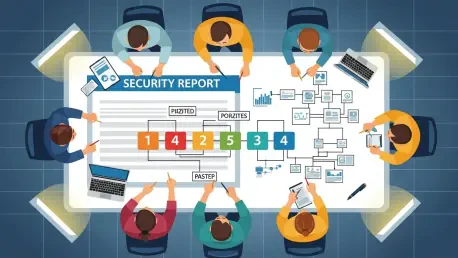
It’s because the test itself is a fleeting moment, but the report is the artifact that lives on. The real craft happens at the keyboard after the test is over. That document is what executives read to make budget decisions, what auditors archive for compliance, and what engineers are expected to live inside of for months as they work on fixes. If that report is confusing, overstates risk, or buries the key details, the entire engagement feels weak, and the security program loses momentum. A strong report is a translation layer; it takes the technical chaos of exploits and pivots and converts it into clear, prioritized decisions and measurable actions that a real team can actually follow and implement.
Many reports simply list vulnerabilities. How do you transform a simple finding, like cross-site scripting, into a compelling case study? Describe the key narrative elements you include to help a non-technical executive understand the problem, its consequences, and the underlying cause.
Simply listing a vulnerability is a wasted opportunity. It turns serious work into background noise. To make it meaningful, you have to build a narrative around it. I treat every single finding like a short case study. First, I explain precisely where the issue sits in the application and how we discovered it. Then, I define who it affects—is it employees, customers, or partners? Finally, and most importantly, I describe what could realistically happen next. Instead of just saying “data theft,” I paint a picture. Screenshots are good for evidence, but a structured story that walks a non-specialist from the technical flaw to the business consequence is what truly keeps everyone aligned and makes the problem feel real.
Imagine a critical flaw on a forgotten demo app and a medium flaw on the main customer portal. How do you communicate this difference in business impact to leadership, and what specific scenarios or data points help them move beyond color-coded severity labels to prioritize effectively?
This is where so many reports fail. They flatten risk by giving a critical SQL injection on a forgotten demo app the same bright red flag as a flaw in the main customer portal. Leadership quickly learns to distrust the color codes. To fix this, you have to build a bridge from the technical risk to business impact—revenue, reputation, operations, and compliance. For every finding, I answer the blunt question: “What changes for the business if someone exploits this?” For the portal flaw, I’d include the types of customer data at risk, potential disruptions to sales processes, and even mock up a likely, unflattering headline. Once that direct link is established, prioritization becomes obvious, and the arguments over red versus orange mostly just disappear.
A report with inconsistent terminology and a messy structure can overwhelm busy reviewers. Walk me through the ideal, repeatable structure for a single finding, from summary to remediation, and explain how using plain language builds credibility with stakeholders outside the security team.
Chaos is never forgiven by a busy reader. Inconsistent naming, buried outcomes, and technical jargon create fatigue and skepticism. A good report has a predictable rhythm. You always start with an executive summary, then outline the scope and methods. From there, each individual finding must follow the same clean structure: a clear summary, a statement of business impact, supporting evidence like screenshots, an assessment of likelihood, and finally, the remediation steps. This must be in that order, every time. Using plain language is about respect for the reader’s time, not dumbing things down. It builds credibility and allows a reviewer to quickly spot patterns, track ownership, and only dive deeper into the technical weeds when they absolutely need to.
Engineers often receive vague guidance like “fix input validation.” What does specific, actionable remediation advice look like in practice? Please share an example of how you guide a team, considering real-world constraints like legacy systems, complex integrations, or staffing shortages.
Telling a team to “fix input validation” is a sign that the tester stopped thinking as soon as the exploitation worked. It provides zero guidance. Strong remediation advice is both specific and realistic. It might reference concrete controls, show configuration examples, or point directly to a specific page in a vendor’s documentation or an industry standard. More importantly, it acknowledges the real world. I always try to consider constraints like legacy systems, complex third-party integrations, or even staffing shortages. By offering trade-offs or phased approaches, you help engineers make faster, smarter judgments and negotiate timelines. That clear, empathetic guidance builds trust, which is far more valuable in the long run than any single proof of concept.
Do you have any advice for our readers?
Remember that the penetration test in the lab is the fun part, but the report is what determines the value for the organization. Focus on clarity, organization, and framing every risk in a way that is relevant to the business. When your findings tell a story, connect to real-world impact, and offer achievable solutions, they create a roadmap, not just a compliance artifact. That kind of refined reporting doesn’t just mitigate risk; it enhances your credibility. And in security, credibility is the currency that buys you the funds, time, and attention needed to make the tough, important decisions.