
Modern containerized ecosystems have evolved into a complex web of microservices where the sheer speed of deployment frequently leaves security protocols in a state of reactive desperation. As engineering teams push code to production dozens of times a day, the traditional barrier between development and security has become a significant bottleneck that threatens both innovation and stability. This persistent friction is often referred to as the “security workflow gap,” a space where vulnerabilities slip through the cracks because scanning tools are too slow or disconnected from the actual developer environment. Organizations now find themselves caught between the necessity of rapid delivery and the catastrophic risk of a major data breach stemming from an unpatched container image or a misconfigured orchestration layer. Within this high-stakes environment, specialized platforms like DockSec have emerged to bridge the divide, promising a more cohesive and automated approach to securing the modern software supply chain without sacrificing the agility that defines current DevOps.
The Persistent Friction in Traditional Container Auditing
The primary obstacle to achieving true DevSecOps maturity lies in the inherent disconnect between static analysis tools and the dynamic nature of container orchestration. Most legacy security solutions operate as external checkpoints, requiring developers to pause their creative process to interpret lengthy, often cryptic vulnerability reports that may not even apply to their specific runtime environment. This fragmentation leads to a situation where security is viewed as an “add-on” rather than a core component of the development lifecycle, resulting in a culture of avoidance where patches are delayed until they become critical emergencies. Furthermore, the lack of contextual awareness in standard scanners means that a high-priority vulnerability in a package that is never actually executed during runtime still triggers an alarm, wasting precious engineering hours on non-issues. By failing to differentiate between reachable code and dormant library vulnerabilities, traditional tools exacerbate the workload without significantly lowering the actual risk profile of the application.
Beyond the technical limitations of scanning, the human element of container security is often overwhelmed by a phenomenon known as alert fatigue, which occurs when security tools generate a constant stream of notifications. When a single container image can trigger hundreds of warnings across various layers, from the base OS to the application binaries, security teams find it nearly impossible to prioritize which issues demand immediate intervention. This saturation of data often leads to a dangerous desensitization, where critical threats are ignored simply because they are buried under a mountain of low-severity findings or false positives. The resulting operational lag means that even known exploits can remain unaddressed in live production environments for days or even weeks after they are discovered. To address this, current strategies must shift toward intelligent filtering and automated risk scoring that can correlate container vulnerabilities with real-world exposure and exploitability metrics. Only by reducing this noise can teams refocus their energy on the architectural vulnerabilities that pose the greatest threat to organizational integrity.
Integration Strategies: Achieving Automated Remediation and Resilience
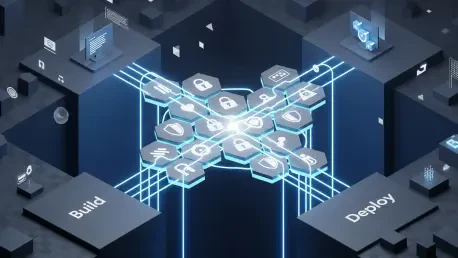
The emergence of DockSec represents a significant shift in how security is integrated into the developer workflow by moving protection mechanisms directly into the continuous integration and delivery stages. Unlike standalone scanners that require manual triggers, this platform embeds itself within the existing toolchain, providing real-time feedback to developers as they build and push their container images. By utilizing advanced heuristics and a comprehensive database of threats, the system identifies potential risks at the moment of creation, allowing for immediate correction before the code ever leaves the local environment. This proactive stance effectively “shifts left” the responsibility for security, but it does so in a way that empowers the developer rather than burdening them with additional administrative tasks. The integration extends beyond simple image scanning to include the analysis of Dockerfiles and Kubernetes manifests, ensuring that configuration errors which often lead to privilege escalation or unauthorized access are caught early. This holistic view of the container lifecycle ensures that every layer of the stack is hardened.
The transition to a more unified container security model was achieved by organizations that prioritized the automation of routine patching and the implementation of granular runtime controls. Security leaders who successfully bridged the workflow gap focused on integrating identity-based access management for every microservice, ensuring that the principle of least privilege was strictly enforced across the entire cluster. This proactive approach included the adoption of immutable infrastructure, where running containers were never altered in place but were instead replaced by hardened versions vetted through automated pipelines. By fostering a culture of shared responsibility, development and security teams were able to align their objectives and reduce the time spent on manual audits. The most effective strategies involved the use of real-time monitoring to detect anomalous behavior, providing a second layer of defense that complemented pre-deployment scanning. Ultimately, these steps led to a more resilient software supply chain that could withstand the demands of rapid delivery through 2026.