
The transition from manually typing lines of code to directing autonomous agents through natural language has fundamentally fractured the traditional security perimeter of modern software development. As Large Language Models redefine the parameters of software engineering, a new discipline known as AI Code Security has emerged to address the risks of automated development. This specialized field focuses on the systematic identification, analysis, and mitigation of vulnerabilities within software produced by AI-assisted tools like GitHub Copilot, Amazon Q, and Claude Code. While these technologies grant developers unprecedented velocity, they simultaneously introduce a complex array of non-deterministic vulnerabilities that traditional review processes cannot catch. The integration of artificial intelligence into the software development life cycle is not merely a quantitative change in how much code is written; it is a qualitative shift toward prediction-based logic. Consequently, securing this new frontier requires a transition from reactive scanning to a context-aware framework that secures the entire journey from the initial natural-language prompt to the live cloud runtime.
Modern software integrity relies on the ability to vet every change before it reaches production, but the sheer volume of machine-generated code has rendered manual intervention nearly impossible. Security professionals now face a landscape where the speed of generation is disconnected from the speed of verification. This gap creates a significant risk profile because AI models are not logical thinkers that understand the consequences of their output. Instead, they function as sophisticated autocomplete engines that prioritize pattern matching over architectural safety. By implementing an automated and intelligent security layer, organizations can ensure that the move toward high-velocity development does not result in a compromised production environment. This article explores the methodologies required to bridge this gap, ensuring that software remains robust even as the methods of creation become increasingly autonomous.
Navigating the Intersection of Artificial Intelligence and Software Integrity
The emergence of AI-driven development has created a fundamental tension between the desire for rapid innovation and the necessity of maintaining a secure code base. In the current landscape, software integrity is no longer just about finding bugs; it is about managing the non-deterministic nature of machine-generated logic. Traditional security models were built on the assumption that humans write code and humans review it, creating a predictable cycle of error and correction. However, when an AI agent generates thousands of lines of code in seconds, the human-centric model collapses. This necessitates a move toward AI Code Security, a discipline that uses the same technological advancements to defend the software that the AI helps to build.
Securing the intersection of artificial intelligence and software engineering requires a deep understanding of how Large Language Models operate within the engineering workflow. These models often suggest code snippets that are functionally correct but architecturally insecure. For example, an AI might provide a perfectly working database query that is simultaneously vulnerable to SQL injection because it lacks proper input sanitization. To address this, security teams must deploy tools that can analyze the semantic intent of the code rather than just its syntax. By moving away from static checks and toward context-aware analysis, organizations can identify high-risk exploits that traditional review processes would likely miss in the deluge of automated output.
The journey toward secure AI development begins with the recognition that security must be as agile as the development process itself. This means integrating security checks at every stage, from the initial prompt given to the AI to the final execution of the code in the cloud. A comprehensive framework for AI Code Security does not just react to problems after they are committed to a repository. Instead, it provides a continuous loop of feedback and remediation that evolves alongside the codebase. By establishing this level of visibility, businesses can harness the full potential of AI-assisted tools while ensuring that the resulting software is resilient against the evolving threat landscape.
The Paradox of Machine-Speed Development and Human-Scale Security
The shift toward AI-assisted coding has created a velocity vs. vulnerability crisis where the volume of code produced far exceeds the capacity of security teams to vet it. As developers leverage autonomous tools to accelerate their output, the sheer quantity of new code creates a significant backlog for security auditors. This situation is particularly dangerous because AI models are statistical prediction engines rather than logical thinkers. They do not have a concept of security best practices; they simply predict the most likely sequence of tokens based on their training data. As a result, they often function as echo chambers, mirroring and amplifying legacy errors like SQL Injection and Cross-Site Scripting that were prevalent in the historical data sets used to train them.
This paradox is further complicated by the fact that traditional Static Application Security Testing tools are becoming increasingly obsolete in an AI-native world. These legacy systems rely on rigid pattern matching and deterministic rules that fail to grasp the nuance of complex, machine-generated logic. Because AI can produce code that is syntactically valid but logically flawed, traditional scanners often generate an overwhelming number of false positives. This results in paralyzing levels of alert fatigue, where developers and security engineers are buried under a mountain of irrelevant warnings. When every minor snippet triggers a security flag, the truly critical vulnerabilities often go unnoticed, buried deep within the noise of the automated scan.
To solve this crisis, the industry must move toward a security model that matches the speed and intelligence of the AI development tools themselves. If the development process is machine-speed, the security process cannot remain human-scale. This involves utilizing advanced analysis engines that can distinguish between harmless code variations and genuine, high-risk exploits. By reducing the noise and focusing on the most critical threats, organizations can maintain their development velocity without sacrificing safety. The goal is to create a symbiotic relationship where AI speeds up production and automated security ensures that every new line of code adheres to the highest standards of integrity.
Implementing a Context-Aware Framework for AI Code Security
Establishing a context-aware framework is the most effective way to manage the unique risks associated with AI-generated software. Such a framework looks beyond individual lines of code to understand the broader application architecture and the environment where the code will eventually run. By considering the context of a code change, security tools can determine whether a specific vulnerability is actually exploitable in the real world. This approach allows teams to move away from the traditional, siloed method of security and toward a unified strategy that encompasses the entire lifecycle of the application.
A successful implementation of this framework requires a multi-layered approach that starts at the developer’s desk and extends to the production cloud environment. Each layer must be designed to communicate with the others, sharing data about the code’s lineage, its dependencies, and its runtime behavior. This interconnectedness is what provides the necessary visibility to secure the frontier of AI development. When security tools understand the intent of the developer and the requirements of the infrastructure, they can provide much more accurate and actionable recommendations, effectively reducing the risk of a breach while supporting the rapid pace of modern software delivery.
Step 1: Establishing Prompt Governance and IAM Guardrails
Securing AI-generated code begins before the first character is written by controlling the instructions provided to the model. Prompt governance involves setting up a set of rules and constraints that guide the AI toward safe and secure output. By implementing programmatic guardrails at the prompt level, organizations can ensure that AI agents operate within safe, pre-defined boundaries. This proactive approach prevents the generation of insecure code patterns at the source, significantly reducing the amount of cleanup required later in the development process.
In addition to governing the prompts, it is essential to establish strict Identity and Access Management guardrails for the AI tools themselves. These tools should only have the minimum level of access required to perform their tasks, preventing them from accidentally exposing sensitive data or making unauthorized changes to the infrastructure. By limiting the scope of what an AI agent can do, organizations can mitigate the risk of an autonomous system making a catastrophic error. Together, prompt governance and IAM guardrails form the first line of defense in a modern AI security strategy, ensuring that the development process starts on a secure foundation.
Enforcing Secure Coding Patterns via Custom System Prompts
One of the most effective ways to influence AI output is through the use of Retrieval-Augmented Generation and custom system prompts. These techniques allow organizations to provide the AI with a specific set of security policies and coding standards that must be followed. For example, a custom system prompt can mandate that the AI always use parameterized queries when writing database logic, effectively blocking the generation of code that is vulnerable to SQL injection. By providing this context up front, the AI becomes a partner in maintaining security standards rather than a source of potential risk.
Furthermore, custom prompts can be used to block the generation of deprecated algorithms or insecure libraries. If a developer asks the AI to implement a cryptographic function, the system prompt can ensure that only modern, industry-standard algorithms are suggested. This type of real-time enforcement helps to maintain a high level of code quality across the entire organization. It also serves as an educational tool for developers, as they are consistently presented with secure coding patterns that align with the company’s internal policies and industry best practices.
Restricting Infrastructure-as-Code to Pre-Vetted Templates
As AI agents increasingly assist with the creation of cloud infrastructure, it is vital to ensure that the resulting Infrastructure-as-Code modules adhere to the principle of least privilege. Organizations should constrain the AI model to use only authorized IAM templates and pre-vetted cloud configurations. This prevents the AI from creating overly permissive roles or insecure networking setups that could be exploited by an attacker. By restricting the AI to a set of known-good templates, the organization can ensure that all new infrastructure is secure by design.
This approach also simplifies the process of auditing and compliance. When all AI-generated infrastructure follows a standardized set of templates, it is much easier for security teams to verify that the environment meets regulatory requirements. Moreover, it reduces the likelihood of configuration drift, as the AI is not allowed to deviate from the established security baseline. Constraining the AI in this way does not hinder its productivity; rather, it provides a safe sandbox where the model can generate high-quality infrastructure code without introducing unnecessary risk to the business.
Step 2: Integrating Real-Time Validation Within the Developer Workflow
To maintain speed without sacrificing safety, security checks must be embedded directly into the Integrated Development Environment and the continuous integration pipeline. This integration ensures that developers receive immediate feedback on the security implications of the code they are writing or generating. When security is treated as a real-time component of the workflow, it becomes a seamless part of the development process rather than a final hurdle that slows down the release cycle. This shift toward in-workflow validation is essential for managing the high volume of code produced by AI-assisted tools.
Embedding security into the workflow also helps to foster a culture of shared responsibility for software integrity. When developers are alerted to vulnerabilities as they appear in their IDE, they can fix them immediately while the logic is still fresh in their minds. This reduces the cognitive load of switching between development and security tasks and leads to a more efficient remediation process. By providing tools that are both powerful and easy to use, organizations can empower their engineering teams to produce secure code at machine-speed, effectively closing the gap between development velocity and security oversight.
Utilizing IDE Plugins for Instant Delta Analysis and Secret Detection
Deploying real-time plugins that analyze code changes as they happen is a critical step in securing the AI-driven workflow. These plugins perform delta analysis, focusing only on the code that has been added or modified, which allows them to provide near-instant feedback without taxing system resources. This is particularly useful for identifying hardcoded secrets, such as API keys or administrative credentials, that might be inadvertently suggested by an AI model. Catching these issues before the code is even committed to a repository prevents them from ever entering the version control system, where they would be much harder to remove.
Beyond secret detection, these plugins can also identify insecure logic and common coding errors in real time. If an AI generates a snippet that contains a cross-site scripting vulnerability, the plugin can highlight the problematic lines and suggest a secure alternative. This immediate intervention prevents the vulnerability from propagating through the system and reduces the amount of manual review required later on. By providing this level of automated oversight, organizations can ensure that every developer, regardless of their security expertise, is capable of producing code that meets the highest safety standards.
Implementing Mandatory PR Guardrails with One-Click Remediation
Pull request gates are an essential part of a secure development pipeline, acting as a final checkpoint before code is merged into the main branch. In an AI-assisted environment, these guardrails should be automated and capable of correlating code changes with architectural risk. This means that the security tool should understand not just that a vulnerability exists, but also how it impacts the overall security posture of the application. By providing developers with ready-to-merge fixes directly within the pull request, organizations can resolve vulnerabilities without breaking the developer’s focus or delaying the release.
One-click remediation is a game-changer for AI security because it simplifies the complex task of fixing vulnerabilities. Instead of having to manually research and implement a fix, the developer can simply review the suggested change and apply it with a single click. This drastically reduces the time to remediation and ensures that security issues are addressed quickly and correctly. When combined with mandatory guardrails that prevent insecure code from being merged, this approach creates a robust defense that can scale with the increased output of AI-assisted development teams.
Step 3: Bridging the Code-to-Cloud Visibility Gap
The most critical aspect of modern AI security is understanding reachability, which determines whether a vulnerability in the source code is actually accessible to attackers in the production environment. This requires bridging the gap between the source code repository and the live cloud infrastructure. Without this visibility, security teams often struggle to prioritize their work, wasting time on minor issues while critical exploits remain unaddressed. By creating a unified view of the entire application stack, organizations can focus their efforts on the risks that pose the greatest threat to the business.
A unified visibility strategy allows for a more nuanced understanding of risk that goes beyond simple vulnerability scanning. It involves mapping the relationship between code components, APIs, and cloud resources to identify potential attack paths. When a vulnerability is discovered, the security team can use this information to determine if the affected code is actually running in an internet-facing container or if it is shielded by other security layers. This level of context is essential for managing the large volume of vulnerabilities that can be generated by AI tools, allowing teams to work more efficiently and effectively.
Mapping Reachability to Prioritize Critical Runtime Vulnerabilities
Using a unified context graph to link code lineage to live cloud containers allows security teams to move from a volume-based approach to a risk-based approach. By mapping reachability, teams can ignore vulnerabilities in unreachable code and focus exclusively on those that are exposed to potential attackers. This prioritization is essential for reducing alert fatigue and ensuring that limited security resources are spent where they will have the most impact. It also provides a clear roadmap for remediation, as developers can see exactly how a code-level vulnerability translates to a real-world threat in the production environment.
Mapping reachability also helps to identify systemic issues that might not be apparent when looking at individual components in isolation. For example, a vulnerability in a seemingly minor library might become critical if that library is used by an internet-facing API. By visualizing these connections, security teams can uncover hidden risks and take proactive steps to mitigate them. This holistic view of the application stack is the key to securing the frontier of AI-generated code, as it provides the necessary context to make informed decisions about risk management and remediation.
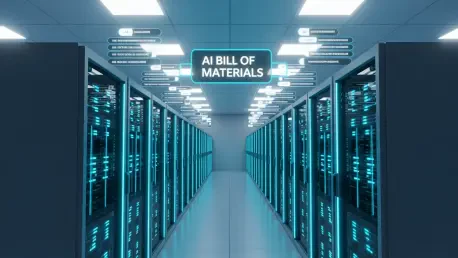
Maintaining an AI Bill of Materials (AI BOM) for Supply Chain Auditing
Cataloging every component and dependency introduced by AI agents is a vital part of defending the software supply chain. An AI Bill of Materials provides a comprehensive record of all the libraries, packages, and code snippets that were generated or recommended by an AI tool. This transparency is necessary for defending against package baiting, a sophisticated attack where malicious actors register hallucinated library names in public registries like npm or PyPI. If an AI tool suggests a non-existent package, an attacker who has registered that name can inject malicious code directly into the organization’s codebase.
An AI BOM also plays a crucial role in regulatory compliance and auditing. It allows organizations to demonstrate that they have a clear understanding of the software they are deploying and that they are actively managing the risks associated with AI-assisted development. By maintaining a detailed log of AI agent activity, security teams can track how code was generated and which models were used. this level of auditability is essential for building trust in AI systems and ensuring that they are used in a responsible and secure manner. In the event of a security incident, the AI BOM provides a valuable resource for identifying the root cause and implementing a fix.
A Checklist for Securing the AI-Driven Software Lifecycle
To maintain a strong security posture in an environment driven by artificial intelligence, organizations should follow a structured set of best practices. First, prompt governance must be established to implement filters that prevent the replication of insecure legacy patterns. This ensures that the AI is guided toward producing secure code from the very beginning. By setting clear expectations and constraints, organizations can reduce the inherent risk of using Large Language Models for software development. This proactive measure acts as a foundational layer of security that influences every subsequent step in the development process.
Second, in-workflow remediation is necessary to shift security left by providing instant fixes within the IDE and pull request stages. This approach allows developers to address security concerns as they arise, preventing them from becoming larger problems later in the cycle. Third, contextual prioritization should be used to focus on reachable, high-impact risks by leveraging code-to-cloud visibility. This ensures that security teams are not overwhelmed by a mountain of irrelevant data and can focus on the threats that matter most. Fourth, a comprehensive AI Bill of Materials must be maintained to provide supply chain oversight and track autonomous agent activity. This level of transparency is vital for defending against modern supply chain attacks. Finally, it is essential to eliminate shadow AI by providing sanctioned and secure AI tools to prevent developers from using unvetted public models that could expose sensitive intellectual property.
The Shift Toward Vibe Coding and the Future of Autonomous Agents
The software industry is rapidly moving toward an AI-native paradigm known as vibe coding, where applications are built almost entirely through high-level natural-language prompts. In this model, the traditional development lifecycle is collapsed as developers focus on defining the intent and desired outcome, leaving the actual implementation to autonomous agents. While this approach offers incredible speed and flexibility, it also introduces significant logic errors and a higher density of vulnerabilities compared to human-written code. Because vibe coding often bypasses traditional code-level review, it requires a new type of security oversight that focuses on semantic intent rather than just syntax.
As autonomous agents take over more of the execution tasks in the development process, the focus of security will inevitably shift. Instead of analyzing code line by line, security tools will need to evaluate the goals and actions of the AI agents. This will likely involve the rise of AI security agents that act as autonomous overseers, matching the speed of development agents to maintain a self-healing software ecosystem. These security agents will be capable of monitoring agentic behavior in real time, intercepting malicious or dangerous actions before they can cause harm. This evolution represents a fundamental change in how we think about software integrity, moving from a static defensive posture to a dynamic and proactive one.
The future of software security in an AI-native world will be defined by the ability to manage complexity at scale. As vibe coding becomes more prevalent, the number of components and connections within an application will grow exponentially. This will make it even more important to have a unified view of the code and cloud environment. By embracing autonomous security tools that can operate at the same level of abstraction as development tools, organizations can ensure that their software remains secure even as the methods of creation become more opaque. The transition to vibe coding is not a reason to abandon security, but rather a call to reinvent it for a new era of computing.
Building a Resilient Future in an AI-Native Landscape
Securing the frontier of AI-generated code necessitated a fundamental move away from the siloed and reactive security models that defined the previous decade. Organizations successfully recognized that the speed of AI-driven development demanded a corresponding evolution in defensive strategies. By embracing governance over prohibition, businesses avoided the pitfalls of shadow AI and ensured that intellectual property remained protected within sanctioned environments. The integration of context-aware frameworks allowed security teams to focus on reachable threats, drastically reducing the noise that once plagued traditional scanning tools. This shift enabled a more efficient use of resources and a more robust defense against increasingly sophisticated exploits.
The transition to an AI-native landscape was marked by the successful unification of code and cloud visibility. This holistic approach provided the transparency needed to manage the complexities of modern software supply chains and the unpredictable nature of machine-generated logic. Automated remediation and real-time validation became the new standard, allowing developers to maintain their flow while adhering to rigorous security requirements. By intercepting vulnerabilities at the moment of inception, organizations created a self-healing ecosystem that grew stronger with every line of code. Ultimately, the industry moved toward a future where security and development were no longer at odds, but were instead two sides of the same innovative coin.