
The traditional concept of a software update has been completely dismantled in favor of a fluid, non-linear progression that redefines how users interact with their operating systems. The Windows 11 Insider Program has moved far beyond its origins as a linear preview pipeline, evolving into a sophisticated, multi-track ecosystem. In 2026, the program reflects a radical departure from traditional software testing, prioritizing specialized engineering goals over simple chronological updates. This guide explores how Microsoft has restructured its preview channels to balance deep architectural innovation with refined user experiences, providing a roadmap for enthusiasts navigating this complex technical landscape.
The current atmosphere of digital development demands an agility that old testing models simply could not provide. By transitioning into a decentralized framework, the program allows various teams to work on disparate parts of the OS without creating bottlenecks for one another. This means that a breakthrough in kernel efficiency does not have to wait for a new set of icons to be finished before it can reach the hands of testers. Consequently, the Insider experience has become more about choosing a specific development philosophy rather than simply choosing how often one wants to receive a new build.
Embracing a New Era of Decentralized Windows Development
The shift toward decentralization represents a move away from the “one-size-fits-all” approach that characterized the early years of Windows 11. Instead of a single stream of code flowing through different stages of stability, the 2026 program operates like a web of interconnected but independent projects. This structure is designed to accommodate the vastly different speeds at which hardware and software now evolve. For example, neural processing unit optimizations might move at a different pace than refinements to the taskbar, and the current system reflects this reality by allowing them to exist in separate development silos until they are ready for integration.
Furthermore, this new era emphasizes active collaboration between the developer and the end-user on a more granular level. Users are no longer just passive observers reporting crashes; they are essential components of a feedback loop that informs the direction of specific architectural pillars. This modular approach ensures that if a particular experiment fails, it does not jeopardize the entire OS development cycle. It provides a safety net that encourages bolder experimentation, as the risks are contained within specific channels rather than being spread across the entire user base of the Insider Program.
Why the Shift to Parallel Development Tracks Matters
The transition to a “One Windows, Multiple Timelines” philosophy marks a fundamental change in how operating systems are built. By decoupling the core system platform from the user interface, Microsoft can now test radical infrastructure changes without compromising the visual stability of the entire OS. This separation is crucial in a landscape where the underlying technology must be resilient enough to handle diverse hardware architectures while the user interface must remain intuitive and familiar. The parallel tracks ensure that foundational work continues unabated by the aesthetic demands of the consumer market.
This strategic pivot allows for more aggressive experimentation in areas like kernel security and AI integration, ensuring that Windows remains resilient against modern threats while still delivering a polished experience to the general public. In a world where cyber threats evolve daily, the ability to test deep-level security protocols in an isolated environment is a significant advantage. Moreover, by running these tracks in parallel, the development team can gather data from a wider variety of use cases simultaneously, which leads to a more robust final product that has been vetted through multiple technical lenses.
Navigating the Three Pillars of the 2026 Insider Program
The current structure of the Insider Program is divided into three distinct channels, each serving a unique purpose in the development lifecycle and catering to different levels of technical risk. Understanding these pillars is essential for any user looking to participate in the program effectively. Each channel is defined not just by its stability, but by its specific mission within the broader development strategy, ranging from deep-level architectural work to minor quality-of-life adjustments.
Choosing between these pillars requires a clear understanding of what a user hopes to achieve. One channel might offer the thrill of seeing the very first lines of a new system component, while another provides a reliable way to test upcoming productivity tools. This specialization ensures that every participant can find a niche that matches their hardware capabilities and their personal interest in the evolution of the operating system. It is a system built on the premise that different users bring different value to the development process.
1. Exploring the Canary Channel as the Architectural Frontier
The Canary Channel serves as the most volatile testing ground, focused almost exclusively on the foundational “bones” of the Windows operating system. It is the place where the most daring ideas are first given life, often in a raw and unpolished form. This track is not meant for those who seek a pretty interface; it is for those who want to see the plumbing of the future.
Validating Core System Stability and Security
Current Canary builds are centered on deep-level architectural changes, such as integrated security event tracking and automated system repair frameworks. These tools operate beneath the surface to identify and neutralize threats before they reach the user level. By embedding these protocols directly into the system core, the OS becomes inherently more secure, moving away from reactive security toward a proactive, self-healing model.
The validation process in this channel is rigorous and often involves testing how the system handles catastrophic failures. This ensures that the foundational code is strong enough to support the layers of features that will eventually be built on top of it. It is a vital stage that prioritizes long-term system health over short-term visual appeal or immediate functionality.
Testing Cross-Device Seamless Connectivity
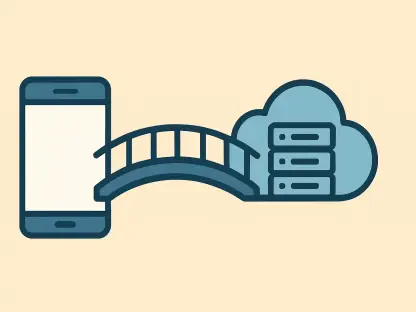
The Canary track is the primary incubator for complex cross-device functionalities, enabling users to transition workflows between mobile and desktop environments with zero friction. This involves deep integration with cloud services and localized wireless protocols that allow for a continuous state of operation regardless of the device being used. The goal is to make the hardware transparent, focusing entirely on the user’s task and data flow.
These experiments often push the boundaries of what current networking standards can support. By testing these features in the Canary Channel, engineers can iron out the latency issues and synchronization errors that naturally occur when trying to bridge different hardware ecosystems. It represents a significant step toward a truly hardware-agnostic computing experience.
Managing Extreme Instability and Risk
Because this channel prioritizes core platform shifts, it often lacks the polished UI found in other tracks and carries a high risk of system failure, requiring frequent clean installations. Users must be prepared for their systems to become unresponsive or for certain hardware components to stop working without warning. It is a high-stakes environment that demands a significant level of technical expertise and a robust backup strategy.
The risk management involved in using the Canary Channel is part of its design. By exposing the most experimental code to a small group of highly technical users, Microsoft can identify major flaws that would be devastating if released to a broader audience. This protects the integrity of the other channels while still allowing for the necessary “trial by fire” that breakthrough innovations require.
2. Using the Dev Channel as a Feature Incubator
The Dev Channel is where the user-facing future of Windows is crafted, focusing on how people interact with their PCs through new tools and intelligent interfaces. This is the track where the operating system begins to take on its personality, moving from raw code to a tangible experience. It is the birthplace of the features that will eventually define the daily routine of millions of users.
Leveraging AI for Natural Language Control
In the Dev Channel, Microsoft is transforming voice access into a conversational experience, allowing users to command their devices using fluid, natural speech rather than rigid scripts. This shift is powered by advanced large language models integrated directly into the OS shell. It allows for a much more intuitive interaction, where the computer understands intent and context rather than just specific keywords.
The development of these tools focuses on reducing the friction between thought and action. By enabling a more natural dialogue with the machine, the Dev Channel is testing a future where the keyboard and mouse are supplemented by a sophisticated digital assistant that can perform complex multi-step tasks through simple vocal instructions.
Enhancing Accessibility through Visual Data Processing
New AI-driven tools within this track can describe complex visual data, such as charts or images, natively within the OS to assist users with visual impairments. This represents a major leap forward in making computing more inclusive. The system can analyze the content of a screen and provide a detailed auditory summary, allowing users to understand the context of data that was previously inaccessible to them.
Moreover, these accessibility features are being built as core components of the UI rather than as afterthoughts. This ensures that they are performant and reliable, providing a consistent experience across all native applications. The Dev Channel serves as the testing ground for ensuring these complex visual-to-audio translations are both accurate and useful in real-world scenarios.
Balancing Innovation with Moderate Performance Risks
While more functional than Canary, the Dev Channel still experiences occasional performance drops and the temporary removal of features as they undergo refinement. This is a natural part of the creative process, where some ideas are found to be less effective than originally anticipated. Users in this channel must be comfortable with the “give and take” of active feature development.
The trade-off for seeing the latest tools is a system that may occasionally stutter or require a reboot after a specific update. However, for those who are passionate about the cutting edge of user interface design and AI integration, these minor inconveniences are a small price to pay for a glimpse into the future of human-computer interaction.
3. Finalizing the Experience in the Beta Channel
The Beta Channel represents the final staging area, where the mission is to perfect features that are nearly ready for a global audience. It is the most stable of the Insider tracks, designed for users who want to be ahead of the curve without sacrificing the reliability of their computer. Here, the focus shifts from “what can we do” to “how can we do it better.”
Refining Quality of Life and Performance Optimizations
Beta updates focus on granular improvements, such as manual camera controls and optimized system wake times, ensuring the software feels snappy and reliable. These are the small details that make a significant difference in the daily user experience. By fine-tuning the performance of already stable features, the Beta Channel ensures that the final release is as polished as possible.
These optimizations are often the result of extensive data analysis from the earlier channels. Engineers use the feedback from Canary and Dev users to identify the specific areas where the software can be made more efficient. This results in a version of Windows that feels fast, responsive, and ready for professional use.
Ensuring Daily Driver Reliability for Power Users
This channel is the safest point of entry for those who want early access to new emojis or navigation menus without risking the stability of their primary workstation. It is tailored for power users who need their machines to work every day but still enjoy being the first to see the latest refinements. The reliability of the Beta Channel makes it an ideal environment for testing how new features interact with a wide variety of third-party software.
The focus here is on ensuring that the upcoming public release will be a smooth transition for everyone. By providing a stable environment for late-stage testing, the Beta Channel acts as a final filter for any remaining bugs. It provides the confidence that the new features are not only innovative but also robust enough for the general population.
Understanding the Paradox of Non-Sequential Feature Releases
A common point of confusion in 2026 is that the “most advanced” channel (Canary) does not always have the “latest” visual features found in the Dev or Beta channels. This occurs because the channels operate on different engineering timelines; Canary may strip away experimental UI elements to focus on testing the underlying kernel, leading to a visual experience that appears older despite having a more futuristic core. It is a logical consequence of the decentralized development model that prioritizes functional isolation.
This paradox highlights the shift away from a linear progression of version numbers. In this new framework, “newer” can refer to the kernel, the shell, or the feature set, and these three elements may not always be in sync across different channels. Understanding this requires a shift in perspective, recognizing that the Insider Program is a collection of parallel journeys rather than a single race to a finish line. This complexity is the trade-off for a more specialized and efficient development process.
Aligning Insider Tracks with Broader Industry Trends
The evolution of the Windows Insider Program mirrors a larger industry trend toward modular software development and “AI-first” operating systems. As hardware becomes more diverse and cloud integration more essential, the ability to test specific components in isolation—such as cross-device assistants or neural processing unit (NPU) optimizations—allows Microsoft to scale Windows across various form factors. This modularity ensures that the OS can adapt to emerging technologies, like spatial computing and advanced edge AI, more rapidly than traditional development cycles allowed.
Furthermore, the focus on AI within these tracks reflects the global movement toward more intelligent and autonomous computing environments. By integrating these capabilities at the system level through the Insider channels, the program is setting the standard for how modern operating systems should function. It is no longer enough for an OS to be a simple platform for applications; it must now be an active partner in the user’s digital life, anticipating needs and facilitating complex tasks through advanced machine learning.
Choosing the Right Path for Your Windows Journey
Selecting the appropriate Insider channel in 2026 required an honest assessment of technical skills and hardware availability. If a user was a developer with a secondary machine, the Canary Channel offered a glimpse into the future of computing architecture that was unavailable anywhere else. Early adopters who sought the latest AI tools and interface changes found their home in the Dev Channel, where the “feel” of the next generation of Windows was being actively shaped. Meanwhile, professionals who prioritized stability while still wanting a head start on upcoming features remained in the Beta Channel to ensure their workflows stayed uninterrupted.
By understanding these specialized tracks, participants contributed meaningfully to the evolution of Windows while maintaining a computing environment that fit their specific needs. The program successfully transitioned into a model where the user’s role was defined by their specific interests and risk tolerance. This structural evolution ensured that the feedback provided was more relevant and actionable, leading to a more stable and feature-rich operating system for everyone. Ultimately, the diversity of the channels allowed for a more comprehensive exploration of what a modern operating system could be, paving the way for innovations that will continue to define the platform for years to come.