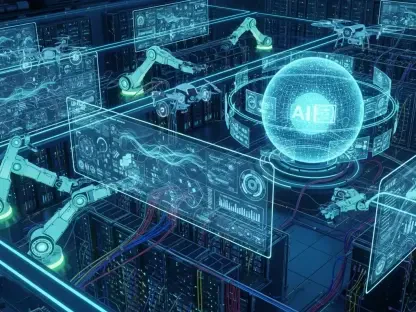

The copilot era is over. What began as AI-assisted code completion has evolved into something far more consequential: autonomous systems that can interpret business requirements, navigate codebases, and execute end-to-end development workflows with minimal human direction. For enterprise technology leaders, this shift demands a fundamental recalibration of how engineering teams operate, how productivity is measured, and how competitive advantage is built.
The distinction matters because it changes everything about software delivery economics. Organizations still treating AI as a faster autocomplete function are missing the larger transformation. The real opportunity lies in understanding how agentic systems can compress development timelines, address chronic talent shortages, and build architectural resilience that manual processes simply cannot match.
From Code Suggestions to Autonomous Execution
Legacy AI assistants functioned as sophisticated lookup tools. They could suggest syntax, complete functions, and occasionally debug simple errors. But they required constant human intervention to bridge individual code snippets into coherent systems. Developers remained the architects, builders, and quality inspectors all at once. The productivity ceiling was real and frustrating.
Agentic AI operates on an entirely different plane. These systems interpret high-level business requirements and decompose them into actionable technical milestones autonomously. They navigate file structures, identify dependencies, initiate pull requests, and conduct self-directed testing before flagging work for human review. The agent understands context. It knows why a particular function exists within the broader architecture and can make decisions accordingly.
This capability transforms the developer’s role from mechanic to conductor. Rather than writing every line of code, engineers define strategic intent and governance parameters. They specify what the system should accomplish and establish the boundaries within which agents operate. The mechanical work of implementation becomes increasingly automated, freeing human expertise for higher-value activities.
Integration Into the DevOps Pipeline
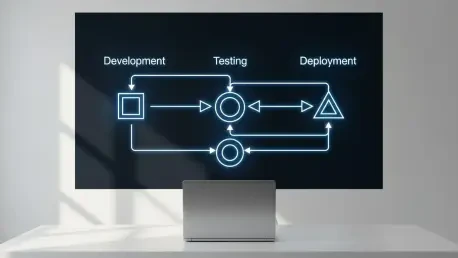
The integration of agentic AI into continuous integration and deployment pipelines has produced measurable improvements in operational stability. Modern implementations embed autonomous agents directly into monitoring and remediation workflows. These systems analyze performance metrics and security vulnerabilities in real time, initiating corrective action before issues reach production environments.
The capabilities extend beyond reactive fixes. Agents leverage historical data and predictive analytics to recommend structural optimizations that reduce latency and infrastructure costs. They can interpret regulatory frameworks and embed compliance checks into the design phase itself. Security audits that once required weeks of manual code review now happen continuously, with agents flagging violations as code is written.
Consider the implications for release velocity. Traditional development cycles allocated substantial time for testing, security review, and compliance verification. When these activities happen autonomously and continuously, release cadences accelerate dramatically. Organizations report deployment frequencies increasing by multiples, not percentages [Human Editor: Insert source to support this claim].
Addressing the Talent Crisis
The global shortage of experienced software engineers has reached critical levels. Industry surveys indicate that roughly 87% of organizations struggle to source developers with the specialized skills needed to manage increasingly complex digital portfolios [Human Editor: Insert source to support this claim]. This scarcity drives compensation inflation, project delays, and strategic compromises that constrain growth.
Agentic AI functions as a force multiplier for existing teams. A developer working with autonomous agents can effectively manage larger codebases and more sophisticated architectures without proportional increases in headcount. The automation of repetitive tasks frees cognitive bandwidth for problem-solving that requires genuine human judgment.
The effect on junior developers deserves particular attention. These systems provide real-time guidance that accelerates skill development, allowing less experienced engineers to perform at higher levels while learning from the agent’s recommendations. The traditional apprenticeship model, where junior developers learned by observing senior colleagues, now incorporates AI-driven coaching at scale.
But this creates its own challenges. Organizations must balance efficiency gains against the risk of skill atrophy. Developers who never write boilerplate code may struggle to understand fundamental concepts. Smart implementation strategies incorporate deliberate practice opportunities alongside automation, ensuring that human expertise continues to develop even as mechanical work diminishes.
Economics of Customization
Enterprise software procurement is shifting. While standardized SaaS products offer immediate utility, they increasingly fail to support the unique processes and specialized workflows that differentiate competitive organizations. The demand for customized solutions continues to outpace growth in general software services.
This creates economic pressure that agentic AI helps relieve. The traditional cost structure for bespoke application development made customization prohibitive for all but the largest enterprises. Autonomous agents lower the barrier substantially by accelerating development timelines and reducing the labor hours required for complex system builds.
Global spending on cloud-native infrastructure is projected to reach unprecedented levels in the coming years [Human Editor: Insert source to support this claim]. This investment creates demand for sophisticated management capabilities that maximize resource utilization. Agentic systems excel at optimizing cloud expenditure through intelligent scaling and redundancy identification. They continuously evaluate workload patterns and adjust provisioning to match actual demand rather than worst-case projections.
The result is a democratization of custom software development. Mid-market companies can now pursue solutions that would have been economically unfeasible just a few years ago. This expansion of capability creates competitive dynamics that favor organizations capable of deploying agent-driven development at scale.
Reliability in Autonomous Testing
Trust remains the central challenge for autonomous systems. Engineers accustomed to controlling every aspect of the development process naturally question whether AI agents can maintain quality standards without constant supervision. Establishing that trust requires transparent and verifiable testing frameworks.
Traditional test automation suffered from a well-documented maintenance burden. Minor interface changes broke scripts, creating cycles of manual intervention that consumed development capacity. Some organizations found that maintaining automated tests required as much effort as the initial development work [Human Editor: Insert source to support this claim].
Agentic AI addresses this through intelligent locator strategies and visual validation techniques. These systems adapt to interface changes without requiring human reconfiguration, maintaining test reliability as underlying applications evolve. The self-correcting mechanisms provide stability that enables true continuous delivery.
Transparency remains essential. Engineers must be able to audit the reasoning behind agent decisions, understanding not just what the system did but why. Black-box automation creates risk that most organizations cannot accept. The most effective implementations provide detailed logging and explanation capabilities that maintain human oversight even as autonomous execution expands.
Managing Distributed Complexity
The architectural trend toward microservices and distributed systems amplifies the value of agentic AI. These environments generate complexity that challenges human cognitive limits. Service dependencies multiply geometrically as systems scale, creating failure modes that may not emerge until production loads stress the architecture.
Autonomous agents map these dependencies and identify potential failure points that human observers might miss during design reviews. They simulate millions of user interactions, stress-testing system limits with coverage that manual processes cannot match. This capability produces more robust and fault-tolerant systems capable of adapting to traffic fluctuations and hardware failures in real time.
The implications for resource allocation are significant. Rather than provisioning for peak demand, agents dynamically adjust service capacity based on actual usage patterns. This elasticity reduces infrastructure costs while maintaining performance standards. Organizations report substantial savings from agent-driven optimization of their cloud environments.
Security as Continuous Process
The integration of security protocols directly into agentic workflows represents a significant advancement toward “secure by design” development. Traditional approaches treated security as a final checkpoint, a gate through which code passed before deployment. This created bottlenecks and often resulted in security compromises when release deadlines conflicted with remediation timelines.
Autonomous agents continuously scan code for vulnerabilities, misconfigurations, and compliance violations. This real-time oversight reduces the window during which exploitable weaknesses might exist in the codebase. The agents draw on extensive databases of known exploits, automatically suggesting patches or alternative implementations that mitigate risk without compromising functionality.
Threat modeling benefits particularly from agentic capabilities. These systems anticipate attack vectors during the design phase, neutralizing vulnerabilities before they are coded. The shift from reactive patching to proactive defense becomes essential as cyber threats grow increasingly automated. Adversaries deploying AI-powered attacks require equally sophisticated defensive measures.
The Orchestration Mindset
The transition to agent-centric development demands cultural change within engineering organizations. Skill profiles that emphasized manual coding proficiency must evolve toward capabilities in logic definition, system oversight, and strategic design. Developers become orchestrators rather than implementers.
This shift challenges traditional career progression models. Engineers who built expertise through years of hands-on coding may find their skills less differentiated in an environment where AI handles implementation details. Organizations must invest in retraining and role redefinition to retain valuable talent while adapting to new operational models.
The human element becomes more critical, not less, as automation expands. Technology serves broader business objectives only when human judgment guides its application. Engineers who can translate business strategy into technical governance frameworks deliver value that autonomous agents cannot replicate. Companies that foster cultures of oversight and collaborative intelligence position themselves to extract maximum value from their AI investments.
Communication skills gain importance in this environment. Defining intent clearly enough for autonomous systems to execute correctly requires precision that casual instruction cannot achieve. Engineers must articulate goals, constraints, and quality standards in ways that leave no room for misinterpretation.
Strategic Positioning for What Comes Next
Organizations that successfully integrate agentic AI into their workflows establish advantages that compound over time. Faster release cycles enable rapid response to market opportunities. More resilient architectures reduce operational risk and maintenance burden. Efficient resource utilization improves margins in increasingly competitive markets.
But the technology continues to evolve rapidly. Today’s cutting-edge implementations will likely appear primitive within a few years. Strategic readiness requires ongoing investment in learning and adaptation. Organizations must develop governance frameworks robust enough to manage current capabilities while flexible enough to incorporate emerging advances [Human Editor: Insert source to support this claim].
The ethical and security implications demand serious attention. Autonomous systems operating at scale create risks that differ in kind from traditional software development. Decision-makers bear responsibility for ensuring that technological capabilities translate into sustainable business growth rather than unintended consequences.
The most successful organizations will treat agentic AI as a partner rather than a tool. This means investing in the human capabilities that complement machine efficiency. It means building cultures where oversight and collaboration define the relationship between engineers and autonomous systems. And it means maintaining the strategic perspective necessary to navigate a landscape where the rules continue to change.