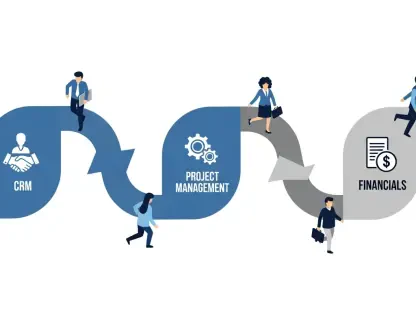

The rapid expansion of a penetration testing team, once a clear sign of success, often becomes the very catalyst for operational gridlock as the tools and processes that supported a small group begin to fracture under the weight of scale. This common industry challenge sees growing teams in consulting firms and government agencies grappling with a fragmented ecosystem of disconnected applications for every stage of an engagement, from initial note-taking to final client delivery. The result is a reliance on manual coordination and “tribal knowledge” that inevitably introduces inconsistencies, slows down project timelines, and increases organizational risk. Addressing this deep-seated architectural problem, PenTest.WS announced the launch of Neuron, a new enterprise-level platform engineered from the ground up to consolidate and streamline the complex workflows of large-scale pentesting operations, aiming to replace operational friction with a unified, cohesive system designed for the modern enterprise.
Addressing the Architectural Flaws of Scaled Operations
As penetration testing teams grow beyond a handful of consultants, the software infrastructure supporting them frequently fails to keep pace, revealing a fundamental architectural deficiency in many existing tools that were designed for individual users or small teams. Adam Benwell, Founder and CEO of PenTest.WS, asserts that the operational breakdowns experienced by expanding teams are not a failure of personnel but a direct consequence of this inadequate software foundation. The workflow becomes scattered across a disparate array of tools for note-taking, quality assurance, project management, reporting, and client communication. This fragmentation forces teams to rely heavily on manual processes and undocumented institutional knowledge to bridge the gaps, creating a brittle system that struggles to maintain consistency and efficiency as the number of concurrent projects and consultants increases. This ad-hoc approach inherently limits scalability and introduces significant overhead, turning growth into a liability rather than an asset.
The consequences of operating with a disjointed toolchain extend far beyond mere inconvenience, directly impacting the quality, speed, and reliability of security assessments. When reporting and quality assurance are treated as separate, subsequent stages of the pentesting lifecycle, they often become significant bottlenecks, delaying project completion and frustrating both consultants and clients. The lack of a shared, centralized context means team members work in silos, making collaboration difficult and increasing the likelihood of errors or omissions. Furthermore, keeping clients informed requires dedicated meetings and manual status updates, consuming valuable time that could be spent on active testing. This operational friction not only slows delivery but also elevates risk, as inconsistencies in methodology and reporting can undermine the value of the entire engagement. For large teams managing numerous parallel projects, these challenges are magnified, threatening the very foundation of their service delivery model.
Neuron’s Unified Approach to Pentesting
In response to these systemic challenges, Neuron was developed not as an incremental update but as a complete re-architecture of the PenTest.WS platform, specifically built to provide a robust foundation for enterprise-scale operations. The platform’s core innovation lies in its effort to consolidate essential pentesting workflows into a single, cohesive system, eliminating the need for teams to juggle multiple disconnected applications. A central element of this unified model is the integration of reporting and quality assurance directly into the testing process. Instead of being relegated to the end of an engagement, reporting begins as soon as findings are discovered, and quality assurance becomes an ongoing, collaborative part of the workflow. This paradigm shift is designed to dismantle the bottlenecks that have traditionally plagued pentesting delivery, allowing for a more fluid and efficient progression from testing to final report. By providing teams with shared context, Neuron facilitates better collaboration and keeps stakeholders informed without constant manual intervention.
Understanding the unique security and compliance demands of its target clientele, Neuron is offered exclusively to enterprise customers through private and on-premise deployments rather than as a standard multi-tenant SaaS product. This deployment model provides organizations with the stringent control, security, and auditability required in sectors such as defense, government, and other highly regulated industries. The platform is also modular, enabling enterprises to activate only the capabilities they need while maintaining centralized governance over standards and processes across the entire organization. PenTest.WS emphasizes that Neuron was not built to compete on an exhaustive list of individual features but to establish a durable and scalable foundation that reflects the complex realities of managing large-scale, real-world pentesting teams. The platform is currently available for private demonstrations, offering qualified organizations a firsthand look at its potential to transform their security operations.
A Foundational Shift for Enterprise Security Teams
The launch of Neuron marked a significant step toward addressing the long-standing operational inefficiencies that have constrained the growth of enterprise penetration testing teams. By shifting the focus from individual tools to a unified operational platform, the initiative provided a new framework for how large-scale security assessments could be managed. It acknowledged that the persistent challenges of inconsistency, project delays, and communication overhead were not isolated issues but symptoms of a deeper architectural problem within the industry’s toolchain. The platform’s introduction challenged the status quo, which had long relied on a patchwork of disparate systems, and proposed a consolidated model where collaboration, reporting, and quality assurance were woven into the fabric of the testing lifecycle. This strategic move signaled a maturation in the pentesting market, reflecting a growing need for solutions that prioritize operational integrity and scalability alongside technical capabilities.