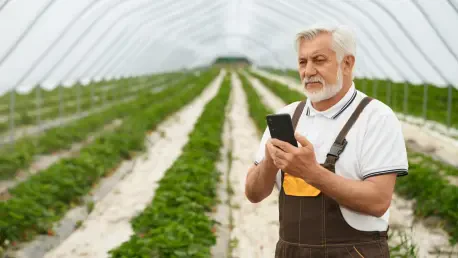

With a deep proficiency in both frontend and backend development, Anand Naidu has become a pivotal figure in shaping how technology integrates with one of our oldest industries: agriculture. He specializes in translating the complex, real-world needs of modern farmers into robust, user-friendly mobile applications. His work focuses on creating practical tools that can withstand the rigors of a muddy field or a tractor dashboard, ensuring technology serves as a genuine partner to those who feed the world.
This conversation explores the unique journey of developing agricultural software, from the initial challenge of identifying a farmer’s true pain points to navigating the specific UX demands of an outdoor, hands-on workforce. We delve into the critical technical decisions, such as building for offline environments, and the grassroots marketing strategies required to gain trust within close-knit farming communities. Ultimately, we uncover the philosophy behind building technology that doesn’t just look good in a boardroom but proves its worth during the heat of harvest.
The guide highlights how a dairy farm’s needs differ from a crop farm’s. When you consult with farmers, how do you pinpoint their most critical pain points to avoid feature bloat? Could you share a step-by-step process for prioritizing those needs into a core app concept?
That’s really the most crucial part of the entire process, and it’s where many projects go wrong. You can’t just rely on surveys. My process always starts with spending significant time on the farm itself. I’m not just talking about a brief tour; I mean watching the daily rhythms, observing how the team communicates, and seeing what their current systems are. Often, you’ll find they’re using a combination of paper notebooks, spreadsheets, and text messages, and the biggest pain points are hidden in the gaps between those systems. For instance, I’ll watch a farm manager spend an hour every evening manually collating harvest data from different workers. That’s a critical bottleneck. So, the first step is observation to identify the real, not the perceived, problems. From there, we focus on solving one or two of those core issues exceptionally well. Instead of building an app that does everything, we build one that, for example, perfects livestock tracking or simplifies equipment maintenance logs. This laser focus prevents feature bloat and delivers immediate, tangible value, which is exactly what a busy farmer needs.
You recommend a 6-12 month timeline and starting development during the off-season. Can you break down the key milestones within that timeframe? Please describe how you manage project pressures when an unexpected delay risks pushing the launch into a farmer’s busy planting or harvest season.
A 6-12 month timeline is realistic because these apps are far more complex than they appear. The first two months are typically dedicated to deep discovery and planning—those farm visits and conversations we just discussed. Months three through six are for core development, where we build the foundational architecture, especially the offline-first capabilities, and implement the primary features. The next three months are all about iteration and field testing with our partner farmers. This is where the real learning happens. The final stretch is for polish, bug fixing, and preparing for launch. Now, managing delays is all about ruthless prioritization. The seasons won’t wait for your code to compile. If we’re facing a delay that threatens to push us into planting season, we immediately scale back to a minimum viable product. It’s far better to launch a rock-solid app with one or two core features that work flawlessly than to release a buggy, feature-rich application that crashes mid-harvest. The trust you lose from a critical failure at a busy time is almost impossible to win back.
The content stresses designing for workers in challenging conditions with “muddy gloves.” Beyond just using large buttons, what specific UX/UI choices have proven to be game-changers for usability? Walk me through how you would test a new feature to ensure it’s practical on a tractor dashboard.
Thinking beyond large buttons is exactly right; it’s about the entire sensory experience. High-contrast color palettes are non-negotiable. We’re not just talking about light and dark mode; we’re talking about color combinations that remain legible under the full glare of the midday sun. Another game-changer is incorporating voice controls and read-aloud features. A worker operating heavy machinery can’t be tapping a screen, so allowing them to log data or request information hands-free is a massive win for both safety and efficiency. To test a new feature on a tractor dashboard, we literally mount a device on one. We then have a farmer drive across a bumpy field and try to complete a task. We’re watching for a few things: Is the text still readable with the vibration? Can they hit the right target on the first try? Does sun glare make certain interface elements disappear? It’s a humbling experience because what looks perfect in a climate-controlled office can be completely unusable in the real world.
You mention that an “offline-first architecture” is non-negotiable for these apps. From a technical standpoint, what are the biggest challenges in building a robust data synchronization protocol? Could you share an anecdote where this specific feature was critical for a client’s success during a harvest?
From a technical standpoint, the biggest challenge isn’t just storing data locally; it’s managing data conflicts during synchronization. Imagine two workers are offline in different fields, and they both update the status of the same piece of equipment. When they both come back online, the app needs an intelligent protocol to resolve that conflict without losing data or requiring manual intervention. This involves creating sophisticated logic that can merge changes, timestamp entries, and prioritize updates correctly. I remember a specific harvest where this was absolutely critical. A large team was spread out across hundreds of acres with almost no cell service. Each worker was using our app to log the weight and location of bins they were filling. The app stored everything locally all day. As their trucks returned to the main depot, which had a single Wi-Fi hotspot, the devices would automatically sync. The farm manager had a live, constantly updating dashboard of the total yield without a single phone call or piece of paper. Without that seamless offline sync, they would have been flying blind for hours, likely wasting time and fuel moving equipment to the wrong locations.
The guide advises testing apps in real farm environments. What does your field-testing protocol actually look like? Please tell me about a critical bug or usability issue you discovered only after testing the app in difficult conditions, such as bright sunlight, rain, or a dusty field.
Our field-testing protocol is immersive. We don’t just send a QA tester out for an afternoon; we partner with a farm and embed the app in their workflow for at least a full week during a relevant season. We provide them with devices and ask them to use the app for their real, daily tasks. This long-term testing is crucial because it reveals issues related to battery drain and performance on older, less powerful devices that many farms use. I’ll never forget one critical issue we found. We had a feature that relied on a device’s camera to scan barcodes on seed bags. It worked flawlessly in our office. But in the field, we discovered that the bright sunlight created so much glare on the plastic bags that the camera couldn’t get a successful read more than half the time. It was incredibly frustrating for the workers. We had to completely rework the scanning algorithm to better handle high-contrast lighting and reflections—a problem we never would have imagined in a thousand years if we hadn’t been standing there in that sunny field.
Marketing these apps requires targeting channels like trade shows, where word-of-mouth is vital. What specific strategies do you use to generate that initial buzz within tight-knit farming communities? Can you provide some examples of metrics you use to measure the success of these marketing efforts?
Generating that initial buzz is all about building trust and proving value, not just shouting about features. At a trade show, instead of a static display, we set up interactive demos that solve a problem farmers face that very day, like calculating optimal irrigation levels based on live weather data. A key strategy is to partner with a local farming cooperative or an influential farmer. We’ll offer their members an exclusive extended trial. When a respected peer says, “This app saved me ten hours last week,” that endorsement is more powerful than any ad campaign. As for measuring success, we look past simple download counts. The most important metrics for us are user engagement and retention over a full agricultural cycle. Are they still actively using the app twelve months after they downloaded it? How many key actions, like logging a crop treatment or updating inventory, are they performing per week during peak season? That tells us we’ve built a tool that’s become an indispensable part of their operation, which is the ultimate measure of success.
What is your forecast for the future of agricultural technology?
My forecast is that agricultural technology will become increasingly integrated and predictive. Right now, we have a lot of fantastic tools that solve specific problems—apps for weather, sensors for soil, and software for equipment. The future is about connecting those data streams into a single, intelligent system. Imagine an app that doesn’t just tell you it’s going to rain but also cross-references your soil moisture data, the growth stage of your specific crop, and your equipment’s location to recommend the precise window for applying fertilizer for maximum absorption and minimal runoff. It’s a shift from data collection to automated decision support. The technology will become less of a tool you actively manage and more of a silent, data-driven partner that helps farmers make smarter, more sustainable, and more profitable decisions with less guesswork.