
The iconic yellow school bus has long been a symbol of the daily educational journey for millions of children, yet for decades, the complex logistics behind its operation remained trapped in an era of paper trails, handwritten notes, and disjointed spreadsheets. This reliance on analog methods created a precarious environment where a misplaced memo about a bus stop change or a delayed report of a bullying incident could have significant consequences for student well-being. The challenge for school districts has been to bridge the gap between the critical importance of student safety and the outdated tools used to manage it, a challenge now being met by a sweeping digital transformation that is fundamentally redefining transportation management from the ground up. This technological evolution is not merely about convenience; it is a critical overhaul aimed at creating a more secure, transparent, and responsive system for protecting students on their way to and from school.
The Digital Overhaul of Transportation Management
Eliminating Inefficiencies and Security Risks
The transition away from traditional, paper-based management systems marks a pivotal step toward enhancing both operational efficiency and data security within school transportation departments. For years, districts grappled with the inherent flaws of analog record-keeping, where critical information was scattered across emails, physical forms, and spreadsheets. This fragmented approach not only increased the likelihood of human error but also posed a substantial risk to the security of sensitive student information. A simple handwritten request for a route change could easily be lost, and spreadsheets containing personal data could be improperly shared or accessed. Modern cloud-based platforms directly address these vulnerabilities by creating a centralized, secure digital environment. All communication, from parental requests to internal staff memos, is contained within a single, closed-loop system. This consolidation ensures that information is not lost in transit and that access is restricted to authorized personnel, thereby protecting student privacy and establishing a reliable, auditable record of all operational changes.
Streamlining Communication and Accountability
One of the most significant advancements offered by modern transportation platforms is the establishment of a direct and transparent communication channel that enhances accountability across all levels of a school district. Instead of a convoluted process where a parent’s request travels through multiple hands via phone calls or emails, these new systems allow information to be fed directly into the official routing software. When a parent submits a digital form to request a temporary bus stop change, for example, that request is logged, time-stamped, and routed to the appropriate administrator for approval and implementation. This streamlined workflow eliminates ambiguity and creates a clear digital paper trail, making it easy to track the status of any request. Consequently, this improved process fosters a greater sense of accountability among drivers, administrative staff, and transportation managers. Everyone involved has a clear understanding of their responsibilities and the status of ongoing tasks, which significantly reduces the chance of miscommunication and ensures that student transportation needs are addressed promptly and accurately.
Enhancing Onboard and Administrative Safety Protocols
Empowering Drivers with Advanced Reporting Tools
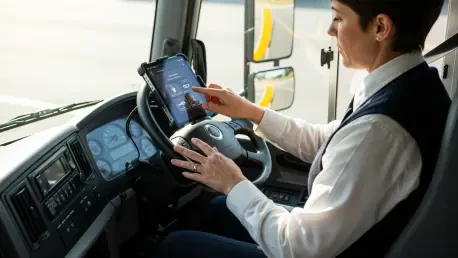
The role of the school bus driver is being fundamentally reshaped by technology, evolving from that of a simple vehicle operator to a proactive agent of student safety. The introduction of digital student incident reporting systems in 2025 provided drivers with a powerful tool to document and address safety concerns in real time. Previously, reporting an issue often involved filling out a paper form at the end of a long shift, a process that was often cumbersome and led to delays. Now, drivers can use a web-enabled device to quickly document events as they happen. Features such as QR codes provide instant access to the reporting interface, while integrated student search functions allow for the quick and accurate identification of individuals involved. Furthermore, the ability to request video footage corresponding to the time of an incident adds a layer of objective evidence that was previously unavailable. This digital system ensures that reports are immediately routed to the appropriate school administrators, creating an electronic record that facilitates swift and collaborative intervention.
A Unified Platform for Comprehensive Oversight
The integration of various digital tools into a single, cohesive platform provides school administrators with an unprecedented level of oversight and control over their transportation operations. By centralizing transportation forms and student incident reports, these systems create a comprehensive data repository that can be accessed from any authorized web-enabled device. This accessibility empowers administrators to manage their departments with greater flexibility and responsiveness. For instance, they can review and approve parental requests for route adjustments while away from their desks or analyze incident reports to identify recurring safety issues on specific routes or buses. This aggregation of data transforms administrative work from a reactive, case-by-case process into a proactive, data-driven strategy. By analyzing trends in incident reports or request volumes, districts can make more informed decisions about routing, driver training, and student management policies, ultimately leading to a safer and more efficient transportation system for everyone.
The Evolved Landscape of Student Transit
The integration of these sophisticated technologies has permanently altered the landscape of pupil transportation. What was once a field dominated by manual processes and fragmented communication has evolved into a highly connected and data-centric operation. The shift to secure, cloud-based platforms effectively closed longstanding loopholes in student data security and operational accountability. Digital tools empowered drivers and administrators, transforming their roles and enabling a more proactive approach to safety management. This technological modernization was not merely an upgrade of existing tools; it represented a fundamental rethinking of how to best ensure the safety and security of millions of students during their daily commute. The result was a more transparent, efficient, and secure system that has set a new standard for school districts across the nation.