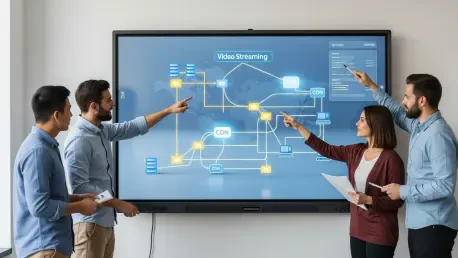

Launching a successful video streaming service requires more than just compelling content; it demands a flawlessly engineered application that can captivate audiences in a market saturated with high-caliber competitors. The digital landscape is littered with platforms that failed not due to a lack of vision, but because of a poor choice in their foundational development partner. The path from a brilliant concept to a dominant streaming platform is paved with complex technical decisions, making the selection of an engineering team one of the most critical investments a business will ever make. This review is designed to cut through the noise, providing a clear and comprehensive analysis of leading development firms to help businesses identify a partner capable of turning ambitious streaming goals into a market reality.
Objective: Identifying the Ideal Partner for a Competitive Market
The primary objective of this review is to equip businesses with the insights needed to navigate the intricate process of selecting a development partner for a video streaming application. In the rapidly expanding streaming industry, the right technical partnership is not merely a vendor relationship but a strategic alliance crucial for achieving sustainable success, maximizing user engagement, and securing a strong return on investment. A misstep in this decision can lead to scalable nightmares, security vulnerabilities, and a user experience that drives audiences away, while the ideal partner acts as a force multiplier, ensuring the final product is robust, secure, and ready to compete on a global stage.
This analysis moves beyond surface-level comparisons to delve into the core competencies that define a premier video streaming development firm. It evaluates potential partners on their ability to handle the unique challenges of video delivery, from building resilient, scalable architectures to implementing sophisticated content protection and monetization strategies. By understanding how each company approaches these critical pillars of streaming technology, decision-makers can align a partner’s specific strengths with their own business objectives, budget constraints, and long-term vision. Ultimately, this review serves as a strategic guide for forging a partnership that not only delivers a product but also fosters innovation and growth in the booming streaming ecosystem.
Overview: Leading Video Streaming App Development Companies
This review examines a curated selection of top-tier development companies, each with a distinct approach and specialization in the video streaming domain. These firms have been chosen based on their industry reputation, technical expertise, and proven track record in delivering high-performance media applications. From nimble startups to enterprise-grade solutions, the companies under review represent a broad spectrum of capabilities tailored to different business needs and project scopes, offering a comprehensive look at the current development landscape.
Leading the pack is JPLoft, a top-rated provider renowned for its rapid deployment capabilities using technologies like WebRTC and AWS media services. In contrast, Oxagile positions itself as a specialist in high-end video streaming, Adtech, and real-time communication, focusing on enterprise-grade platforms that demand exceptional performance and reliability. Belitsoft enters the field as a versatile IT software company offering staff augmentation and outsourced development, with a notable focus on crafting custom media solutions. Rounding out the initial contenders are Softeq, a full-stack engineering firm with deep expertise in embedded systems and AI for complex video projects; Fingent, an award-winning company known for building custom OTT platforms enhanced with AI and AR/VR solutions; and Jafton, a New York-based firm that brings a user-centric design philosophy to its AI-powered mobile and web applications.
Performance Evaluation: Criteria for Selecting a Development Partner
To provide a fair and thorough assessment, each company was evaluated against a set of critical performance criteria that are indispensable for the creation of a successful streaming service. These benchmarks are designed to measure not just technical proficiency but also strategic insight and long-term reliability. The first and most crucial criterion is Proven Experience with Streaming. A verifiable track record with real-world OTT, VOD, or live streaming projects is non-negotiable, as it demonstrates a firm’s ability to navigate the unique challenges of video content delivery, from ingest and transcoding to distribution and playback. This experience provides an assurance that the partner understands the nuances of the industry beyond generic app development.
Beyond past projects, the evaluation dives deep into the Technical Stack and Architectural Scalability. A partner’s expertise in modern video protocols, cloud infrastructure like AWS or Google Cloud, and content delivery networks (CDNs) is paramount. Their ability to design a scalable architecture that can handle sudden traffic spikes while remaining cost-efficient is a key indicator of future success. Equally important is Security and Content Protection, where experience with Digital Rights Management (DRM), secure APIs, robust payment gateways, and adherence to data privacy standards is essential to protect both content and user data. Furthermore, Monetization Model Expertise was scrutinized, assessing each company’s ability to implement diverse revenue models such as subscriptions (SVOD), advertising (AVOD), and pay-per-view (TVOD). A partner must not only build these features but also understand how to optimize them for maximum revenue. Finally, the evaluation considered UI/UX Design for Video Consumption and Post-Launch Support and Maintenance, as an intuitive user interface and reliable ongoing support are critical for user retention and long-term platform stability.
Comparative Breakdown: Advantages and Disadvantages
A balanced analysis of each company reveals distinct strengths and weaknesses, making certain firms better suited for specific project types. JPLoft, for instance, shines with its strong experience in scalable architectures and end-to-end support, making it an excellent choice for businesses looking for a comprehensive partner with deep monetization expertise. Its primary drawback, however, is a limited exposure to the complex world of large broadcast licensing, which positions it as a less ideal candidate for established global media networks requiring intricate rights management. In contrast, Oxagile brings deep expertise in enterprise-grade OTT and VOD platforms, consistently delivering scalable architectures for multi-platform delivery. This high-end focus comes at a price, as their services command a higher cost and often involve longer timelines, making them less suitable for early-stage startups needing a quick and budget-conscious MVP.
Belitsoft offers a flexible development model and solid experience in custom media solutions, backed by strong backend capabilities that appeal to clients needing robust integration. However, it is not a dedicated specialist in high-scale OTT, and its project timelines can sometimes fluctuate with changing requirements. Softeq stands out for its formidable engineering talent across embedded systems, mobile, and the cloud, making it a powerhouse for projects involving custom hardware or complex media workflows. This specialized expertise comes with higher engineering rates, and its focus is not exclusively on OTT, which may be a consideration for clients seeking a niche provider. Similarly, Fingent demonstrates solid experience in custom OTT development and cross-platform delivery but is less specialized in broadcast-grade solutions and carries premium pricing for its custom builds. Finally, Jafton offers a strong user-centric design approach and the advantage of US-based communication, making it a great partner for startups. Its smaller team size, however, may limit its capacity for exceptionally large enterprise-level projects.
Summary and Final Assessment
The review of these leading development companies reveals a diverse and highly specialized market where the “best” partner is entirely dependent on a project’s specific needs. There is no one-size-fits-all solution; instead, businesses must match their goals for scale, complexity, budget, and user experience with a firm whose core strengths align with those priorities. For instance, companies like Oxagile and Softeq are clear front-runners for enterprise-level projects that demand deep, specialized engineering and can accommodate higher costs and longer development cycles. Their expertise in building robust, scalable, and secure platforms is ideal for established media players or corporations entering the streaming space.
On the other hand, JPLoft and Jafton present compelling options for startups and mid-sized businesses that prioritize speed to market, user-centric design, and agile development processes. Their ability to deliver feature-rich applications with strong monetization support makes them attractive partners for ventures aiming to carve out a niche in the competitive streaming landscape. Meanwhile, firms like Belitsoft and Fingent occupy a middle ground, offering a blend of custom development capabilities and flexible engagement models that can cater to a wide range of projects. The final assessment underscores the importance of looking beyond a company’s portfolio and evaluating its architectural philosophy, security protocols, and approach to long-term maintenance, as these factors ultimately determine a platform’s viability and success.
Concluding: Recommendations and Strategic Advice
The process of selecting a video streaming app development company concluded with a clear understanding that the decision must be a strategic one, rooted in a thorough self-assessment of business goals. The ideal partnership was never about finding the firm with the longest client list, but about identifying the team whose technical expertise, development methodology, and business acumen were most aligned with the project’s unique vision. Businesses were best served by first defining their core requirements, including target audience, desired monetization models, scalability expectations, and content security needs. With this blueprint in hand, they could approach potential partners with precise questions.
Ultimately, the most successful collaborations were forged through a multi-step verification process. This began with a deep dive into a company’s case studies, specifically seeking out projects with similar technical challenges. It was followed by direct conversations with their engineering leads to gauge their understanding of video-specific technologies like transcoding, adaptive bitrate streaming, and DRM integration. Requesting a detailed architectural proposal and a transparent roadmap provided critical insight into their strategic thinking and project management capabilities. By prioritizing this due diligence, businesses moved beyond marketing promises and made an informed choice that laid a resilient foundation for long-term growth and success in the highly competitive video streaming arena.