
The line between a disposable mobile application and an indispensable corporate asset is now defined less by its surface-level features and more by the invisible engineering rigor that underpins its existence. In today’s digital-first landscape, organizations are realizing that a mobile app is not merely another marketing channel or a convenient tool; it is a direct conduit to customers, a vital node in the operational nervous system, and a powerful engine for competitive differentiation. The conversation has shifted from “Do we need an app?” to “How do we build an app that becomes a cornerstone of our long-term strategy?” This report examines the paradigm shift from viewing apps as isolated projects to recognizing them as integrated, enduring business assets that require a disciplined, engineering-focused methodology to build and sustain.
From Isolated Tools to Integrated Business Engines
The perception of mobile applications has undergone a profound transformation. Initially seen as standalone novelties or extensions of a website, they have matured into central hubs of digital interaction and operational command. This evolution reflects a broader trend in which mobile devices are the primary touchpoint for a vast spectrum of activities, from customer-facing transactions to internal workflow management. Consequently, an application’s value is no longer measured by its feature count but by its ability to seamlessly integrate into the larger digital infrastructure of an organization.
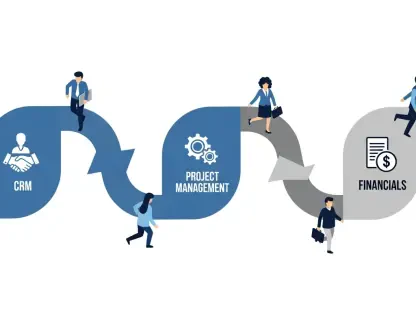
Modern strategic applications act as a cohesive front-end for complex ecosystems, connecting users to databases, customer relationship management platforms, and enterprise resource planning systems. This deep integration prevents the formation of data silos and ensures a consistent, unified experience across all organizational touchpoints. As such, the development process has necessarily become a multidisciplinary engineering practice, demanding a holistic approach that accounts for architectural soundness, long-term maintainability, and operational reliability from the very first line of code.
Decoding the Momentum Trends and Projections in Strategic App Development
The increasing emphasis on a structured, strategic approach to mobile development is not an arbitrary trend but a direct response to tangible market forces and performance indicators. As the mobile ecosystem matures, the distinction between a hastily developed application and a thoughtfully engineered strategic asset becomes starkly evident in user engagement, operational efficiency, and ultimately, financial return. This section delves into the consumer expectations and technological advancements fueling this shift, alongside the market data that quantifies its value.
The Driving Forces Consumer Expectations and Technological Enablers
At the heart of this movement are escalating consumer expectations for flawless digital experiences. Users now demand applications that are not only intuitive and visually appealing but also fast, reliable, and deeply personalized. This requires a level of sophistication that goes far beyond the user interface. It necessitates seamless integration with back-end systems to pull real-time data, process transactions securely, and synchronize information across multiple platforms without friction. The days of a simple, static app are over; today’s users expect a dynamic and responsive digital partner.
This demand is met by powerful technological enablers. Advances in cloud computing provide the scalable infrastructure needed to support complex app functionalities, while more sophisticated API frameworks allow for more fluid and secure data exchange between the app and core business systems. Furthermore, the industry is moving toward building sustainable and adaptable systems through modular architecture. This practice separates an application’s core logic from its presentation layer, allowing for independent updates and easier feature expansion without destabilizing the entire product, ensuring it can evolve with both business needs and technological advancements.
Quantifying the Value Market Growth and Performance Metrics
The return on investment for strategically developed applications is clear and measurable. Market data consistently shows that apps built with a focus on architecture and user experience achieve significantly higher user retention rates. When an application performs reliably and integrates smoothly into a user’s daily life or workflow, it fosters loyalty and transforms casual users into brand advocates. This contrasts sharply with poorly constructed apps, which often suffer from high abandonment rates after a single negative experience.
From an enterprise perspective, the gains are equally compelling. Projections for the enterprise mobile solutions market show robust growth from 2026 to 2028, driven by the measurable operational efficiencies these tools deliver. A well-integrated internal application can automate workflows, reduce manual data entry errors, and provide employees with instant access to critical information, leading to substantial productivity improvements. By investing in a structured development process, organizations are not just building an app; they are engineering a more efficient, agile, and data-driven operational model.
Navigating the Complexities of a Mobile-First Ecosystem
Developing a true strategic asset involves navigating a landscape fraught with technical complexities. The sheer diversity of the mobile ecosystem presents one of the most significant hurdles. Developers must contend with a vast and ever-growing fragmentation of devices, screen sizes, and operating system versions across both iOS and Android platforms. An application that performs perfectly on a high-end flagship device may fail to function correctly on a budget model, making comprehensive testing and adaptive design non-negotiable requirements for success.
Beyond device compatibility, performance optimization under variable conditions is a critical challenge. Mobile users interact with applications in a multitude of environments, from stable Wi-Fi networks to areas with spotty cellular coverage. A strategic application must be engineered to handle these fluctuations gracefully, managing data synchronization, offline capabilities, and resource consumption efficiently. This requires a deep understanding of platform-specific limitations, such as background processing rules and power management protocols, to ensure the application remains responsive and reliable no matter the circumstance. The architectural challenge, therefore, is to build a system that is both powerful and resilient.
The Governance Gauntlet Compliance Security and Data Privacy Mandates
In an environment where mobile applications frequently handle sensitive personal and corporate data, the regulatory and security landscape has become a primary consideration in development. Adherence to platform-specific policies from Apple and Google is merely the starting point. These guidelines, which govern everything from data handling to in-app purchases, are continuously updated and require diligent monitoring to ensure an application remains compliant and available on the app stores. Failure to comply can result in removal from these critical distribution channels, effectively cutting off an application from its user base.
Beyond platform rules, robust data governance protocols are essential for building trust and mitigating risk. This involves implementing stringent security measures as a core component of the application’s architecture, not as an afterthought. Practices such as end-to-end encryption for data in transit and at rest, secure authentication mechanisms, and strict access controls are fundamental. A strategic approach to development embeds these security principles from the project’s inception, ensuring that the application is designed to protect sensitive information and align with global data privacy regulations like GDPR, thereby safeguarding both the user and the organization.
Engineering for Tomorrow The Future of Strategic Mobile Applications
The future of mobile applications lies in their ability to evolve. A strategic asset is not a static product that is launched and forgotten; it is a living system that requires long-term lifecycle management. This forward-looking approach begins during the initial architectural design, where decisions are made to support future scalability and maintainability. By creating comprehensive documentation and adopting modular design principles, organizations ensure that the application can be updated and enhanced over time without incurring prohibitive technical debt or depending on the ad-hoc knowledge of the original development team.
Data analytics plays a pivotal role in guiding this evolution. By integrating analytics frameworks to capture anonymized user interaction data, organizations can gain actionable insights into how the application is being used in the real world. This feedback loop informs future development priorities, allowing teams to refine the user experience, optimize popular features, and strategically plan for new functionalities based on observed behavior rather than assumptions. This data-driven approach ensures that the application remains relevant, valuable, and closely aligned with the shifting needs of its users, cementing its status as a dynamic and enduring asset.
Forging Your Digital Cornerstone A Blueprint for Strategic Success
In review, the analysis confirmed that transforming a mobile app from a simple tool into a genuine strategic asset demanded a disciplined, engineering-focused methodology. The blueprint for success was found not in short-term feature sprints but in a foundational commitment to long-term value. The investigation revealed that organizations achieved this by prioritizing a robust and scalable architecture, which provided the structural integrity needed for future growth and adaptation. This focus on sound engineering principles proved essential for navigating the complex and fragmented mobile ecosystem.
Furthermore, the critical importance of embedding security and compliance into the development process from its inception was underscored. By treating data privacy and platform governance as core requirements rather than final checklist items, leading organizations built trust and ensured the longevity of their digital assets. Ultimately, the synthesis of findings pointed to a clear conclusion: a mobile application became a lasting digital cornerstone when its creation was guided by a holistic lifecycle plan, ensuring it was engineered not just for its initial launch but for its entire journey of evolution within an organization’s digital infrastructure.