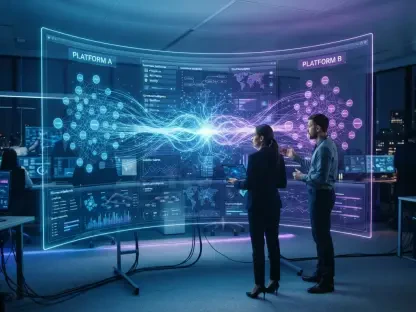

The absolute democratization of software engineering has reached a definitive tipping point where the ability to articulate business logic in plain language now outweighs the technical requirement of mastering legacy programming syntax. As we navigate the midpoint of this decade, the landscape of digital creation has been fundamentally rewritten by the convergence of generative artificial intelligence and sophisticated visual orchestration platforms. This evolution is not merely a shift in tools but a total redefinition of who qualifies as a developer and how software is conceptualized, prototyped, and scaled within global markets. The distinction between a business analyst with a vision and a software engineer with a compiler has blurred, creating a hybrid ecosystem where human intent serves as the primary source code.
The current state of the industry is characterized by the maturity of two distinct but increasingly intertwined technological trends. On one hand, traditional no-code platforms have integrated deep learning models to automate complex logic and database schema generation, effectively removing the limitations that previously restricted these tools to simple internal applications. On the other hand, a new breed of AI-native builders has emerged, capable of generating complete full-stack architectures from a single natural language prompt. These platforms do not just assist in writing code; they operate as autonomous agents that handle infrastructure, security protocols, and front-end design, allowing creators to focus entirely on user experience and business value.
The scope of this transformation extends far beyond the startup ecosystem, influencing how the largest enterprises approach digital agility. Major technology players and industry leaders have moved past the experimental phase, integrating these builders into their core operational frameworks to combat the perennial backlog of IT requests. Regulatory bodies have also begun to keep pace, establishing frameworks that ensure the security and explainability of AI-generated software. As a result, the market for application development in 2026 is no longer a battle between manual coding and visual building, but a unified front of augmented development that prioritizes speed, accessibility, and iterative precision.
The Convergence of Vision and Execution in Modern Software Engineering
The software engineering profession has undergone a structural realignment where the primary value proposition has shifted from the execution of code to the orchestration of logic. Historically, bringing a digital product to life required a series of handoffs between those who understood the business problem and those who understood machine instructions. However, current development standards eliminate this translation layer, allowing a product’s vision to be directly manifested as a functional application. This convergence is driven by the realization that modern large language models have become sufficiently proficient at handling the boilerplate and structural requirements of software, leaving higher-order creative and strategic decisions to the human builder.
This realignment has profound implications for the global talent market and the internal structure of corporate departments. Organizations are increasingly looking for architects who possess a deep understanding of systems thinking and user psychology rather than specific proficiency in a fleeting framework. The ability to prompt an AI-native builder effectively, manage complex data relationships visually, and ensure a cohesive user journey has become the most sought-after skill set. Consequently, the barriers to entry that once protected the engineering guild have been replaced by a more meritocratic landscape where the quality of the idea and the clarity of its articulation determine the success of a digital venture.
Furthermore, the technological influence of this convergence is visible in the architecture of modern tools, as we move away from the rigid, modular components of early no-code builders toward fluid, generative interfaces that adapt to specific project needs. Instead of fitting a business process into a predefined template, modern builders allow the process to define the tool. This fluidity is supported by a robust infrastructure of microservices and serverless backends that are automatically provisioned by the building platform, ensuring that even applications created by non-technical users possess the scalability and resilience required for production environments in 2026.
The Transformation of the Development Ecosystem
Emerging Technological Frontiers and Builder Behaviors
The current technological frontier is dominated by the rise of prompt-to-app generators that have effectively solved the problem of the blank canvas. Platforms like Lovable and Bolt.new have demonstrated that the path from a conceptual description to a live React application can be measured in minutes rather than months. These tools leverage browser-based runtimes and autonomous agents to build, test, and deploy applications without requiring the user to touch a command line. This behavior marks a significant shift in how builders interact with software; they are no longer just building apps but are supervising the growth of a digital asset through iterative dialogue with an intelligent system.
In contrast to the rapid-fire generation of MVPs, we are also witnessing the evolution of visual builders like Bubble and FlutterFlow into comprehensive enterprise ecosystems. These platforms have moved beyond simple drag-and-drop interfaces to offer deep logical complexity, allowing for the creation of intricate B2B SaaS platforms and high-performance mobile applications. The behavior of builders on these platforms has become increasingly sophisticated, with a heavy emphasis on data modeling and API orchestration. Builders now act as system integrators, weaving together various specialized services—such as authentication from one provider, database management from another, and AI processing from a third—into a seamless user experience.
The rise of autonomous AI agents within the development environment has fundamentally changed the testing and maintenance lifecycle. Instead of manual quality assurance cycles, modern development environments utilize agents that can simulate thousands of user interactions and self-correct errors in the codebase before a human even notices a bug. This shift has led to a builder mindset characterized by rapid experimentation and a high tolerance for risk. Since the cost of making a change and the time required to roll it back have both plummeted, the development cycle has become a continuous loop of deployment and refinement, leading to software that is more responsive to real-world user feedback than ever before.
Quantifying the Shift: Market Data and Projections
The economic impact of this transition is reflected in the staggering growth of the AI-native and no-code sectors, with the combined market valuation reaching unprecedented heights as we enter the second half of the decade. Data from 2026 suggests that the global market for low-code and no-code technologies is expanding at a compound annual growth rate that significantly outpaces traditional software services. Projections indicate that from 2026 to 2029, the industry will see a continued surge in investment, driven by the massive adoption of AI-augmented tools across the healthcare, finance, and logistics sectors. This growth is evident not just in the tools themselves but also in the volume of applications being produced, with the number of new digital products launched annually increasing tenfold.
Key performance indicators show that the time-to-market for early-stage startups using AI-native builders has decreased by nearly eighty percent compared to traditional methods used just five years ago. This efficiency gain has a direct correlation with the reduction in seed-stage capital requirements, as founders can now reach product-market fit with a fraction of the previous engineering spend. Furthermore, within the enterprise sector, the adoption of citizen-developer programs has led to a sixty percent reduction in internal IT backlogs. Organizations that have successfully implemented governance frameworks for these tools report a significant increase in operational agility, as business units can now build their own solutions for local problems without straining centralized resources.
Looking toward 2027 and 2028, the forecast for the labor market remains dynamic, with a projected forty percent increase in roles that require proficiency in AI-assisted development platforms. While some feared that automation would lead to a decrease in engineering demand, the reality in 2026 shows a massive expansion of the total addressable market for software. More companies than ever are becoming software companies, leading to a net increase in the need for individuals who can manage the intersection of human strategy and machine execution. Data suggests that the value of human-in-the-loop development remains paramount, even as machines take over the labor-intensive aspects of coding.
Navigating the Technical and Structural Hurdles
Despite rapid technical advances, the industry continues to face significant hurdles, particularly regarding the reliability and explainability of AI-generated logic. While prompt-to-app generators can produce visually stunning interfaces almost instantly, the underlying business logic can sometimes contain subtle errors or hallucinations that are difficult to detect without a thorough technical audit. This challenge necessitates a new category of debugging tools designed specifically for non-technical users, which can visually map out the flow of an AI-generated program and highlight potential logical inconsistencies. The industry is currently in a race to develop these observability layers to ensure that the speed of creation does not come at the cost of operational integrity.
Structural hurdles also exist in the form of vendor lock-in and application portability, as many of the most powerful no-code platforms operate as closed ecosystems. This makes it difficult for businesses to migrate their applications or data to different providers if pricing or service levels change. This has led to a growing demand for platforms that offer full code exports or generate standards-based codebases like React or Flutter. Developers are increasingly weighing the immediate speed of a walled garden against the long-term flexibility of an open-source or exportable architecture. Addressing this tension requires a strategic approach to platform selection, where the lifecycle of the application is considered from the very first prompt.
Moreover, the integration of legacy systems remains a persistent obstacle for large-scale adoption within established enterprises. Modern AI-native builders are designed for the greenfield development of cloud-native applications, but they often struggle when forced to interact with thirty-year-old mainframe databases or siloed on-premises software. The bridge between the cutting edge of 2026 and the technical debt of the past is being built through sophisticated API connectors and middleware layers, but the process remains complex and labor-intensive. Overcoming this hurdle requires a concerted effort from both tool providers and enterprise IT departments to create standardized interfaces that allow modern generative tools to securely access and manipulate legacy data.
The Regulatory Framework and Governance Mandates
The regulatory landscape in 2026 has become much more defined as governments around the world have recognized the strategic importance of AI-driven development. Significant laws have been enacted to address the unique challenges of software essentially written by machines, with a heavy focus on accountability and intellectual property. Current standards require that any AI-generated application used in a public or regulated capacity must have a clear audit trail, documenting the prompts used and the specific models involved in the creation process. This level of transparency is intended to prevent the proliferation of black-box software in critical sectors like banking and public infrastructure.
Compliance and security measures have also been elevated to meet the threats of a more automated world, as the ability to generate applications at scale comes with the risk of generating vulnerabilities at scale, prompting the introduction of mandatory security scanning for all AI-generated code. Security protocols like SOC 2 and HIPAA have been updated to include specific provisions for citizen-developed applications, ensuring that even a simple internal tool meets the same data privacy standards as a professionally engineered system. These mandates have forced platform providers to bake security directly into the generation process, creating an environment where compliance is a default state rather than an afterthought.
Furthermore, the role of governance within the organization has shifted from a restrictive gatekeeper to a supportive facilitator. IT departments in 2026 have established centers of excellence that provide approved templates, secure data sandboxes, and training for business units. This approach allows for the democratization of development while maintaining centralized control over data and the digital footprint of the company. The impact of these practices has been a significant reduction in shadow IT, as employees no longer feel the need to bypass official channels to get the tools they need to do their jobs. By providing a safe and sanctioned path for development, organizations have turned a potential security liability into a massive engine for internal innovation.
The Horizon of Innovation and Future Market Disruptors
Looking forward, the next wave of innovation is expected to move beyond the generation of static applications toward the creation of self-evolving software systems. These systems will not just be built once; they will continuously monitor their own performance and user interactions, suggesting and implementing improvements in real time. This concept of autonomous maintenance will disrupt the traditional software life cycle, reducing the need for manual updates and allowing applications to adapt to changing market conditions or user preferences almost instantly. The development of these self-healing architectures represents the next major frontier for AI-native platforms as we approach the late 2020s.
Another potential market disruptor is the integration of spatial computing and augmented reality into the no-code development workflow. As hardware for immersive experiences becomes more ubiquitous, the demand for three-dimensional applications will skyrocket. Modern builders are already beginning to incorporate spatial design engines that allow users to create complex AR and VR environments using the same natural language and visual logic they currently use for web and mobile apps. This expansion of the medium will open up entirely new categories of software in education, manufacturing, and remote collaboration, further broadening the scope of what can be achieved without traditional coding.
The influence of global economic conditions and environmental sustainability will also play a role in shaping the future of the industry. There is a growing focus on green software engineering, where AI models are optimized to generate code that is not only functional but also energy-efficient. As the carbon footprint of data centers becomes a major regulatory concern, the ability of a developer to produce lightweight, efficient applications will become a key competitive advantage. This shift toward sustainable development, combined with the continued democratization of technical skills, suggests an industry that is becoming more responsible and inclusive even as it becomes more powerful and automated.
Strategic Synthesis and the Path Forward
The analysis of the industry in 2026 indicated that the transition from manual coding to augmented creation had largely concluded, leaving a more efficient and accessible landscape for digital innovation. The findings demonstrated that the successful adoption of these technologies was not merely a matter of selecting the right tool but of implementing a comprehensive strategy that balanced speed with governance. Organizations that embraced the hybrid model—combining the creative vision of business users with the technical oversight of professional architects—achieved the most significant gains in productivity and market responsiveness. This synthesis proved that the future of development lay in the collaboration between human intelligence and machine capability rather than the replacement of one by the other.
Decision-makers realized that the path forward required a renewed investment in human capital, specifically in the areas of logical reasoning and systems design. While machines took over the burden of syntax, the demand for individuals who could conceptualize complex workflows and understand user needs reached an all-time high. The industry shifted its focus toward creating environments where experimentation was encouraged and the cost of failure was minimized, leading to a culture of continuous improvement. This cultural shift was as important as the technological advancements themselves, as it allowed for a more diverse range of voices to participate in the creation of the digital world.
Looking ahead, the prospects for the industry remain incredibly strong, with potential areas for growth in specialized AI agents for niche industries and the continued refinement of cross-platform deployment. The strategic recommendation for those looking to invest or build in this space is to prioritize ownership and explainability, ensuring that the applications of tomorrow are not just fast to build but also secure and easy to maintain. The evolution of the past few years established a foundation for a new era of digital creativity, one where the only limit to what can be built is the clarity of the vision behind it. The industry matured into a state where software was no longer a barrier to be overcome, but a fluid medium through which human potential was expressed.
The strategic synthesis of 2026 data revealed a significant pivot toward autonomous development, as the industry demonstrated that initial skepticism regarding AI-generated software was largely overcome through robust governance frameworks and maturing builder platforms. The most successful ventures were those that treated these new tools as core strategic assets rather than tactical shortcuts. This era marked a definitive departure from the belief that software engineering was an exclusive domain, opening doors for a global workforce of creators to build the next generation of the digital economy. The landscape transformed into a more democratic, efficient, and innovative ecosystem that served as a model for other sectors undergoing similar technological disruptions.
The findings also highlighted that the focus on interoperability became a primary driver for platform selection. As the industry moved through 2026, the demand for open standards and the ability to move logic across different environments grew, forcing many proprietary systems to offer better export options and API access. This shift ensured that the growth of the sector was not hampered by the limitations of any single provider, fostering a more resilient and competitive market. The realization that data and logic ownership was paramount for long-term stability led to a more mature approach to digital architecture, where the speed of no-code was combined with the reliability of established engineering principles.
Ultimately, the report showed that the path to success in this new reality was defined by an organization’s ability to adapt its internal culture to the pace of AI-augmented development. The traditional, siloed approach to IT was replaced by a more integrated model where cross-functional teams worked together to build, iterate, and scale solutions in record time. This holistic transformation proved to be the true value of the AI-native and no-code movement, as it empowered every level of the organization to contribute to the digital roadmap. The industry entered the next phase of its growth with a clear understanding that while the tools would continue to evolve, the core principles of clear thinking, secure design, and user-centricity would remain the permanent pillars of software excellence.