
The sheer volume of machine-generated code flooding modern repositories has turned the once-steady stream of pull requests into a turbulent deluge that threatens to drown human engineering teams. As the industry navigates the current landscape of 2026, the primary hurdle in software development has fundamentally transitioned from the act of creation to the rigor of verification. While Large Language Models have effectively democratized high-speed code generation, they have inadvertently created a structural imbalance where the human reviewer is now the weakest link in the chain. Organizations that once struggled with a scarcity of features now find themselves paralyzed by a surplus of unvetted logic, leading to a critical need for automated governance that can match the pace of algorithmic production.
The current environment is defined by a shift from a deficit of code to an overwhelming surplus where the keyboard is no longer the bottleneck. In the era preceding the widespread adoption of AI agents, the time taken to write a function was often the longest part of the development lifecycle. Today, that dynamic has flipped, and the primary constraint on software delivery has migrated to the pull request queue. As engineering organizations adopt high-velocity AI tools, the necessity for a structured governance layer becomes the defining factor in maintaining system integrity. Without this layer, the acceleration of code production merely serves to accelerate the accumulation of technical debt, as human developers struggle to keep pace with machine-generated output.
The Shift From Code Production to Validation Velocity
The transition into this high-output era has forced a radical rethinking of what it means to build software. Previously, the focus was on the artisan-like quality of the individual developer, but the current paradigm treats code as a high-volume commodity that requires rigorous automated filtering. Engineering leaders are recognizing that shipping code at the speed of an AI agent is only valuable if the validation process can scale at a similar trajectory. This has led to the rise of validation velocity as the key performance indicator for elite dev-ops teams, replacing traditional metrics like lines of code or commit frequency.
As the industry matures, the focus has moved toward creating systems that act as intelligent filters rather than just creative assistants. The goal is no longer just to help a developer write a better loop; it is to ensure that the thousand loops generated by a background agent every hour adhere to the specific security, performance, and architectural standards of the enterprise. This shift represents a move from individual productivity to organizational reliability. Engineering teams are currently building the infrastructure necessary to handle this review debt, recognizing that manual line-by-line inspection is a legacy process that cannot survive the sheer scale of modern machine-driven development.
Emerging Trends and Market Projections for Automated Governance
Navigating the Plateau of Model Intelligence and the Context Gap
Current industry data suggests that while generative AI models are becoming more sophisticated, their ability to perform high-quality code reviews has hit a notable plateau. This trend highlights a significant context gap where general-purpose models lack the specific tribal knowledge, architectural nuances, and historical failure modes of a particular organization. When an AI reviews code without knowing that a specific legacy database has a connection limit or that a certain naming convention is mandatory for internal compliance, it provides generic feedback that offers little value to senior engineers. This limitation has catalyzed the movement toward systems that prioritize organizational context over raw reasoning power.
The market is shifting toward a concept known as Artificial Wisdom, where systems are not just intelligent in a general sense but are deeply informed by an organization’s unique history and standards. These systems are powered by Context Lakes, which are centralized repositories containing everything from past incident reports to internal documentation and architectural decision records. By feeding this specific knowledge into the governance layer, companies are bridging the gap between a general-purpose AI and a specialist reviewer. This allows the AI to provide feedback that feels as if it came from a senior engineer who has been with the company for a decade, effectively solving the problem of generic, low-impact automated suggestions.
Growth Forecasts for the AI Governance and Verification Market
As organizations hit the metaphorical review wall, investments are pivoting away from simple code assistants and toward sophisticated verification and governance infrastructure. Market indicators suggest a rapid expansion in tools that offer semantic auto-approval, which goes beyond simple syntax checking to understand the intent and impact of a change. Forecasts for the period from 2026 to 2028 point toward a future where zero outage environments become the benchmark for success. This growth is driven by the realization that the cost of a single AI-generated bug reaching production far outweighs the cost of implementing a robust, automated governance framework.
This pivot is creating a new category of engineering software focused on graph-based analysis and automated gatekeeping. These tools are designed to maintain a 24/7 memory of every organizational standard, effectively eliminating high-severity bugs before they ever reach a production environment. By 2027, the market for AI governance is expected to rival the market for code generation itself, as companies realize that speed without safety is a liability. The focus is increasingly on the reliability of the output rather than the volume of the throughput, leading to a surge in demand for platforms that can provide a verifiable trail of logic for every automated approval or rejection.
Overcoming the Structural Obstacles of Human Review
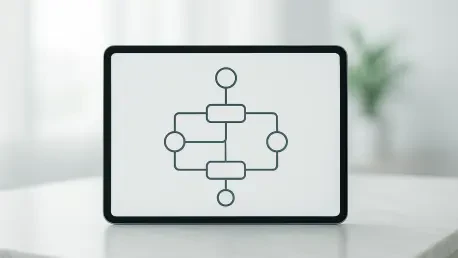
The primary challenge facing modern dev-ops is the limited cognitive bandwidth of senior engineers who now face an explosion of machine-generated pull requests. Relying solely on human oversight creates a dangerous choice: companies must either sacrifice speed for safety or sacrifice safety for speed. This structural bottleneck is not just a matter of time but of focus, as senior developers are pulled away from high-level architectural work to perform repetitive validation tasks. Strategies to overcome this involve redefining the code review into two distinct streams: automated technical validation and human-centric architectural alignment.
By offloading the technical gatekeeping to an informed AI governance layer, humans can focus their limited time on mentorship and high-level design choices. This approach breaks the linear bottleneck of manual line-by-line inspection, allowing the governance system to handle the eighty percent of reviews that are standard or low-risk. The remaining twenty percent, which involve complex architectural decisions or cultural shifts, are then elevated to human experts. This division of labor ensures that humans remain in the loop where they provide the most value, while the automated systems handle the high-volume validation required in a machine-driven ecosystem.
The Regulatory and Compliance Landscape for AI-Generated Code
As AI begins to both write and review its own output, the regulatory landscape is evolving to demand greater transparency and accountability. Governments and industry bodies are moving toward requiring auditable interfaces, where AI-driven approvals must be backed by a clear trail of logic linked to documented standards. Compliance is no longer just about following a static checklist; it now involves bidirectional codification. This means ensuring that the rules applied by AI agents are the same ones understood and updated by human stakeholders, creating a synchronized system of governance that leaves no room for the black box effect.
This evolution in compliance ensures that even as automation scales, the responsibility for system integrity remains clear. Modern governance frameworks are being designed to provide a transparent record of why a specific piece of code was allowed to pass through the system. If an incident occurs, the governance layer can be queried to understand which rule was misinterpreted or where the context lake was lacking. This shift from manual compliance to automated, auditable governance is essential for highly regulated industries such as finance and healthcare, where the stakes of a software failure are exceptionally high and the demand for accountability is non-negotiable.
The Future of Engineering: Toward the Software Graph and Beyond
Transitioning From Linear Diffs to Multi-Repository Analysis
The future of code governance lies in moving beyond the analysis of individual diffs to a holistic Software Graph perspective. In this model, the governance layer analyzes the entire ecosystem as a web of interconnected nodes and contracts rather than isolated files. This represents a major leap in innovation, allowing for cross-repository integration checks that ensure the health of the entire system. A change in a single microservice might look perfectly safe in isolation, but a graph-based AI can identify how that change will disrupt a downstream contract in a completely different repository, catching errors that a human reviewer would likely miss.
This global view allows organizations to move away from the fragmented nature of modern development where teams often work in silos. By using AI to maintain a constant, up-to-date map of the entire software graph, companies can achieve a level of systemic stability that was previously impossible. This transition enables a more proactive form of governance where potential disruptions are identified during the coding phase rather than during the deployment phase. The focus shifts from checking if the code is correct in its own right to checking if the code is a healthy addition to the broader biological organism of the company’s software.
Milestones for 2026 and the Evolution of the Developer Role
As the industry moves through the current year, the developer’s role is evolving from a writer of code to a curator of context and a governor of automated systems. By the end of 2026, the industry is expected to reach a milestone where human review is no longer mandatory for standard changes but remains an oversight function for exceptions. This evolution is fueled by global economic pressures for efficiency and the continuous maturation of AI governance tools. Developers are spending more time defining the rules and standards in the context lake and less time manually inspecting syntax or logic flows.
This shift does not diminish the importance of the developer but rather elevates it to a more strategic level. The modern engineer is responsible for the health of the automated systems that generate and verify code, acting as the ultimate authority on what constitutes high-quality software. This transformation is redefining software quality as a function of governed automation rather than manual labor. As we progress toward 2027, the standard for engineering excellence will be measured by the robustness of the governance framework a developer maintains rather than the number of pull requests they personally close.
Building the Middle Path of Artificial Wisdom
The investigation determined that the path forward necessitated a shift away from binary choices between total automation and manual oversight. Stakeholders identified that the adoption of a 100-PR threshold provided a measurable benchmark for earning trust in automated systems, allowing teams to transition toward semantic auto-approval only after a period of rigorous data-driven verification. The findings indicated that the most successful organizations were those that treated their tribal knowledge as a primary asset, codifying it into a centralized context engine that informed every agent in the ecosystem. This approach allowed for a sustainable balance of velocity and safety, ensuring that the explosion of AI-generated code did not result in a collapse of system reliability.
The research also highlighted that the move toward a graph-based understanding of software was no longer a luxury but a requirement for managing modern complexity. By analyzing the interconnectedness of microservices and repositories, engineering leaders were able to mitigate the risks associated with rapid, decentralized development. Actionable steps for the future involved the aggressive codification of internal standards and the implementation of auditable logic trails for all AI interactions. Ultimately, the industry moved toward a model where the developer functioned as a high-level architect and curator, overseeing a governance infrastructure that provided the wisdom necessary to manage the raw power of artificial intelligence.