
In an era where a single coding challenge can determine the trajectory of a software engineer’s entire career, the emergence of AI-driven tools designed to operate unseen during live interviews marks a significant shift in the hiring landscape. The intense, high-pressure environment of technical assessments has created a demand for solutions that can level the playing field, and one company is positioning itself at the forefront of this movement. Interview Coder has officially launched version 2.0 of its desktop assistant, an AI tool engineered to provide discreet, real-time support to candidates navigating complex coding problems during live, screen-shared interviews.
This launch raises important questions about the evolving nature of technical recruitment. As AI becomes more integrated into professional workflows, tools that offer on-the-fly assistance challenge traditional methods of evaluating a candidate’s raw skill. The core premise of Interview Coder 2.0 is to act as an invisible co-pilot, minimizing performance anxiety and allowing engineers to demonstrate their problem-solving capabilities more effectively, albeit with a digital partner working silently in the background.
The High Stakes World of Technical Interviews and the Rise of AI Co Pilots
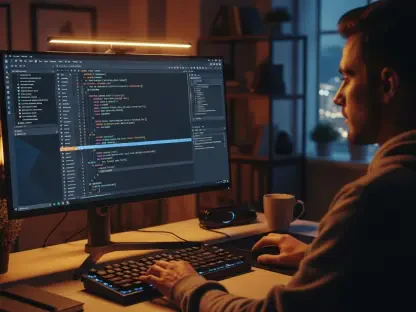
The modern technical interview is often criticized as a high-stress performance that may not accurately reflect a developer’s day-to-day abilities. Candidates are expected to solve complex algorithmic problems under tight time constraints, often while being observed by multiple interviewers. This pressure can lead to simple mistakes and mental blocks, even for highly skilled engineers, creating a gap between their actual competence and their performance in an artificial assessment environment.
In response to these challenges, a new category of AI-powered assistants has emerged, aiming to bridge this performance gap. These tools are not just code completion utilities but sophisticated co-pilots designed to understand the context of an interview and provide relevant support. The introduction of platforms like Interview Coder suggests a growing market for solutions that help candidates manage the pressures of live coding and present their best work, fundamentally altering the dynamics of the traditional technical evaluation process.
Unpacking Interview Coder 2.0 A Look Under the Hood
The central design pillar of Interview Coder 2.0 is its emphasis on discretion. The platform includes a suite of over 20 specialized tools engineered to operate without detection during screen-sharing sessions. Features such as invisible user interface overlays and full click-through functionality allow the user to interact with the AI assistant directly over their coding environment without leaving any visual trace. The application further ensures its stealth by maintaining a hidden taskbar presence, making it virtually undiscoverable to an observer.
A significant technological leap in this version is the integration of live audio transcription. This feature enables the AI to process an interviewer’s spoken questions and instructions in real time, providing it with crucial context. By understanding the verbal nuances of the interview, the system can generate more accurate and relevant suggestions, from clarifying problem statements to structuring a more coherent response. This moves the assistant beyond simple code generation toward becoming a more comprehensive interview partner.
At its core, the platform continues to deliver robust AI assistance for complex coding challenges. It provides real-time feedback on a user’s logic, helps formulate clear explanations for their code, and offers debugging support to quickly identify and resolve errors. This combination of stealth technology, contextual understanding, and powerful AI support is designed to give candidates a decisive edge during high-stakes interviews.
Gauging the Impact User Adoption and Success Metrics
The platform has already achieved a significant global footprint, with a reported user base of over 97,000 individuals. This widespread adoption indicates a strong demand among software engineers for tools that can help them navigate the rigorous and often intimidating technical interview process. The global reach of the user base highlights that the pressures of technical hiring are a universal challenge within the industry.
To quantify the tool’s effectiveness, the company points to internal data from 2025, which shows that 41,000 users reported receiving one or more job offers after utilizing the assistant. While self-reported, this metric suggests a strong correlation between the use of the tool and successful interview outcomes. It positions the platform not merely as a technical utility but as a strategic asset in a candidate’s job search, directly impacting career progression.
Accessing the Assistant Platform Availability and Trial Options
To ensure broad accessibility, Interview Coder 2.0 is offered with cross-platform compatibility. The desktop application is available for both Windows and macOS, covering the two dominant operating systems used by software developers. This dual-platform support removes a significant barrier to entry and allows a larger segment of the target audience to integrate the tool into their existing workflows without needing to alter their preferred development environment.
For prospective users who wish to evaluate the software’s capabilities before making a purchase, the company provides a free trial version. This trial offers a glimpse into the core functionalities of the AI assistant, allowing candidates to experience its interface and basic support features. However, it is important to note that the trial is functionally limited, with the full suite of advanced stealth tools and comprehensive AI assistance reserved for those who purchase a full license.
The platform’s business model deviates from the common subscription-based standard. Instead, it offers a lifetime-access license for a one-time payment. This purchase includes all current features as well as all future updates and ongoing technical support. This approach frames the tool as a long-term investment in an individual’s career growth, appealing to candidates who anticipate navigating multiple job searches over time.
The release of Interview Coder 2.0 was a notable development in the intersection of artificial intelligence and professional hiring practices. It moved the concept of an AI interview assistant from a theoretical possibility to a tangible, commercially available product. This launch prompted a broader industry discussion about the ethics and efficacy of such tools, and it challenged companies to reconsider how they evaluated talent in an era of increasingly sophisticated digital assistance. The platform’s existence reflected a clear market need created by the pressures of the modern technical interview.