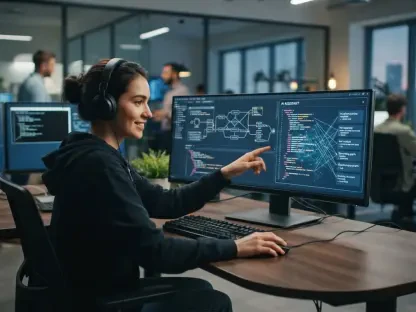
The global software development landscape is currently undergoing a fundamental transformation as artificial intelligence moves from the periphery of the workflow to its very core, signaling a future where human ingenuity and machine efficiency are inseparable. As of 2026, the AI code assistant

The financial burden of recurring software subscriptions has reached a tipping point for many professionals who are tired of paying for features they rarely use. As of 2026, the landscape of productivity software is shifting toward leaner, more efficient alternatives that prioritize local control
Windsurf introduces an agentic IDE alternative where the Cascade assistant manages a visible sequence of terminal commands and file edits known as a Flow. This shift toward agentic behavior represents a significant milestone in software engineering, where tools are no longer merely reactive
Data movement between High Bandwidth Memory and on-die registers often takes longer than the actual computation in standard PyTorch operations used for foundation models. Training and fine-tuning multi-billion parameter foundation models stand as some of the most resource-heavy tasks in the modern

Anaconda now hosts more than twenty-five hundred packages optimized for recent Python versions on Windows on Arm, including specialized builds for PyTorch and NVIDIA CUDA components. This milestone underscores a broader shift where the Windows on Arm platform has successfully graduated from a niche
The traditional software development lifecycle, once anchored by the physical limitations of human typing speed and manual coordination, has reached a point of absolute structural obsolescence. While the ability to generate syntax has accelerated, the underlying systems for moving that code from a