
Anand Naidu has spent the better part of two decades navigating the complex architecture of both frontend and backend systems, witnessing firsthand the shift from manual syntax debugging to high-level system orchestration. As AI tools become standard equipment in the modern developer’s toolkit, he has emerged as a leading voice on the intersection of machine-generated code and human accountability. He understands that while the speed of delivery has reached unprecedented levels, the true challenge lies in the “shadow” of that speed—the loss of institutional knowledge and the erosion of technical intent. His perspective is grounded in the reality that code is not just a set of instructions for a computer, but a liability or an asset that humans must eventually answer for during audits, security breaches, or scaling hurdles. By focusing on the “why” rather than just the “how,” he helps organizations bridge the gap between rapid implementation and long-term maintainability.
As AI handles more implementation details, human responsibility shifts toward defining intent and oversight. How do you see this transition impacting the daily routine of a senior developer who is used to being ‘in the weeds’ of the code?
The daily routine for a senior developer is moving away from the rhythmic clatter of keys typing out boilerplate and toward a more contemplative, architectural role. Historically, we spent hours translating complex business requirements into workable logic, but today, that translation is increasingly handled by an algorithm. This means the developer’s focus must sharpen on the “intent” of the software, ensuring that every function serves a documented purpose rather than just being a clever piece of generated logic. You might find yourself spending less time debugging syntax and far more time reviewing the logic of a machine’s suggestions to ensure they align with the broader system design. It is a shift from being a solo builder to becoming a master inspector who must vouch for every brick laid in the foundation.
When an engineer says ‘the model suggested it’ during a review, what are the hidden dangers for the long-term health of an enterprise application?
That phrase is a red flag that signals a breakdown in the chain of accountability and understanding. Research shows that approximately 27% of merged code is now AI-generated, and when we stop being able to explain the logic behind that 27%, we are essentially building a “black box” into our core business systems. If an auditor or a regulator comes knocking six months from now to ask why a specific financial calculation was handled a certain way, “the model suggested it” will not suffice as a legal or professional defense. This lack of ownership creates a “ghost in the machine” effect where code becomes impossible to maintain or refactor because no human actually understands the original reasoning. It eventually leads to software that cannot be trusted, and once trust is lost, the cost of fixing those hidden errors far outweighs any initial productivity gains.
You’ve advocated for moving from a ‘prompt-first’ model to ‘specification-driven’ development. What does that actually look like on the ground for a team trying to keep up with fast delivery cycles?
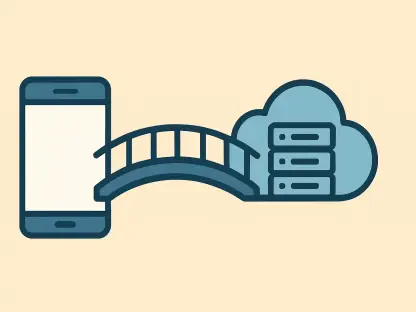
A prompt-first model is often chaotic; an engineer throws a request at an AI, tweaks the output until it looks right, and hits the commit button without a paper trail. In a specification-driven approach, we slow down just enough to document the intended outcome in a concise, clear specification before a single line of code is generated. This creates a bridge of traceability where the “why” is captured in a ticket or a document, and the “how” is the generated code that follows. On the ground, this looks like a more disciplined review process where the reviewer isn’t just checking if the code works, but validating that the implementation perfectly matches the pre-approved intent. It prevents the logic from living only in a chat window or a developer’s fleeting memory, ensuring the business logic remains accessible to the whole team.
Governance is often seen as a roadblock. How can a ‘defense-in-depth’ strategy actually speed up the development process rather than just adding more red tape?
Effective governance should be viewed as an engineered system designed to catch errors early, which actually reduces the massive time-wasting bottlenecks that occur when bugs reach production. By using a layered system—starting with local developer checks and moving through AI-assisted reviews and CI/CD pipeline gates—you create multiple safety nets that allow developers to move faster with confidence. When you have repository-level controls and clear generation policies, you spend less time second-guessing your tools and more time shipping features. It is about building a “fail-safe” environment where if one control fails, another is there to catch the issue before it becomes a catastrophic security or compliance breach. In the long run, this prevents the “stop-everything” moments that happen when an unvetted piece of AI code causes a system-wide failure.
Many companies focus on the volume of code produced, but you suggest that the ability to explain and defend code is the real differentiator. How does this shift the definition of ‘success’ for an engineering department?
We are entering an era where generating code is cheap and fast, so “success” can no longer be measured by the number of tickets closed or the lines of code committed. Instead, success is defined by the resilience and explainability of the software, as 51% of professional developers are now using these AI tools daily to accelerate their work. The real competitive advantage goes to the organization that can pass a security assessment or a regulatory audit in half the time because their “decision trail” is perfectly preserved. If you can explain every design choice and demonstrate compliance with a clear audit trail, you move through customer reviews and acquisitions much faster than a competitor who is drowning in “black box” code. Trust becomes the ultimate differentiator in a market where everyone is using the same underlying AI models to build their products.
If a team wants to gauge their AI maturity today, you mention a specific test involving a recent pull request. Why are these three questions so critical for identifying gaps?
The test is simple but brutal: you take a recent, business-critical pull request and ask what requirement it implements, where that is documented, and who confirmed the implementation matches the intent. These questions are critical because they immediately expose whether you have a robust system or just a collection of individuals using “magic” tools. If your team has to dig through old chat logs or rely on a specific person’s memory to answer why a piece of code exists, you have a governance gap that AI will only make worse as your codebase grows. Clear, immediate answers prove that you have maintained human oversight over the machine’s output. Without that clarity, you aren’t really building a product; you are just accumulating technical debt that will eventually come due at the most inconvenient time.
What is your forecast for the future of the software engineering profession?
I believe we are heading toward a world where the “Engineer” title will focus less on the act of writing syntax and more on the discipline of “System Orchestration and Verification.” We will likely see a future where nearly 80% or 90% of the initial code drafts are generated by machines, but the value of the human will skyrocket in the areas of ethical oversight, security architecture, and business logic alignment. The most successful developers won’t be the fastest coders, but the ones who can most effectively “interrogate” AI outputs and maintain a flawless map of how various machine-written modules interact. We are moving from being the “doers” to being the “thinkers” and “guardians,” and while the tools will do the heavy lifting, the weight of accountability will rest more firmly on human shoulders than ever before.