

The contemporary mobile application landscape has shifted dramatically from being a secondary digital storefront to serving as the absolute central nervous system for modern global business operations. In a market where consumer expectations for latency-free experiences and hyper-personalization

Business leaders currently face a paradox where the very systems designed to streamline operations often become the primary source of administrative friction and data silos. While the previous decade focused on migrating these Enterprise Resource Planning tools to the cloud, the current landscape

Software engineering teams are currently grappling with a paradox where the very tools designed to accelerate development cycles might actually be introducing invisible layers of technical debt through autonomous self-testing processes. As of 2026, the adoption of generative AI in the software
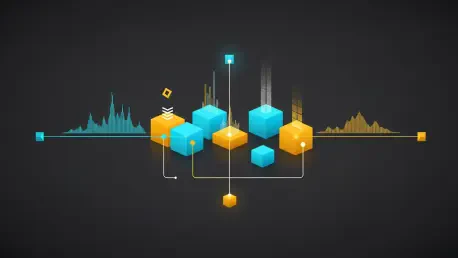
The persistent gap between a musician's creative vision and the technical limitations of digital audio workstations has traditionally been defined by the software's built-in features, often leaving producers to work within rigid functional boundaries. However, as of 2026, this barrier has become

The silent shift from predictable, human-scale cyberattacks to autonomous, machine-speed incursions has effectively invalidated traditional security architectures that once served as the primary line of defense for global enterprises. The rapid integration of artificial intelligence into the

The realization that artificial intelligence must interact with the tangible world to reach its full potential has driven a massive shift toward systems that can perceive, reason, and act within three-dimensional environments. While large language models have dominated the digital landscape for

The digital landscape has shifted from static data retrieval to a dynamic environment where autonomous agents negotiate complex business logic across interconnected ecosystems. The era of simply asking a chatbot to summarize a meeting or draft a basic email is rapidly fading. It is being replaced
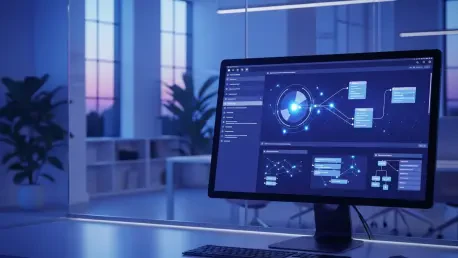
The relentless evolution of the software development industry has reached a state where the ability to conceptualize a digital product is no longer tethered to the mastery of traditional programming languages. Modern no-code SaaS builders have fundamentally altered the barrier to entry, allowing

The moment a digital employee moves beyond answering questions and begins manipulating live production databases marks a fundamental shift in the landscape of corporate risk and operational efficiency. For years, the enterprise world viewed artificial intelligence primarily through the lens of a
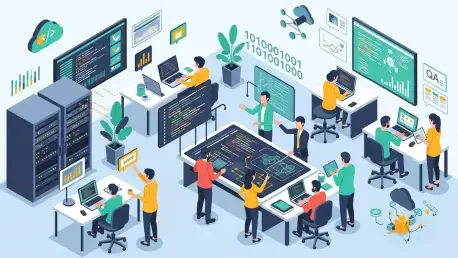
Waves of technological change have always defined the software industry. From the emergence of high-level programming languages and integrated development environments to the rise of cloud computing and DevOps practices, each innovation has changed how software is conceived, built, tested, and


