
The rapid proliferation of AI-assisted development has presented the software industry with a profound paradox, simultaneously accelerating innovation while amplifying the attack surface for new and complex security vulnerabilities. This review explores the evolution of AI-powered application security, its key features, performance metrics, and the impact it has had on securing the software development lifecycle (SDLC). The purpose of this review is to provide a thorough understanding of the technology, its current capabilities, and its potential future development.
The Dawn of Intelligent Application Security
The integration of artificial intelligence into application security marks a pivotal transition from reactive defense mechanisms to a more proactive and predictive posture. This evolution is a direct response to the pressures of modern software development, where rapid CI/CD pipelines and the widespread use of AI-assisted coding tools have drastically compressed release cycles. In this accelerated environment, traditional security scans, often performed late in the development cycle, have become a significant bottleneck and are frequently unable to keep pace with the continuous introduction of new code.
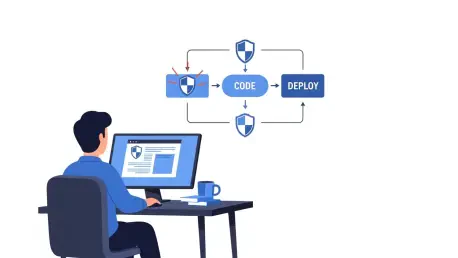
AI’s core principle in this domain is its ability to analyze vast and complex codebases with a level of speed and contextual understanding that surpasses human capabilities. By learning from countless vulnerability patterns, secure coding practices, and the unique architecture of an application, these intelligent systems can identify subtle flaws that might otherwise go unnoticed. This capability allows security to be embedded directly into the development workflow—a concept known as “shifting left”—transforming it from a final checkpoint into an ongoing, automated process that supports developers rather than hindering them.
Core Capabilities of AI-Enhanced Security Platforms
Unified Vulnerability Scanning Across the SDLC
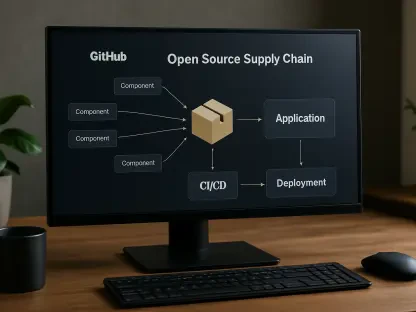
A defining feature of advanced AI security platforms is their ability to deliver a consolidated view of risk across the entire application stack. In the past, security teams often juggled a disparate collection of tools for static analysis (SAST), software composition analysis (SCA), and container scanning, leading to fragmented visibility and operational inefficiencies. Modern platforms unify these functions, providing a single interface to scan everything from proprietary source code and open-source dependencies to container images and infrastructure-as-code configurations.
This holistic approach is critical for breaking down the silos that have traditionally existed between development, security, and operations teams. By integrating directly into the CI/CD pipeline, these platforms can perform comprehensive scans automatically at every stage, from code commit to pre-deployment. This ensures that potential vulnerabilities are identified early and consistently, providing a cohesive security narrative for the entire software supply chain rather than isolated, and often conflicting, reports from multiple point solutions.
Context-Aware Risk Prioritization
One of the most significant challenges in application security has been “alert fatigue,” where security teams are inundated with a high volume of low-priority or false-positive vulnerability alerts. AI-powered platforms address this by introducing context awareness, leveraging a deep understanding of the application’s runtime environment to prioritize genuine threats. This “infrastructure awareness” allows the system to analyze a vulnerability not in isolation, but in the context of its deployment, considering factors like network accessibility and the presence of mitigating controls in the production environment.
This intelligent prioritization dramatically improves the signal-to-noise ratio, enabling teams to focus their resources on the issues that pose a tangible risk to the organization. For instance, a vulnerability in an internal-facing library that is not exposed to the public internet would be correctly de-prioritized compared to a critical flaw in a public-facing API. By understanding how an application actually runs, AI provides a more realistic and actionable risk assessment, making security efforts far more efficient and effective.
High-Fidelity Threat Detection and Automated Remediation
The sophistication of AI engines has led to a significant leap in the accuracy of threat detection, drastically reducing the false positives that plague legacy scanning tools. Platforms are now demonstrating the ability to cut down erroneous alerts by a substantial margin, which directly translates to a lower mean time to resolution (MTTR). When developers trust the alerts they receive, they are more likely to address them promptly, fostering a more collaborative relationship between security and development teams.
Beyond just identifying flaws, these platforms excel at providing actionable, developer-centric remediation guidance. Instead of simply flagging a line of vulnerable code, the AI can often suggest a precise code fix, explain the nature of the vulnerability, and deliver this information directly within the developer’s integrated development environment (IDE) or pull request workflow. This streamlined process minimizes disruption and empowers developers to fix security issues as part of their standard coding practice, effectively embedding security expertise directly into their toolset.