
The traditional software development paradigm is being rapidly dismantled as enterprises move beyond simple autocompletion toward a future defined by agent-native architectures and autonomous systems. Engineering leaders are now witnessing a shift where large language models are no longer peripheral tools but are instead the primary drivers of code generation and system maintenance across distributed environments. This transition implies that the very structure of enterprise software is changing to accommodate non-human actors that can reason through complex logic and implement fixes without constant manual intervention. As the industry advances from 2026 to 2028, the reliance on these agentic systems will likely become the standard for maintaining high-availability applications in competitive sectors. The speed at which an organization can iterate is becoming synonymous with how effectively it can integrate these autonomous entities into its core operations and maintain its market position.
The Shift: From Assisted Coding to Autonomous Engineering
Development workflows have progressed significantly from the early days of basic script generation to the current state of self-healing repositories and autonomous debugging. In the current landscape, tools like advanced agentic frameworks allow for the creation of software that can identify its own bottlenecks and propose architectural changes to resolve them. This level of autonomy is achieved through the use of specialized agents that have access to the entire codebase, documentation, and historical performance data. By analyzing patterns across thousands of commits, these agents can predict where bugs might occur and proactively suggest patches before the issues ever reach production environments. The integration of such technology reduces the friction between product ideation and market delivery, allowing businesses to respond to consumer needs with unprecedented agility. Furthermore, this shift is forcing a reevaluation of how technical debt is managed on a global scale.
Systemic Transformation: Declarative Intent and Verification
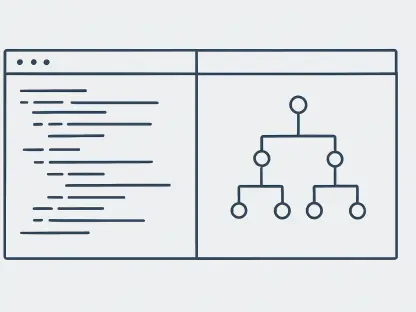
Building on this foundation, agent-native coding is fundamentally changing the way enterprise software is designed from the ground up. Developers are increasingly focusing on defining declarative intents rather than writing imperative instructions, trusting the agentic layer to translate those high-level goals into functional, optimized code. This approach allows for a more modular and resilient software architecture, as agents can manage dependencies and microservices with a level of precision that is often difficult for human teams to maintain at scale. Moreover, the use of agent-native systems facilitates better collaboration between different departments, as the AI can serve as a bridge between technical requirements and business objectives. For instance, an agent could automatically update API documentation or generate integration tests based on a simple description of a new feature. As these systems become more prevalent, manual verification is being replaced by AI checkups.
Strategic Evolution: Workforce Resilience and Future Readiness
Moving forward, the adoption of agentic development practices offered a clear path toward significant cost reductions and accelerated innovation cycles. Organizations that successfully transitioned to this model reported a notable decrease in the time spent on routine maintenance and a surge in the delivery of high-value features. To capitalize on this trend, it was essential for leadership to foster a culture of continuous learning and adaptation among their engineering teams. This meant prioritizing the development of skills related to AI orchestration, prompt engineering, and systemic oversight rather than focusing solely on traditional programming languages. Furthermore, the focus shifted toward building a resilient infrastructure that could support the heavy computational demands of running multiple autonomous agents simultaneously. By investing in scalable cloud resources and advanced telemetry, businesses ensured that their agent-native ecosystems remained stable and performant.