
The reliability of modern software delivery pipelines depends almost entirely on the absolute certainty that a green checkmark indicates functional code, yet a persistent shadow known as flakiness is currently destabilizing the foundation of global development infrastructure. For years, the industry operated under the assumption that if a test failed, the code was broken, and if it passed, the feature was sound. However, the rise of non-deterministic testing—where the same code produces different results under identical conditions—has shattered this confidence, leading to a state of perpetual uncertainty for engineering teams. While these unstable tests were traditionally viewed as isolated nuisances within specific repositories, recent investigations have uncovered a far more insidious reality. This phenomenon acts less like a local bug and more like a contagious pathogen that migrates through shared dependencies and infrastructure. As systems become more interconnected, the instability of a single component can ripple through an entire ecosystem, effectively poisoning the well for hundreds of secondary projects.
Mechanisms of Contagion in Interconnected Codebases
Researchers from Kyushu University recently undertook a massive longitudinal study of the OpenStack ecosystem to determine exactly how these instabilities propagate across modern cloud environments. By examining tens of thousands of code reviews and hundreds of individual projects, the team was able to map the intricate web of dependencies that allow testing failures to travel from one repository to another. This large-scale analysis revealed that the interconnected nature of modern software means that a failure in a foundational service often manifests as an inexplicable error in a seemingly unrelated high-level application. The data suggests that developers are no longer just fighting bugs in their own code but are instead struggling against a background radiation of instability emitted by the very frameworks they rely upon. This shift in perspective moves the problem from a matter of individual coding discipline to a systemic challenge of ecosystem health. Understanding these patterns is the first step toward building more resilient and predictable automated systems.
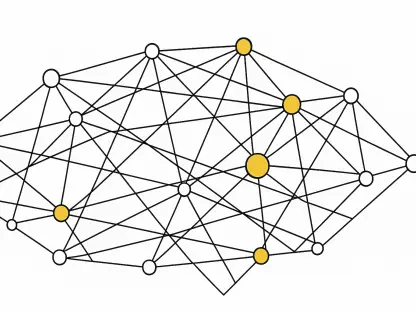
The investigation identified two distinct modes of failure propagation that the researchers categorized as cross-project flakiness and inconsistent flakiness. Cross-project flakiness occurs when a single unstable test triggers failures across multiple repositories that share the same underlying infrastructure or service definitions, creating a synchronized disruption. In contrast, inconsistent flakiness is perhaps more baffling to developers, as it involves a test that performs reliably within its original project but becomes highly volatile once integrated into a different part of the software ecosystem. This suggests that the context of execution is just as critical as the logic of the test itself, making it nearly impossible for individual developers to predict how their code will behave in a wider environment. These findings underscore the reality that software components do not exist in a vacuum, and their stability is fundamentally tied to the health of the surrounding digital landscape. Such variability forces teams to spend excessive time diagnosing issues that are not actually present.
Quantifying the Economic Drain and Human Toll
One of the most significant revelations from the Kyushu University research was the discovery that even simple unit tests, which are traditionally thought to be isolated and predictable, are highly susceptible to ecosystem-wide instability. The study found that approximately 70% of the unit tests analyzed exhibited signs of cross-project flakiness, effectively debunking the common industry belief that small-scale tests are inherently immune to environmental interference. This high percentage indicates that the standard modular approach to testing is insufficient when the underlying environment is prone to fluctuation. When even the most basic checks cannot be trusted to provide a consistent result, the entire hierarchy of automated verification begins to collapse under the weight of false positives and negatives. This vulnerability means that developers are often chasing shadows, attempting to fix logic that is perfectly sound but appears broken due to external variables. The pervasive nature of this instability across different test types suggests that no level of the software stack is truly safe from the influence of non-deterministic factors.
The cumulative impact of these unreliable tests translates into a massive loss of productivity and a severe drain on human capital across the global technology sector. According to the research data, more than half of the projects within the OpenStack ecosystem were directly impacted by these failures, resulting in an estimated 1,100 days of wasted developer time in just a single observation period. This represents a staggering amount of engineering talent redirected away from innovative features and toward the tedious task of troubleshooting non-existent problems. Beyond the raw temporal loss, the constant cycle of false alarms contributes to developer burnout and a general sense of cynicism regarding automated testing tools. When engineers stop trusting their test suites, they are more likely to ignore genuine warnings, which increases the risk of critical bugs reaching production. The economic cost is further compounded by the massive computational resources consumed by re-running failed tests in the hope of achieving a passing result. This wasteful cycle not only inflates infrastructure costs but also slows down the pace of innovation.
Systemic Triggers and the Path Toward Coordinated Defense
The root causes of these failures are frequently found in system-level factors rather than in the specific logic of the test code itself, pointing to a need for more robust infrastructure management. The research team identified several common culprits, including timing discrepancies within automated pipelines, insufficient server resource allocation, and version conflicts between shared software libraries. Because many projects within an ecosystem share the same continuous integration infrastructure, these environmental triggers naturally cause failures to spread like a contagion from one repository to another. For example, a minor delay in a shared database service can cause a timeout in a high-level test, leading a developer to believe their recent code change is faulty when the problem is actually external. These systemic triggers create a chaotic environment where the signal-to-noise ratio is consistently low, making it difficult for teams to maintain a high velocity of development. Addressing these issues requires a departure from the traditional model of isolated project management in favor of a holistic view of the supply chain.
To mitigate the damage caused by these infectious failures, the software community recognized the necessity of moving toward a more coordinated and ecosystem-wide strategy for maintaining digital health. Improving the stability of the global development pipeline required a standardized approach to testing environments that significantly reduced the variance between local and integrated execution. The researchers concluded that treating test reliability as a collective responsibility, rather than a task for individual developers, was the only viable way to build more trustworthy systems. Engineers began implementing more sophisticated tools capable of detecting flaky behavior in real-time, allowing them to quarantine unstable tests before they could infect the wider codebase. This shift toward a proactive and collaborative defense model proved essential for preserving the integrity of the modern digital infrastructure that supports society. By prioritizing environmental consistency and cross-project communication, the industry successfully lowered the barriers to innovation and restored confidence in the automated testing processes.