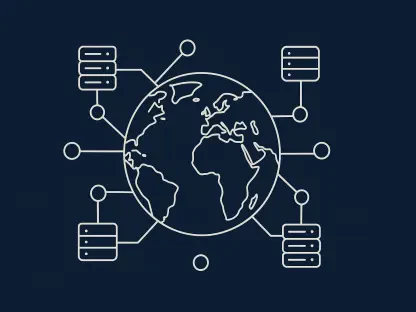

Modern enterprise data platforms are evolving into intelligent orchestration layers that allow users to ask arbitrary business questions across disparate systems. The long-standing dream of a single, unified data warehouse has largely been replaced by a more pragmatic and powerful reality in 2026: a federated ecosystem where information resides in specialized environments tailored to specific workloads. While the consolidation of data was the primary goal for nearly two decades, the current focus has shifted toward the consolidation of the access pattern. Organizations have realized that moving petabytes of data into one location often destroys the unique semantic value provided by specialized stores, such as the relationship density in graph databases or the millisecond-level responsiveness of key-value stores. Consequently, the role of the data platform has transformed from a mere storage container into a sophisticated reasoning engine that sits atop heterogeneous sources, interpreting complex business requirements and routing them to the most efficient technical execution paths available in the modern stack.
This architectural shift is driven by the realization that business intelligence needs to be as dynamic as the market itself. In the past, analysts were forced to navigate a rigid landscape of pre-defined dashboards that could only answer questions the engineering team had anticipated weeks or months in advance. Today, the integration of Large Language Models as orchestration layers allows for a fluid interaction with data that mirrors human thought processes. This does not mean the underlying databases have become less important; rather, they have been liberated from the constraints of static schemas. By providing a natural language interface that understands the underlying business logic, these orchestration layers bridge the gap between raw data and actionable insights, enabling a level of operational agility that was previously impossible. The ability to reason across structured, semi-structured, and unstructured data simultaneously is the defining characteristic of this new era of enterprise analytics.
1. Examine User Intent: Analyzing Semantic Business Logic
The first step in any intelligent orchestration cycle involves a deep analysis of the user’s underlying intent, moving far beyond simple keyword matching or rigid query templates. When a business leader asks a question regarding the root causes of revenue variance, the orchestration layer must perform a sophisticated semantic decomposition to understand the entities, timeframes, and specific performance metrics involved. In 2026, Large Language Models are exceptionally skilled at identifying that a request for “market performance” might necessitate data from a metrics store for historical figures, a vector database for qualitative market intelligence reports, and a graph database to understand customer churn patterns. This phase ensures that the system is not merely searching for words, but is actually comprehending the strategic context of the inquiry, which allows it to select the most appropriate tools and data sources for a comprehensive and accurate answer.
Furthermore, this intent analysis phase serves as a vital filter that prevents the system from generating irrelevant or technically expensive queries. By establishing a clear understanding of what is being asked before any data is retrieved, the orchestrator can determine the necessary depth of the investigation. For instance, a high-level summary request requires a different execution path than a detailed forensic audit of supply chain delays. The model evaluates the complexity of the request and maps it against the available business ontology, ensuring that the subsequent steps in the protocol are both efficient and targeted. This early-stage reasoning is what differentiates a modern intelligent agent from a traditional federated search engine, as it allows the system to anticipate the need for cross-system synthesis before the first byte of data is even accessed from the underlying infrastructure.
2. Break Down Queries: Decomposing Complex Architectures
Once the user’s intent is fully understood, the system enters the query decomposition phase, where the broad initial question is shattered into a series of highly specialized sub-queries. This is a critical departure from legacy systems that attempted to force all data into a single query language or a flattened relational structure. Instead, the orchestration layer speaks the native “dialects” of the various systems it manages, generating Cypher for graph traversals, optimized SQL for the data warehouse, and semantic similarity searches for vector stores. By decomposing the request, the system ensures that each data store is utilized for its primary strength; for example, a question about organizational influence is routed to a graph database that can handle multi-hop relationships with ease, while a request for historical sales totals is sent to a columnar warehouse designed for massive aggregations.
This granular approach to data retrieval also allows the system to handle novel and unexpected business questions without requiring new engineering tickets or custom code changes. Because the decomposition happens dynamically at the time of inference, the orchestrator can combine data sources in ways that were never explicitly programmed by the original developers. If a user asks a question that requires a synthesis of real-time sensor data from an API and long-term strategic goals from a document repository, the model generates the appropriate calls on the fly. This flexibility is essential in a modern corporate environment where the variables affecting business performance change almost daily. By breaking down complex problems into manageable technical tasks, the orchestration layer maintains high precision while avoiding the “hallucination” issues often associated with simpler, non-orchestrated language model implementations.
3. Run Tasks Concurrently: Optimizing for Performance and Latency
In the world of enterprise analytics, speed is just as critical as accuracy, which makes parallel execution a non-negotiable requirement for any orchestration protocol. Once the sub-queries have been generated, the system launches them simultaneously across the disparate data landscape. In 2026, this is typically managed through sophisticated thread pooling and asynchronous execution patterns that ensure the user is not left waiting for a sequential chain of database hits. By running these tasks concurrently, the total latency of the data retrieval phase is limited only by the slowest single data source, rather than the cumulative time of every individual query. This performance optimization is what makes it possible for an intelligent agent to provide comprehensive, multi-source answers in a matter of seconds, providing a user experience that rivals the speed of a traditional, pre-computed dashboard.
Moreover, concurrent execution allows the system to maintain high availability and resilience even when one or more underlying data sources are experiencing high load or temporary downtime. The orchestrator can be programmed with sophisticated fallback logic; if an external market intelligence API is slow to respond, the system can provide a partial answer based on internal data while clearly noting the missing external context. This level of technical sophistication ensures that the decision-making process is never entirely stalled by a single point of failure in the data pipeline. By managing multiple simultaneous connections and synthesizing the incoming data streams in real-time, the orchestration layer acts as a high-performance traffic controller, ensuring that the flow of information from the warehouse to the end-user remains smooth, consistent, and remarkably fast.
4. Apply Rigid Security Controls: Implementing Deterministic Protection
Security within an intelligent orchestration layer must be absolute and deterministic, particularly when dealing with sensitive corporate information that is subject to strict regulatory oversight. Unlike the probabilistic nature of language model generation, security enforcement in 2026 relies on a rigid layer that validates user permissions at the data query level before any information is ever ingested into the model’s context window. This approach, often referred to as “input gating,” ensures that the orchestration layer only retrieves data that the specific user is authorized to see based on their role and departmental clearance. By applying row-level and column-level security filters at the source database during the sub-query phase, the system guarantees that sensitive data is never leaked, as the model itself never has the opportunity to process unauthorized information.
This structural security model is far superior to traditional application-level filtering, which often tries to scrub sensitive details from the final output after the model has already processed them. By moving the security boundary to the very beginning of the retrieval process, organizations can deploy these intelligent agents with much higher confidence, knowing that the system’s reasoning is naturally constrained by the user’s actual access rights. If a regional manager in North America asks about global sales performance, the orchestration layer will only return data for the North American region, and the final synthesis will be based solely on that permitted subset. This deterministic approach not only protects the organization’s most valuable information assets but also provides a clear and auditable trail of data access that satisfies the requirements of modern data privacy and compliance frameworks.
5. Merge and Summarize Findings: Synthesizing Contextual Intelligence
The final phase of the orchestration protocol is the semantic synthesis of the retrieved data, where the model merges findings from different sources into a coherent and actionable narrative. This is where the true power of the LLM shines, as it can identify patterns and resolve contradictions that would be invisible in a standard spreadsheet or dashboard. For example, the system might notice that a drop in regional revenue (from the metrics store) coincides perfectly with a series of negative sentiment reports in support tickets (from the vector store) and a change in leadership at a key partner organization (from the graph database). By connecting these dots, the orchestrator provides a unified answer that explains the “why” behind the numbers, offering a level of strategic insight that previously required hours of manual labor by a team of senior data analysts.
Furthermore, this synthesis process includes a mandatory layer of source attribution and transparency, which is essential for building trust among executive users. Every claim made in the final summary is backed by a clear citation that points back to the specific data source, whether it is a row in a SQL database or a paragraph in a strategic planning document. This allows users to “drill down” into the evidence supporting the agent’s conclusions, effectively turning the AI from a black box into a verifiable research assistant. In 2026, the value of an analytics platform is measured by its ability to provide this kind of contextual intelligence—an answer that is not just a collection of facts, but a reasoned explanation of the business reality, complete with the supporting evidence needed to make high-stakes decisions with absolute confidence.
6. Identify High-Value Unanswered Questions: Finding the Data Gaps
To successfully implement an intelligent orchestration layer, an organization must first identify the complex business questions that remain unanswered by current, traditional reporting tools. Often, these are the questions that exist in the gaps between departments—queries that require data from the CRM, the ERP, and the supply chain management system to be viewed in a single context. Analysts often spend their entire Monday mornings manually pulling data from these different sources and stitching them together in spreadsheets because the existing BI tools were never designed to handle such cross-functional synthesis. By cataloging these “un-askable” questions, the leadership team can pinpoint the exact areas where an LLM-powered orchestrator will provide the most immediate and transformative value to the business operations.
Focusing on these high-friction areas also helps in building a roadmap for data infrastructure improvements that are grounded in actual business needs rather than technical trends. If the most pressing questions involve complex relationships between entities, it signals a clear need for a more robust knowledge graph. If they involve analyzing thousands of unstructured documents, it highlights the importance of the vector store. By starting with the questions that users are currently forced to answer by hand—or worse, the questions they have stopped asking altogether because the process is too difficult—the organization ensures that its investment in orchestration technology is directly aligned with the most significant bottlenecks in its current decision-making processes. This approach transforms the implementation from a generic technology upgrade into a targeted strategic intervention.
7. Concentrate on a Single Use Case: Demonstrating Rapid Value
The most successful deployments of intelligent orchestration layers in 2026 are those that avoid the “boil the ocean” approach and instead focus on a single, high-impact use case to prove the concept. By selecting one specific area—such as revenue variance analysis or supply chain risk assessment—an organization can build a deep and effective orchestration loop that demonstrates tangible ROI within a short timeframe. This focused strategy allows the engineering team to refine the intent analysis, query decomposition, and security protocols in a controlled environment before attempting to scale the solution across the entire enterprise. It also provides a clear success story that can be used to gain buy-in from other departments and stakeholders who may be skeptical of the transition away from traditional, static dashboards.
Concentrating on a narrow use case also provides the opportunity to perfect the integration between the orchestration layer and the specialized data stores. Each department often has its own unique data nuances and “tribal knowledge” that must be encoded into the business ontology for the system to be truly effective. By going deep into one functional area, the team can capture these nuances and ensure the agent’s responses feel natural and accurate to the people who use them every day. Once the value is proven and the technical foundation is solidified, the orchestration layer can be expanded incrementally to include more data sources and support more complex business functions. This phased approach minimizes risk, allows for continuous learning, and ensures that the system evolves in a way that is consistently useful to the end-users.
8. Prioritize Knowledge Graph Development: Building the Business Ontology
Building a robust knowledge graph is perhaps the most difficult but highest-leverage step in the journey toward a truly intelligent data orchestration layer. Unlike traditional relational databases that store data in isolated tables, a knowledge graph models the organization’s domain as a network of interconnected entities and relationships. This reflects how the business actually functions—customers are connected to products, which are connected to suppliers, who are influenced by global market events. By prioritizing the development of this business ontology early in the process, organizations provide the LLM with a structural map of the company’s “mental model.” This allows the agent to perform multi-hop reasoning and discover hidden connections that are invisible to systems that rely solely on flat tables and basic SQL joins.
In 2026, the knowledge graph serves as the primary factual guardrail for the orchestration layer, significantly reducing the risk of hallucination by forcing the model to follow verified relationship paths. When the agent is asked about the impact of a potential supplier failure, it doesn’t have to guess; it simply traverses the graph to see exactly which products, customers, and revenue streams are linked to that specific supplier. This level of deterministic reasoning is what makes the system trustworthy for enterprise use. While building a comprehensive graph requires a significant investment in data modeling and semantic engineering, the payoff is a system that can answer the most complex “what-if” scenarios with a level of precision and depth that no other data architecture can match. The graph is the “brain” of the orchestration layer, providing the structural logic that informs every other part of the protocol.
9. Center the Design on the Analyst: Improving Human Workflows
The ultimate goal of an intelligent orchestration layer is not to replace the human analyst, but to augment their capabilities and remove the drudgery from their daily workflow. Designing the system with the analyst at the center means focusing on how the tool can automate the repetitive tasks of data gathering and synthesis, allowing the human to focus on high-level interpretation and strategic decision-making. Success is not measured by the technical complexity of the LLM or the speed of the graph traversal, but by how much time is saved for the person who used to spend their week building a complex spreadsheet. By providing an interface that speaks the analyst’s language and understands their specific business context, the system becomes an indispensable partner in the analytical process rather than just another technical tool to manage.
Furthermore, a user-centric design approach involves creating a feedback loop where analysts can easily correct the system’s reasoning or add new context to the business ontology. This ensures that the system grows smarter over time, absorbing the unique insights and expertise of the organization’s most experienced employees. In 2026, the best orchestration layers are those that offer a seamless “collaborative” experience, where the human and the AI work together to explore data. The AI handles the massive task of searching, filtering, and merging information across dozens of stores, while the human provides the final judgment and creative problem-solving. This partnership accelerates the speed of insight and allows the organization to respond to market changes with a level of agility that was previously unattainable through traditional reporting methods alone.
10. Track Performance and Gaps: Ensuring Continuous System Evolution
Continuous monitoring and observability are essential for maintaining the long-term health and accuracy of an intelligent orchestration layer. In a dynamic enterprise environment, data sources change, schemas evolve, and new business definitions emerge, all of which can lead to “system drift” if not carefully tracked. Organizations must establish clear metrics for response accuracy, latency, and user adoption, creating a dashboard for the orchestrator itself. By logging every tool call, query decomposition decision, and synthesis step, the team can quickly identify and fix failure modes, such as a stale data source or a poorly performing embedding model. This commitment to observability is what ensures that the system remains a reliable source of truth for the organization, preventing the erosion of user trust that can happen when a single inaccurate answer goes unaddressed.
Equally important is the process of tracking the questions the agent cannot currently answer, as these failures serve as the primary roadmap for the system’s future development. Every time a user asks a question that results in a “data missing” or “cannot synthesize” response, it highlights a gap in the current data architecture or the business ontology. These gaps should be reviewed regularly by the data engineering team to determine which new data stores need to be integrated or which parts of the knowledge graph need to be expanded. By treating every failed query as a valuable learning opportunity, the organization can ensure that the orchestration layer is always evolving to meet the actual needs of its users. This iterative approach to development ensures that the platform remains relevant and increasingly powerful as the business grows and the market landscape continues to shift.
A Strategic Shift Toward Federated Intelligence
The implementation of these intelligent orchestration protocols transformed how analysts interacted with raw information, moving the enterprise away from the era of static visualization toward a model of active reasoning. By prioritizing the orchestration of disparate data sources rather than the consolidation of the data itself, organizations successfully bypassed the traditional bottlenecks associated with massive data migrations. The results were immediate, as business leaders gained the ability to interrogate their entire data landscape through a single, intelligent interface that understood the nuances of their specific industry. This shift didn’t just save time; it fundamentally changed the nature of business intelligence, allowing for a level of cross-functional insight that previously existed only in the minds of a few senior executives who had spent decades learning the organizational silos.
As the adoption of these platforms matured, the focus of the data team moved from managing pipelines to curating the business ontology and ensuring the accuracy of the underlying reasoning chains. The knowledge graph became the most valuable asset in the company, acting as a living map of the organization’s intellectual capital. Looking ahead, the next phase of this evolution involved the expansion of these agents from purely analytical tools into autonomous operational assistants capable of not just explaining what happened, but suggesting and even executing corrective actions. The foundation laid by the orchestration layer ensured that these future advancements remained grounded in verified data and deterministic security, providing a safe and scalable path toward a more autonomous and intelligent corporate future.