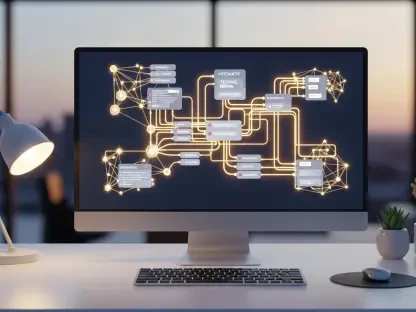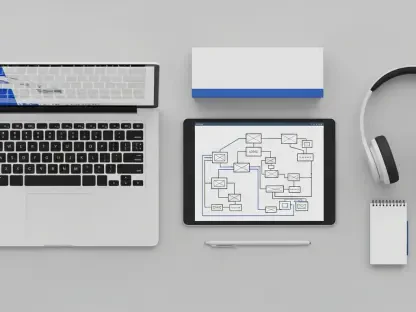

The rapid disintegration of monolithic business software has forced a total reimagining of how mid-market enterprises handle their operational data and supply chain logistics. Static, siloed systems that once served as the backbone of industry are no longer capable of supporting the agility required in a global market defined by persistent volatility. Consequently, businesses are pivoting toward platform-first architectures that treat enterprise resource planning as a living ecosystem rather than a locked repository. This strategic shift represents a fundamental change in how companies approach digitalization, prioritizing cloud-native integration and specialized leadership to unlock long-term customer value.
The Shift from Legacy Software to Dynamic Platforms
Market Growth: The Migration to Cloud-Native Architectures
Modern adoption statistics reveal a massive movement as mid-market firms abandon on-premise legacy systems in favor of flexible cloud environments. This transition is not merely a change in hosting but a commitment to the Platform-as-a-Service model, which provides the real-time data visibility essential for surviving narrow margin pressures. Distribution and logistics firms, in particular, are reallocating their digital infrastructure budgets toward these agile frameworks to ensure they can scale without the traditional friction of hardware limitations.
The surge in cloud-native adoption from 2026 to 2028 is expected to redefine the competitive landscape, making digital maturity a non-negotiable trait for survival. By moving away from rigid structures, organizations gain the ability to pivot their operations in response to sudden supply chain disruptions. This flexibility allows for a more granular understanding of inventory and demand, ensuring that every piece of data contributes to a more efficient and profitable bottom line.
Real-World Implementation: Forterro and Orderwise
Forterro has demonstrated the practical application of this trend through the strategic appointment of Chris Fisher as the Managing Director of its Orderwise business unit. By placing a leader with a deep background in complex migrations at the helm, the company is bridging the gap between technical potential and specialized industry requirements. This leadership move facilitates a closer alignment with a platform-first strategy, ensuring that innovation translates directly into operational stability for clients in niche sectors.
In specialized verticals like fresh produce and building materials, the deployment of “Flex Services” and cloud migration strategies has proven transformative. These initiatives allow firms to integrate AI-driven analytics and unified warehouse management tools without causing the catastrophic downtime often associated with system upgrades. As a result, businesses can maintain daily operations while simultaneously modernizing their core infrastructure to handle more sophisticated data processing tasks.
Expert Perspectives on Leadership and Value Creation
Industry veterans argue that ERP leadership roles now demand deep sector expertise rather than generic technical management skills. The complexity of modern business environments requires a nuanced understanding of how specific industries, such as logistics or manufacturing, actually function on the ground. Experts suggest that a leader’s ability to relate to the real-world challenges of a warehouse manager or a supply chain director is what determines the success of a technology rollout.
Furthermore, there is a growing consensus that “customer value creation” has replaced mere functionality as the primary metric for vendor success. It is no longer enough for a platform to simply work; it must actively drive growth and solve problems that are unique to the client’s market position. By focusing on these outcomes, leadership teams can ensure that the technology serves the business strategy, rather than forcing the business to adapt to the limitations of the software.
The Future Landscape of Integrated Business Ecosystems
The evolution of ERP systems is trending toward autonomous platforms that leverage artificial intelligence for predictive supply chain management. These future systems will likely move beyond simple reporting to provide proactive recommendations, identifying potential bottlenecks before they impact the production line. However, this transition brings significant challenges regarding data security and scalability, as firms must protect increasingly open and integrated ecosystems from sophisticated digital threats.
Hyper-localization will also play a critical role, with platforms offering specialized functionality for niche industries while maintaining a unified, cloud-based core. This approach allows a company to benefit from a standardized infrastructure while utilizing tools specifically designed for their unique trade. For the mid-market economy, these advancements mean that staying small no longer requires sacrificing the technological advantages once reserved for global corporations.
Securing a Scalable Technology Foundation
The transition from siloed tools toward unified, platform-first architectures emerged as the definitive movement in the modernization of enterprise resources. This shift underscored the necessity of aligning leadership expertise with technical innovation to ensure that cloud migrations actually delivered on their promises. Organizations that prioritized adaptability over rigid legacy structures found themselves better positioned to navigate the complexities of a data-driven global economy. Ultimately, the focus remained on building a technology foundation that could grow alongside the business, turning digital infrastructure into a genuine engine for operational resilience.