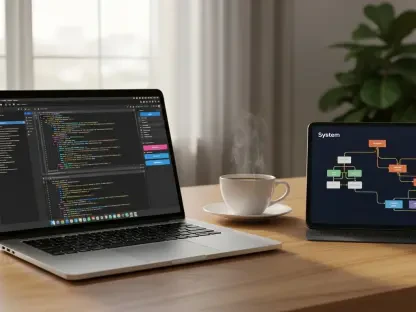

The global brewing industry currently faces a critical juncture where the integration of advanced digital frameworks determines whether a company maintains its competitive edge or falls behind in operational efficiency. Asahi Europe & International has addressed this challenge by initiating Project Odyssey, a comprehensive effort to migrate its vast organizational infrastructure from the aging SAP ECC system to the modernized S/4HANA platform. This shift represents more than just a software upgrade; it is a fundamental reimagining of how a beverage giant manages its supply chain, finance, and procurement across diverse international markets. By acknowledging the limitations of legacy systems in an era defined by real-time data and rapid market fluctuations, the company has committed to a transformation that prioritizes cohesion over fragmentation. This initiative serves as a cornerstone for future growth, ensuring that regional operations from the United Kingdom to Central Europe function under a unified technological umbrella that supports agility and data-driven decision-making.
The Strategy Behind Project Odyssey: Building a Unified Foundation
Transitioning to the S/4HANA Framework
The migration from SAP ECC to S/4HANA is a high-stakes technical endeavor that requires more than just moving data between environments; it necessitates a total overhaul of the digital core. Asahi’s transition focuses on replacing disparate legacy structures with a streamlined, real-time architecture that can handle the immense data loads generated by modern manufacturing and distribution. This technological leap allows the organization to leverage advanced analytics and automated workflows that were previously impossible under the constraints of older enterprise resource planning software. By standardizing the digital foundation, the company aims to eliminate technical debt and reduce the maintenance costs associated with maintaining outdated systems across multiple regions. The move to S/4HANA ensures that every business unit operates on a single version of the truth, facilitating better visibility into global inventory and financial health. This modernization is essential for maintaining a competitive posture in a landscape where speed and precision in the supply chain are non-negotiable requirements for success.
Project Odyssey is not a simple “lift and shift” operation but a phased rollout designed to ensure stability and minimize disruption across ten major European markets. From the current year through 2028, the implementation will gradually encompass critical hubs in the United Kingdom, Germany, Poland, Italy, and the Netherlands. This deliberate pace allows the project team to refine the deployment strategy based on lessons learned from initial phases, particularly in Central and Eastern Europe. By focusing on hub functions first, the organization can stabilize the core template before expanding it to more complex local markets. This roadmap reflects a sophisticated understanding of the risks associated with large-scale digital transformations, where an overly aggressive timeline often leads to system failures or operational bottlenecks. The staggered approach provides the necessary breathing room for technical teams to address site-specific configurations while maintaining the integrity of the global template, ensuring that each regional go-live builds upon the successes of the previous one without compromising service.
Establishing Regional Process Standardization
A primary objective of Project Odyssey is the creation of a standardized regional template that harmonizes core business processes across diverse geographical locations. In the past, individual markets often operated with localized workflows that created silos and hindered cross-border collaboration. By enforcing a unified process model, Asahi ensures that a procurement or logistics professional in Italy follows the same protocols as their counterpart in Poland. This standardization is vital for achieving economies of scale and simplifying the reporting structures that inform executive strategy. However, achieving this level of uniformity requires a delicate balance between global efficiency and local compliance requirements. The project team must account for different tax laws, labor regulations, and market-specific nuances while keeping the core template intact. This structural alignment is the engine that drives operational excellence, allowing the company to respond to market trends with a level of coordination that was previously unattainable when business units operated on fragmented legacy platforms.
The focus on regional standardization also serves as a catalyst for cultural transformation within the workforce, encouraging a mindset of collaboration and shared responsibility. When processes are consistent across the organization, it becomes significantly easier to move talent between regions and share best practices without the need for extensive retraining. This fluidity is a major strategic advantage for a global enterprise, as it allows for a more flexible response to regional challenges or opportunities. Furthermore, a standardized system provides a cleaner dataset for artificial intelligence and machine learning applications, which thrive on consistent, high-quality information. By investing in this unified process architecture, Asahi is not just fixing current inefficiencies but is actively building the infrastructure required for the next wave of digital innovation. The commitment to a regional template ensures that the benefits of the S/4HANA rollout are felt across the entire value chain, from the initial sourcing of raw materials to the final delivery of products to consumers in various international markets.
Elevating Training as a Critical Success Factor
Partnering for Specialized ERP Enablement
The recognition that technical excellence alone cannot guarantee the success of a digital transformation led Asahi to partner with Optimum, a specialized ERP training consultancy. Historically, many large-scale software implementations failed or underperformed because the human element was treated as an afterthought, with training programs being rushed or generic. Asahi has inverted this traditional model by placing user adoption at the heart of Project Odyssey. By collaborating with experts who specialize in ERP education, the company ensures that the workforce is not just familiar with the new interface but is truly proficient in the updated business processes. This partnership involves a deep dive into the specific needs of different user roles, moving beyond a one-size-fits-all approach to education. The consultancy provides the specialized pedagogical tools and change management expertise required to translate complex technical workflows into actionable knowledge for employees on the ground, ensuring that the investment in S/4HANA translates into actual business value.
An essential component of this training partnership is the comprehensive needs analysis conducted at the beginning of the engagement. This process involves identifying the unique requirements of various departments, from warehouse management to high-level financial reporting, and tailoring the educational content accordingly. By mapping the training to specific job functions and local business contexts, the program ensures that every employee understands exactly how the new system impacts their daily responsibilities. This level of customization is critical for reducing the “dip in productivity” that often accompanies the introduction of new software. Moreover, the training must be delivered in multiple languages to accommodate the diverse workforce across ten European markets. The ability to provide high-quality, localized training materials ensures that language barriers do not hinder the adoption of the standardized regional template. This strategic focus on user enablement demonstrates a sophisticated approach to digital change, where the goal is to empower the workforce to drive the transformation from the bottom up rather than imposing it from the top down.
Cultivating Long-Term Organizational Resilience
The training methodology employed for Project Odyssey utilizes a blended learning model designed to cater to a variety of learning styles and operational environments. This approach integrates instructor-led sessions, virtual classrooms, and interactive eLearning modules, allowing employees to engage with the material in the way that best suits their needs. Beyond digital content, physical materials and quick-reference guides provide immediate support during the critical early days of the system go-live. This multi-faceted strategy ensures that the knowledge is reinforced through multiple touchpoints, increasing the likelihood of long-term retention. By providing a diverse array of learning tools, Asahi minimizes the risk of user frustration and resistance, which are often the primary barriers to successful software adoption. The goal is to create a learning ecosystem that supports employees throughout the entire transition period, from the initial introduction to the system to the mastery of complex, role-specific tasks that are required for peak performance.
To ensure the sustainability of the transformation, the project places a heavy emphasis on the development of “super users” within each regional hub. These individuals receive advanced training that goes beyond basic navigation, enabling them to act as internal champions and first-line support for their colleagues. This peer-to-peer support network is invaluable for troubleshooting minor issues and fostering a culture of continuous improvement without relying solely on external consultants. Additionally, the creation of a multilingual knowledge base provides a permanent repository of information that can be accessed whenever a user encounters a challenge. This focus on self-sufficiency ensures that the organization can maintain its high standards of operational excellence long after the initial rollout phase is complete. By building internal capability and fostering a deep understanding of the S/4HANA system, Asahi has positioned itself to adapt more quickly to future technological shifts, turning a one-time project into a foundational capability for long-term organizational resilience.
Designing the Future of Digital Operations
The collaborative efforts between the internal project teams and external training experts provided a clear roadmap for navigating the complexities of a multi-country enterprise resource planning rollout. By prioritizing user adoption and process standardization, the organization successfully mitigated the risks typically associated with migrating away from legacy systems. Leaders who are planning similar transformations should consider the immediate implementation of role-based training programs that coincide with technical development phases rather than following them. It became evident that early engagement with super users facilitated a smoother transition and reduced the burden on central IT support teams during critical go-live windows. Organizations must also invest in multilingual, interactive learning assets to bridge the gap between regional offices and global templates, ensuring that local nuances do not compromise the integrity of the standardized system.
Looking ahead, the focus moved toward maintaining the momentum of digital maturity by integrating continuous learning cycles into the standard operational rhythm. The establishment of a centralized, accessible knowledge base allowed for rapid onboarding of new staff and ensured that institutional knowledge remained protected against turnover. Decision-makers were encouraged to treat ERP training as a persistent strategic function rather than a one-off project expense. By fostering a culture that valued digital proficiency as much as technical architecture, the company set a new benchmark for operational excellence. Future initiatives will likely benefit from the data-driven insights gathered during this rollout, enabling even more precise refinements to global business processes. The transition proved that the true value of modern enterprise software is unlocked only when the individuals tasked with using it are fully equipped to leverage its comprehensive capabilities.