
The traditional boundaries between human intention and executable machine logic are dissolving as autonomous systems move from suggesting syntax to managing the entirety of complex architectural lifecycles. This shift is most evident in the arrival of ZCode, an environment designed to operate with a level of independence that renders previous assistants obsolete. Unlike reactive tools that rely on constant user prompting, this platform functions as an active participant in the engineering process. It manages multi-step projects by synthesizing requirements into actionable roadmaps, representing a fundamental change in how software is conceptualized and built.
ZCode marks a departure from the “copilot” era toward a future defined by agentic autonomy. While established competitors focus on optimizing individual lines of code, Z.ai has positioned its tool to handle high-level coordination and validation. This strategic move challenges the dominance of traditional development hubs by proving that sophisticated, high-performance logic can emerge from diverse global centers. By prioritizing an end-to-end workflow, the environment reduces the cognitive load on engineers, allowing them to serve as high-level supervisors rather than granular editors.
Core Technological Pillars and Engine Capabilities
The GLM-5.2 Large Language Model
The system is powered by the GLM-5.2 engine, a mixture-of-experts model that utilizes 744 billion parameters to process complex programming logic. Its most striking feature is a massive one-million-token context window, which enables the agent to maintain a comprehensive understanding of entire codebases simultaneously. This capability allows for deep architectural reasoning that smaller models cannot match, as it avoids the loss of logical continuity often found in fragmented context management. Consequently, the platform excels at identifying cross-file dependencies and ensuring that changes in one module do not inadvertently break functionality elsewhere.
Hardware Independence and Architectural Framework
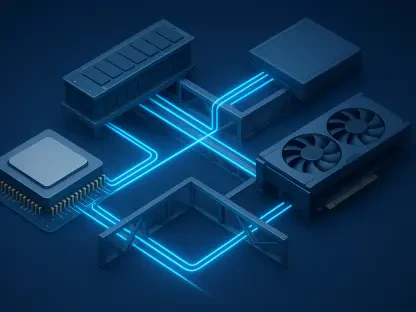
The development of this environment is notable for its reliance on Huawei hardware rather than conventional American semiconductors. This move represents a calculated effort to achieve technical sovereignty, ensuring that the infrastructure remains robust despite shifting geopolitical landscapes. The platform is inherently cross-platform, offering seamless support for Windows, macOS, and Linux to accommodate diverse professional environments. Furthermore, its “bring-your-own-key” architecture provides users with the flexibility to integrate external models like Gemini, preventing vendor lock-in and allowing teams to tailor the intelligence layer to their specific needs.
The Shift Toward Integrated Agentic Workflows
The engineering sector is moving away from standalone models in favor of environments that manage the total project lifecycle. This platform embodies that trend by integrating planning, modification, and validation into a single, cohesive stream. By automating the validation phase, the system ensures that generated code meets predefined safety and functional standards before it is even presented for human review. This proactive approach significantly shortens the feedback loop, as the environment identifies its own errors and iterates until a stable solution is reached.
Practical Deployments and Enterprise Utility
In enterprise settings, the ability to monitor long-running sessions via mobile platforms like WeChat and Telegram provides unprecedented flexibility. This integration allows developers to step away from their workstations while maintaining oversight of automated refactoring or testing tasks. Such accessibility is paired with an aggressive pricing model that spans from Lite to Max tiers, making high-performance agentic tools available to both independent contractors and massive organizations. By lowering the entry cost, the platform disrupts the market hierarchy and encourages broader adoption of autonomous development practices.
Critical Challenges and Market Obstacles
Despite its technical prowess, the system must navigate significant hurdles related to international data security and geopolitical friction. Building trust with global customers who are wary of non-Western infrastructure remains a primary obstacle for widespread enterprise adoption. There is also the technical reality that autonomous decision-making still requires human intervention for high-privilege approvals to ensure safety. Balancing the desire for total automation with the necessity of human oversight is a delicate trade-off that the developers continue to refine as the technology matures.
The Horizon of Globalized AI Development
The trajectory for this technology points toward further breakthroughs in model efficiency and hardware-specific optimization. As the market for enterprise coding agents grows, the presence of cost-effective alternatives will likely force established players to innovate more rapidly. This competitive pressure benefits the industry as a whole, driving the development of more intelligent and resource-efficient tools. The long-term impact will be a more democratized landscape where high-tier engineering capabilities are accessible regardless of a firm’s geographic location or budget constraints.
Final Assessment: A Disruptive Force in Software Engineering
The introduction of ZCode demonstrated that the gap between Western and global AI development has narrowed significantly. The platform successfully merged high-end reasoning with practical enterprise features, proving that agentic environments could manage real-world complexity with minimal human friction. It showed that hardware independence was a viable path for sustaining high-performance software tools in an era of restricted trade. Ultimately, the system established a new benchmark for cost-effective autonomy, signaling a permanent shift in how the global engineering community approached automated development.