

The global financial infrastructure currently rests upon a precarious foundation where millions of lines of machine-generated code are integrated into core banking systems every single day without exhaustive human validation. As the industry moves deeper into this automated era, the transition from

The rapid evolution of data security has reached a critical juncture where the traditional reliance on proprietary black-box systems is no longer sufficient to meet the rigorous demands of global enterprise governance. As organizations grapple with escalating third-party breaches and aggressive
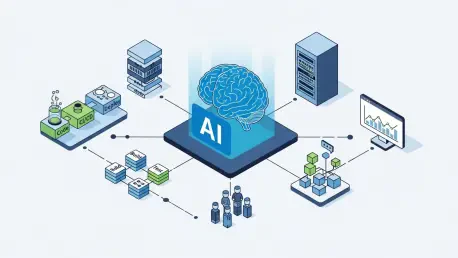
The seamless integration of high-speed machine learning models into software delivery pipelines has fundamentally disrupted the traditional balance between engineering velocity and systemic reliability across the modern enterprise landscape. This evolution represents a departure from human-centric

The traditional boundary between theoretical regulatory compliance and real-world operational security has finally dissolved as the Monetary Authority of Singapore (MAS) shifts its focus toward a rigorous, live-environment validation model for artificial intelligence. This transition represents a

The sleek, responsive interface of a modern enterprise application often conceals a labyrinth of interdependent logic that threatens to collapse under its own weight during the next update cycle. This architectural density is not merely a technical detail but a significant economic factor that

The decision to overhaul an Enterprise Resource Planning system represents a high-stakes financial investment that defines the operational velocity of a corporation for the foreseeable future. In the current market, the deployment or modernization of such a system is no longer viewed as a