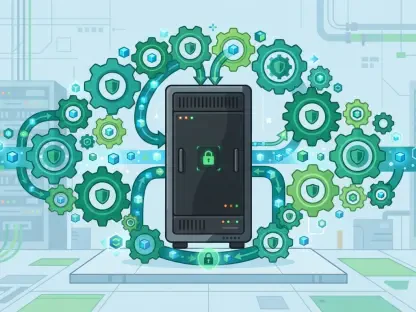

Guided remediation workflows allow developers to upgrade packages and run regression tests simultaneously to ensure that security fixes do not break functionality. This capability is becoming increasingly vital as the velocity of software production reaches unprecedented levels in the current technological landscape. In recent years, the integration of autonomous agents into the development lifecycle has transformed how code is written, reviewed, and deployed. However, this speed often comes with the hidden cost of security debt, as manual review processes fail to keep pace with AI-generated modifications. The IBM Bob Premium Package for DevSecOps serves as a necessary intervention, bridging the gap between rapid innovation and rigorous protection. By embedding security protocols directly into the early stages of development, organizations can effectively mitigate risks before they escalate into systemic failures. This proactive stance ensures that the advantages of AI are fully realized without compromising the integrity of the software supply chain or the overall security posture.
Integrated Defense and Real-Time Remediation
Pre-Disk Intervention and SafeWrite
SafeWrite represents a paradigm shift in how vulnerabilities are handled during the coding process by acting as a real-time gatekeeper. Conventional security tools typically operate after the fact, scanning files once they have been committed to a local disk or a central repository. SafeWrite, however, functions at a much deeper level by intercepting instructions in memory the moment an AI agent suggests a code modification. This pre-disk intervention allows the system to analyze proposed changes to dependency files or environment configurations before they are ever finalized. When an agent attempts to introduce a new package, SafeWrite immediately cross-references the request against a massive, updated database of known vulnerabilities. If a security risk is identified, the system does not merely issue an alert; it proactively suggests or automatically implements a safer alternative. This level of immediate oversight prevents high-risk vulnerabilities from entering the codebase in the first place.
Beyond simple dependency checks, the system maintains the integrity of the entire software supply chain through active blocking and version control. In scenarios where an AI agent proposes a package that lacks a viable secure alternative, SafeWrite is designed to block the installation entirely, preventing the introduction of a potential backdoor or a known exploit. This ensures that the developer is alerted to the risk at the moment of creation, rather than discovering it during a later production scan. Furthermore, the tool prevents unauthorized or direct edits to lockfiles, which are critical for ensuring that builds remain consistent across different environments. By strictly controlling how these files are modified, the package eliminates the risk of dependency drift or the accidental inclusion of unverified third-party libraries. This comprehensive protection layer provides a stable foundation for teams that rely on autonomous agents to manage complex system architectures.
Developer-Centric Security Feedback
Developer productivity is often hindered by the friction of toggling between multiple disconnected security platforms. The IBM Bob Premium Package addresses this by bringing prioritized security findings directly into the integrated development environment. As engineers open or save files, built-in scanners for Static Application Security Testing and supply chain risks provide instant feedback on the code’s health. This localized visibility allows developers to identify infrastructure misconfigurations, exposed secrets, and risky dependencies without leaving their primary workspace. The “Fix with Bob” feature further streamlines this process by offering automated remediation for common issues. With a single click, the tool can refactor code or update configurations to align with security best practices. By making security an interactive part of the daily coding routine, the package reduces the cognitive load on developers and ensures that vulnerabilities are addressed with minimal delay.
The underlying philosophy of this approach is to shift the responsibility for security further to the left in the development lifecycle. Traditionally, security was a final gate that often resulted in significant rework if issues were discovered late in the process. By integrating these scanners directly into the developer workflow, the package ensures that security is a continuous consideration rather than a periodic audit. This real-time feedback loop is essential for maintaining the high deployment frequency required in today’s market. Moreover, the integration eliminates the need for organizations to maintain complex third-party security connections, which can often be a source of configuration errors themselves. Having built-in tools means that every member of the engineering team has access to the same high standard of security intelligence. This democratization of security tools empowers developers to take ownership of their code’s safety, leading to a more resilient and high-quality end product.
Intelligence, Governance, and Collaborative Review
Logic-Based Scanning and Pull Request Governance
One of the most persistent challenges in automated security scanning is the high rate of false positives, which can lead to alert fatigue among engineering teams. Traditional scanners often rely on rigid, rule-based patterns that identify suspicious code fragments without understanding the context in which they operate. In contrast, IBM Bob utilizes advanced AI to perform read-only, contextual scans that actually reason about the application logic. This allows the system to distinguish between a legitimate use of a sensitive function and a potential security flaw. By analyzing the relationship between different files and the overall intent of the code, the AI can pinpoint sophisticated vulnerabilities that conventional tools might miss. This reasoning capability is particularly useful for detecting logic gaps in authentication and authorization flows. Because the AI understands the architectural layout of the project, it can provide more accurate and meaningful insights.
The scope of security coverage extends beyond the local development environment into the version control system, where collaborative reviews take place. Starting with popular platforms like GitHub, the package introduces intelligent pull request analysis to catch risks before they are merged. Developers can initiate an automated, in-context review of their changes by simply using a command like “/review” within the interface. This triggers a comprehensive scan that evaluates the new code for security vulnerabilities, performance bottlenecks, and maintainability concerns. The AI provides inline comments that highlight specific areas of concern, making it easy for the author and the reviewer to understand the potential impact of the changes. This automated layer of governance ensures that no code reaches the main branch without being subjected to a rigorous assessment. While the AI provides depth, final authority remains with human reviewers, maintaining a balance between speed and oversight.
AI Inventory and Strategic Integration
As organizations increasingly rely on autonomous agents for software delivery, the need for transparent governance becomes paramount. The IBM Bob Premium Package addresses this by integrating with watsonx.governance to provide full visibility into the AI agents operating within the development lifecycle. The system automatically identifies every agent involved in the workflow and registers them in a centralized AI Inventory. This process eliminates the manual effort usually required to track AI assets and ensures that no agent operates in the shadows. By having a clear record of every agent’s identity and function, organizations can maintain a high level of accountability for the code and configurations they produce. This inventory serves as a single source of truth for both development and compliance teams, allowing them to monitor the behavior of the AI workforce. This automated registration is a critical step in scaling AI usage without losing control over the secure environment.
Following the full deployment of these integrated security measures, organizations observed a measurable reduction in the time required to remediate critical vulnerabilities. Engineering leaders adopted the platform as a foundational standard, which streamlined the path toward achieving continuous compliance across distributed development teams. The automated governance workflows established a new benchmark for accountability, as every AI-generated modification was successfully tracked and validated against corporate risk frameworks. Moving forward, the focus shifted toward refining these autonomous agents to handle even more complex refactoring tasks, while keeping security as the primary constraint. Technical teams leveraged the insights gained from context-aware scans to optimize their architectural patterns, effectively closing the gap between rapid feature delivery and robust system integrity. The successful integration of these tools demonstrated that security could function as an accelerator for innovation.