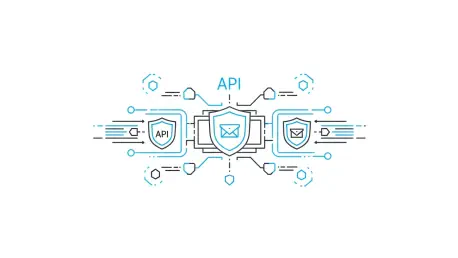

The recent unveiling of a landmark partnership between API security leader 42Crunch and Anthropic has introduced the concept of Agentic DevSecOps to the industry. This transformative approach to digital protection leverages the advanced reasoning of Anthropic’s Claude Code to shift security from a human-led, reactive process to an autonomous system capable of real-time decision-making. By integrating artificial intelligence directly into the development cycle, the partnership addresses the urgent need for security measures that match the breakneck pace of modern software creation. Enterprises can now address the massive influx of new code without sacrificing safety or performance. This shift marks a significant departure from traditional methods, aiming to ensure that every Application Programming Interface (API) is born secure, rather than being patched after the fact. As digital ecosystems grow more complex, this integration serves as a critical defense layer for the modern enterprise.
Bridging the Widening Divide: The Crisis of Scale in API Defense
The primary catalyst for this technological leap is the staggering disparity between the volume of code generated by AI assistants and the capacity of traditional security protocols to vet it. Enterprises are currently utilizing high-speed generative tools to produce software at a scale previously unimaginable, which has inadvertently created a massive backlog for human security teams. These teams often become a bottleneck, struggling to audit thousands of new endpoints and logic flows that emerge daily. This initiative seeks to eliminate that friction by making security an intrinsic, automated component of the code itself. By doing so, the expanding attack surface of cloud-native applications remains protected without impeding the breakneck pace of modern software delivery pipelines. The goal is to move beyond mere monitoring toward a state where the development environment can recognize and neutralize threats as they are written. This transition represents a vital shift in how organizations conceive of software integrity.
Application Programming Interfaces have emerged as the foundational communication links for nearly all modern digital infrastructure, but their rapid deployment has introduced significant organizational risk. Because these interfaces now serve as the primary execution layer for most business logic, securing them through manual intervention is no longer a scalable or viable strategy. The partnership between 42Crunch and Anthropic addresses this vulnerability by positioning security as an enabler that operates at machine speed during the initial creation phase of the API. This approach ensures that the “shadow API” problem—where undocumented or unprotected interfaces are pushed to production—is mitigated at the source. Instead of relying on periodic scans or post-deployment patches, the system enforces compliance with security standards in real-time. This structural integration allows businesses to maintain a high velocity of innovation while ensuring that their core digital assets remain resilient against sophisticated cyber threats.
Operational Excellence: The Mechanics of Agentic Remediation
The technical core of this new integration is a sophisticated autonomous loop that distinguishes agentic systems from standard, rule-based automation. When Claude Code identifies a vulnerability within the development process, the system does not simply generate an alert for a human developer to investigate later. Instead, it utilizes its deep understanding of context to generate a precise fix and applies it directly across the relevant portions of the codebase. The agent then proceeds to re-test the updated code automatically to verify that the solution is effective and does not introduce any regression errors. This closed-loop process allows developers to maintain their cognitive flow, as they are no longer required to pause their work for manual debugging or external security audits. By handling the heavy lifting of vulnerability identification and correction, the system transforms the developer experience into one that is inherently safer and more efficient. It creates a seamless bridge between coding and safety.
From a strategic business perspective, autonomous security removes the traditional trade-off between the speed of development and the safety of the application. By automating the remediation of common vulnerabilities, such as broken object-level authorization or injection flaws, organizations can significantly reduce the overhead costs associated with manual maintenance. This efficiency allows highly skilled engineering talent to move away from repetitive security tasks and shift their focus toward high-value innovation that drives competitive advantage. Furthermore, the reduction in human error leads to a more predictable release cycle and a better overall return on investment for the enterprise. As security becomes a seamless part of the tech stack, the business risk associated with rapid digital transformation is substantially lowered. This allows leadership to approve aggressive roadmap targets with the confidence that the underlying infrastructure is fortified by autonomous, intelligent protection systems and advanced logic.
Future Governance: Human Oversight in an Autonomous Environment
The emergence of agentic AI did not signal the end of human security roles, but rather necessitated a profound evolution in the daily responsibilities of DevSecOps professionals. These experts transitioned into strategic oversight roles, acting as governors who defined the high-level security standards and policy frameworks that AI agents were required to follow. This shift allowed human teams to focus on the nuances of complex architectural threats and business-specific logic that required a deeper level of intuition than even the most advanced AI can provide. Professionals spent more time designing resilient systems and less time triaging individual tickets or managing basic configuration errors. This evolution elevated the security function from a reactive support role to a proactive architectural discipline. By leveraging AI for mundane tasks, security leaders dedicated their expertise to solving the most difficult and creative challenges in cybersecurity. It was a fundamental shift in professional utility.
While the transition toward autonomous remediation offered undeniable benefits, it also required the implementation of robust guardrails to prevent technical regressions. Organizations maintained transparent decision-making logs that detailed every action taken by the AI, ensuring that a clear audit trail existed for compliance and troubleshooting purposes. The ability for manual overrides remained a critical safety feature, allowing human operators to intervene if the AI inadvertently introduced secondary risks or functional breaks in mission-critical systems. Balancing this AI autonomy with rigorous human governance became the new gold standard for building resilient, high-speed digital infrastructure in an AI-driven economy. This dual approach ensured that the speed of the machine was always guided by the wisdom and ethical considerations of the human expert. As these systems matured, the synergy between human and machine defined the modern era of enterprise security and software integrity within the global market.