The fundamental architecture of corporate technology, once defined by predictable applications and clear security boundaries, is now undergoing a seismic transformation driven by an intelligence that learns, remembers, and acts autonomously. Enterprise IT has arrived at a critical inflection point where artificial intelligence is no longer a peripheral tool for specialized tasks but is rapidly becoming the foundational operating system for business itself. This report analyzes the forces driving this change, the profound challenges it presents, and the strategic imperatives for leaders navigating this new landscape. The convergence of generative AI, ubiquitous cloud computing, and advanced automation is not merely an incremental upgrade; it represents a complete reimagining of how digital work is performed, managed, and secured.
Setting the Stage: Enterprise IT on the Brink of an AI Revolution
The traditional enterprise IT landscape was built on principles of structure and control. It consisted of a manageable portfolio of a few hundred core applications, each with a defined purpose and a predictable lifecycle. Security was largely a function of perimeter defense, focusing on protecting well-defined networks and endpoints from external threats. Development cycles were methodical, and the deployment of new software was a deliberate, centrally managed process. This model provided stability and predictability, allowing organizations to digitize processes within a framework they could effectively govern.
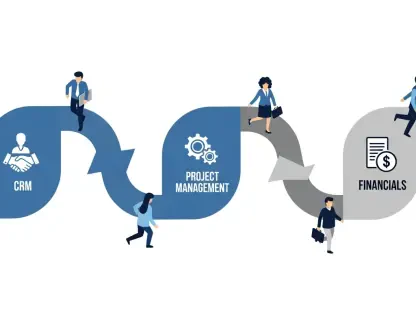
This era of manageable complexity is rapidly giving way to a new paradigm. Artificial intelligence, particularly generative AI and the large language models (LLMs) that power it, has crossed a threshold from a specialized instrument to a pervasive, transformative force. Instead of being a feature within an application, AI is becoming the fabric of core business operations, embedded in everything from customer relationship management to financial analysis. This shift is supercharged by the scalability and accessibility of cloud computing, which provides the immense computational power necessary to train and operate these sophisticated models. Consequently, AI is not just another tool in the IT toolkit; it is the engine of a revolution that is redefining operational efficiency and competitive advantage.
This technological sea change has also reshuffled the deck for market players. Major technology vendors and cloud providers like Amazon, Microsoft, and Google are in an arms race to deliver more powerful foundational models and AI-integrated enterprise platforms. Simultaneously, a vibrant ecosystem of startups is emerging, building specialized AI-driven solutions for governance, security, and automation. The power dynamics are shifting away from legacy software providers toward companies that can offer a cohesive, intelligent platform for managing this new, complex digital ecosystem. The competition is no longer about who has the best SaaS application but who can provide the most effective layer of intelligence and control over an increasingly automated enterprise.
Forces of Change: Decoding AI’s Impact on IT Operations
The Three Pillars of AI Powered Disruption
The most immediate and disruptive force is the sheer proliferation of intelligence. The IT environment is shifting from managing hundreds of monolithic applications to overseeing thousands of AI-powered micro-apps and ephemeral autonomous agents. These agents, often created for a single task and existing for only a few hours or days, introduce a level of scale and dynamism that legacy management tools cannot handle. This explosion in digital entities creates unprecedented complexity in tracking, securing, and governing business processes, demanding a new generation of intelligent automation to manage the very intelligence being deployed.
This new ecosystem introduces a profound security challenge best described as the memory paradox. Unlike human memory, which is fallible and finite, the “infinite memory” of GenAI models operating in the cloud allows them to retain and recall vast quantities of information indefinitely. This characteristic fundamentally alters the cybersecurity paradigm. The focus must shift from merely protecting network perimeters to meticulously governing the flow of data within the AI models themselves. Every piece of sensitive data absorbed by an AI becomes a permanent part of its knowledge base, creating a persistent risk of unauthorized access or leakage. Security is no longer just about preventing breaches but about managing an indelible corporate memory.
Finally, AI agents are poised to become the primary user interface for digital work, fundamentally changing human-computer interaction. Traditional SaaS applications, while still critical, will increasingly operate as an “invisible backbone.” Instead of navigating complex software menus, employees will interact with task-oriented AI agents that connect to systems of record like CRMs and ERPs via APIs. These agents will automate routine tasks, execute complex workflows, and synthesize information on behalf of the user. This shift relegates today’s applications to the role of data sources and service providers for a new, intelligent layer of automation that sits between the user and the underlying technology.
By the Numbers: Quantifying the Scale and Speed of Adoption
The growth projections for AI agents and applications within the enterprise are staggering. Industry forecasts indicate that the number of intelligent agents operating within corporate environments will expand exponentially, moving from a novelty to a ubiquitous presence by the end of the decade. This is not a distant future; the groundwork for managing tens of thousands of digital entities per organization is being laid now, driven by business demand for hyper-automation and operational efficiency. The speed of this adoption outpaces previous technology shifts, including the cloud revolution, compressing a decade of change into a few short years.
This rapid expansion is mirrored by market performance indicators. Investment is pouring into platforms designed specifically for AI governance, security, and lifecycle management. The market for tools that can provide a single pane of glass for observing, controlling, and securing a heterogeneous mix of traditional applications and autonomous agents is seeing significant growth. This trend underscores a market-wide recognition that the existing IT management and security stack is insufficient for the AI era. Enterprises are actively seeking solutions that can impose order on the coming chaos.
From a business perspective, the most compelling metric is the impact on productivity. The automation of digital work driven by AI is expected to eliminate a significant portion of manual, repetitive tasks currently performed by knowledge workers. Conservative estimates suggest that AI agents will automate up to 70% of these workflows, freeing human employees to focus on higher-value strategic activities. This is not merely an efficiency gain; it represents a fundamental restructuring of work itself, with profound implications for job roles, skill requirements, and organizational design.
The Implementation Gauntlet: Challenges on the Path to an Intelligent Enterprise
One of the most significant barriers to realizing the AI-driven enterprise is the inadequacy of legacy infrastructure. Traditional IT management frameworks, designed for a world of static, long-lived applications, are fundamentally incapable of handling the sheer volume, velocity, and transient nature of AI agents. Tools for asset management, security monitoring, and compliance reporting were not built to track thousands of ephemeral digital workers that may only exist for a few minutes. This mismatch forces organizations to either slow down AI adoption or accept a dangerous level of unmanaged risk.
This technological gap creates a deep-seated tension between business agility and IT control. Business units, eager to leverage AI for a competitive edge, are pushing for the rapid deployment of new agents and AI-powered tools. In contrast, IT and security teams are bound by the imperative to maintain a secure, compliant, and governable environment. This conflict between the drive for innovation and the need for centralized oversight is becoming the central strategic challenge for CIOs and CISOs. Without a modern approach, organizations risk either stifling innovation or creating a chaotic “shadow AI” ecosystem that operates outside of established controls.
The challenge of securing AI’s “infinite memory” presents both technical and strategic hurdles. Preventing sensitive data—such as personally identifiable information, intellectual property, or financial records—from being permanently absorbed and potentially misused by AI models is a complex problem. It requires sophisticated data lineage tracking, real-time policy enforcement, and the ability to control how data is used in prompts and generated in outputs. Organizations must grapple with how to build technical guardrails that are robust enough to prevent data leakage without crippling the AI’s utility.
Furthermore, the very mechanisms for delivering digital tools to employees must be modernized. Platforms like Virtual Desktop Infrastructure (VDI), which have long served as the standard for securely delivering applications, must now evolve to handle a hybrid world. The challenge is to create a seamless delivery fabric that can publish, manage, and secure both traditional applications and the new class of AI agents at scale. This requires an architecture that is agile, automated, and capable of providing a unified user experience, regardless of the nature of the digital tool being accessed.
The Governance Imperative: Crafting a New Rulebook for AI in the Enterprise
To navigate the risks of AI, establishing clear and enforceable data guardrails is no longer optional; it is a critical necessity. Organizations must develop and implement rigorous policies that govern the entire data lifecycle as it interacts with AI. This includes defining what data is permitted to enter AI models, controlling how that data is used in prompts to prevent misuse, and managing how information is allowed to exit the AI ecosystem. These guardrails form the foundation of responsible AI adoption, ensuring that a powerful tool does not become an uncontrollable liability.
This new reality requires an evolution in how security and compliance are perceived and executed. Compliance can no longer be a static, system-level checklist performed periodically. Instead, it must become a continuous, real-time governance process that extends to data, models, and even user intent. Security teams must now monitor not just for network intrusions but for improper data handling within AI conversations and workflows. This shift moves compliance from a periodic audit function to a dynamic, always-on operational discipline woven into the fabric of the intelligent enterprise.
The only way to effectively manage this complex environment is by architecting for control. Disjointed, siloed management tools will inevitably fail in an ecosystem of thousands of interconnected agents and applications. The strategic imperative is to build an IT architecture that provides a single, unified point of control. This centralized platform must be capable of delivering, securing, and managing the entire diverse landscape of digital assets—from legacy applications to ephemeral AI agents—across any cloud or on-premise environment. Without this architectural coherence, governance becomes an impossible task.
Compounding these technical challenges is a landscape of regulatory uncertainty. Governments and industry bodies worldwide are beginning to formulate legal standards for the use of AI in the enterprise, with significant implications for data privacy, corporate liability, and operational best practices. Organizations must navigate this evolving legal framework proactively, building governance models that are not only compliant with current regulations but also flexible enough to adapt to future mandates. This requires a close partnership between IT, legal, and compliance teams to establish a defensible and ethical AI strategy.
Blueprint for 2026: Envisioning the Future of the AI Driven Enterprise
We have now entered an era where AI is not merely an application but an embedded, foundational component of the digital enterprise. The concept of an “intelligent operational layer” has become a reality, where AI infuses every process and decision-making workflow. This intelligence is ambient and persistent, functioning as a utility that powers everything from supply chain optimization to personalized customer service. The enterprise no longer “uses” AI; it operates on a platform of intelligence.
This shift has fundamentally altered the nature of human-computer interaction. The primary mode of engagement for knowledge workers is no longer with complex software interfaces but with task-oriented AI agents. Users articulate their goals in natural language, and autonomous agents orchestrate the necessary actions across multiple backend systems to achieve the desired outcome. This evolution simplifies digital work, abstracts away underlying technical complexity, and allows employees to focus on intent and strategy rather than manual execution.
Consequently, mission-critical systems of record, such as CRMs and ERPs, have settled into their new role as the “invisible backbone” of the enterprise. These platforms remain essential for their data integrity and transactional capabilities, but direct human interaction with them has diminished significantly. They now function primarily as data sources and service endpoints, accessed via APIs by the intelligent automation layer. Their value is measured not by their user interface but by their reliability and accessibility to the AI agents that drive the business.
This new operational model has also redefined the role of IT professionals. The focus has shifted from managing a discrete portfolio of applications to orchestrating and governing a vast, dynamic ecosystem of intelligent, automated systems. IT roles are now more akin to those of air traffic controllers or system architects, responsible for setting policies, monitoring automated workflows, and ensuring the security and ethical operation of the entire intelligent enterprise. The skills required have evolved from technical configuration to strategic governance and automation oversight.
Strategic Synthesis: A Roadmap for Leading the AI Transformation
This report has detailed the definitive inflection point facing enterprise IT, driven by the powerful convergence of agent proliferation, persistent AI memory, and large-scale automation. The traditional paradigms for managing applications, securing data, and organizing digital work have been rendered insufficient by the speed and scale of this transformation. Navigating this new landscape requires a deliberate and forward-looking strategy that addresses these forces head-on. The path forward for enterprise leaders is not one of incremental adjustment but of foundational adaptation.
The first recommendation of this analysis was the necessity of embracing intelligent automation at scale. The sheer volume and ephemeral nature of AI agents demand a move beyond manual management. Enterprises have found success by investing in sophisticated platforms designed to orchestrate, secure, and govern this complex, agent-driven environment. Such platforms have proven essential for balancing the business demand for rapid innovation with the critical need for centralized control and visibility.
Second, this report highlighted the urgent need to enforce rigorous, data-centric AI governance. The cybersecurity risks associated with the “infinite memory” of AI models necessitated a proactive and granular approach to data control. Leading organizations have established clear guardrails governing data ingress, usage, and egress within their AI systems. This shift from perimeter defense to data-centric governance has been crucial in mitigating risks and building a foundation of trust in enterprise AI.
Finally, the analysis underscored the importance of modernizing and unifying the core delivery infrastructure. A successful AI strategy was shown to be dependent on an architecture that could seamlessly support a unified ecosystem of both traditional applications and autonomous agents. By adapting core infrastructure to provide a single point of delivery and control, enterprises have built the agile and secure foundation required to thrive in an era where intelligence is the primary driver of business value.