
The relentless pressure to ship software faster has turned traditional Change Review Boards into relics of a slower era where manual approval was the only viable safety net against catastrophic system failures. This guide serves as a comprehensive roadmap for engineering leaders and DevOps practitioners who seek to modernize their deployment workflows by replacing subjective human testimony with objective, machine-verifiable evidence. By implementing the strategies outlined here, organizations can achieve a state where compliance is a byproduct of the engineering process rather than a secondary, manual hurdle. The ultimate objective is to provide a framework that allows for rapid innovation without compromising the rigorous stability requirements of high-scale cloud environments.
Moving Beyond Manual Gatekeeping in Modern Software Infrastructure
The traditional friction between engineering velocity and system stability often results in a bureaucratic bottleneck known as change management. As cloud environments grow in complexity, the manual “bookkeeping” associated with every minor update becomes unsustainable, leading to burnout and delayed releases. This manual oversight often relies on the subjective memory of developers rather than objective data, creating a fragile environment where mistakes are hidden behind a wall of paperwork. Consequently, the disconnect between the speed of automated deployments and the speed of human review committees continues to widen.
Replacing manual review calls with machine-verifiable evidence—data-driven artifacts that prove a change is safe, tested, and reversible—offers a path forward. By shifting toward a tiered, automated oversight model, organizations can maintain rigorous compliance without sacrificing the speed of innovation. This transition requires a cultural shift where the evidence of safety is built directly into the software delivery pipeline, ensuring that every modification to the production environment is accompanied by a cryptographic or data-driven receipt of its integrity.
The Inefficiency of One-Size-Fits-All Change Control
Historically, change management served as a critical safety net, but its “one-size-fits-all” approach has failed to keep pace with the era of microservices and continuous deployment. When a low-risk configuration tweak is subjected to the same scrutiny as a major database migration, the process loses its nuance and effectiveness. The lack of differentiation leads to a scenario where change managers are overwhelmed with trivial requests, making it nearly impossible for them to identify the truly high-risk operations that require their specialized expertise and attention.
Understanding why this manual burden persists is the first step toward modernization. We must examine how technical debt and a lack of granular visibility have turned the Change Review Board (CRB) into a reactive gatekeeper rather than a proactive partner in system reliability. Moreover, the persistence of these legacy processes is often rooted in fear of audit failures, where human signatures are wrongly perceived as more legally defensible than automated logs. This mindset ignores the reality that human error is far more likely to occur during a manual review than within a well-governed, automated pipeline.
Building a Framework for Automated Trust and Reversibility
The transition toward a machine-verifiable future requires a structured framework that codifies trust through architectural principles. Establishing this framework begins with the realization that not all infrastructure changes are created equal, and their level of automation should reflect their inherent risk. By defining clear criteria for what constitutes a safe, automated change, teams can provide the CRB with the confidence needed to delegate authority to the machines.
Step 1: Mapping the Reversibility Profile of Proposed Changes
The foundation of streamlined change management is the categorization of actions based on how easily they can be undone. Not all changes carry the same weight, and recognizing these differences allows for tiered automation levels. A deep analysis of the reversibility profile ensures that the recovery path is prioritized as heavily as the implementation path itself.
Prioritizing Bi-directional Actions for Low-Risk Automation
Bi-directional changes are those where the mechanism to implement and the mechanism to roll back are identical, such as adjusting a resource tag via an API. These represent the “gold standard” for automated approval because their recovery path is guaranteed and predictable. When a system is designed to favor bi-directionality, the risk of a “failed” change is significantly mitigated, as the system can return to its previous known-good state with minimal latency and no human intervention.
Managing Mono-directional and Destructive Operations
Higher-risk changes, such as database schema upgrades or permanent deletions, require a different level of evidence. These “mono-directional” paths often involve separate recovery procedures, like restoring from backups, which must be clearly documented in the machine-verifiable record. Because these actions are fundamentally harder to undo, they must be flagged for additional automated checks or manual spot-checks to ensure the recovery procedure has been tested and validated in a staging environment prior to production execution.
Step 2: Evaluating Behavioral Contracts Across System Boundaries
A change is only as safe as its impact on the surrounding ecosystem. This step focuses on verifying that a change respects the “contracts” or agreements between upstream and downstream dependencies. In a distributed architecture, local correctness does not guarantee global stability, making cross-boundary verification a prerequisite for automated trust.
Verifying Full Technical Agreements with Partner Systems
To bypass manual review, teams must provide evidence that all behavioral expectations between systems are explicitly defined and automatically tested. This ensures that a change in one system does not trigger a cascading failure in a partner system. These agreements should be codified in the form of consumer-driven contract tests or API schemas that are validated as part of the deployment pipeline to ensure continuous compatibility.
Identifying the Risks of Verbal or Legacy Dependencies
Changes involving systems with “verbal contracts” or undocumented legacy code represent a significant risk. Identifying these gaps prevents teams from automating changes that have unbounded or unpredictable impacts on the broader infrastructure. Where documentation is missing or dependencies are purely tribal knowledge, the framework must mandate a return to manual scrutiny until those interactions can be formally mapped and integrated into the automated evidence-gathering process.
Step 3: Generating Machine-Verifiable Receipts for Review Boards
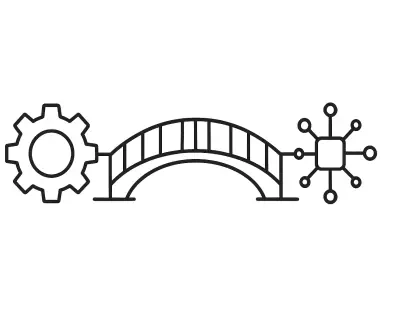
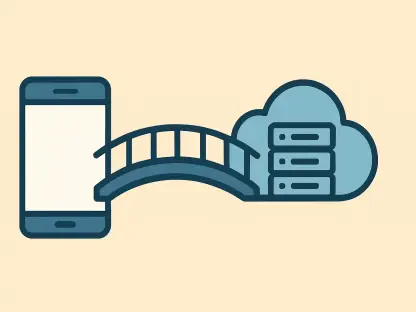
The final step in streamlining the process is replacing human testimony with “receipts”—standardized, automated artifacts that serve as proof of safety and compliance. These receipts act as a bridge between the engineering reality and the regulatory requirements, providing a transparent and immutable record of every action taken within the infrastructure.
Compiling Internal Artifacts from Deployment Pipelines
Teams must present evidence gathered from lower environments, including versioned rollout scripts, audit records from standardized pipelines, and quantitative stability metrics like uptime and throughput. These internal artifacts must show that the change was successfully applied and, if necessary, successfully rolled back in a simulated environment. This data serves as the technical proof that the deployment logic is sound and the code is ready for the production environment.
Validating External Impact via Automated Conflict Scheduling
Beyond application health, machine-verifiable evidence must account for external factors. This includes automated records showing that dependent teams were notified and that the change does not overlap with high-traffic periods or conflicting maintenance windows. By integrating with organizational calendars and dependency maps, the deployment system can automatically generate evidence that the timing of the change is safe and that no known conflicts exist that could exacerbate the risk of the operation.
Core Components of a High-Trust Change Management Strategy
A high-trust strategy is built upon a tiered risk assessment that distinguishes between reversible, mono-directional, and destructive changes to determine the level of required oversight. This enables the organization to focus human talent on high-risk architectural shifts while allowing routine updates to pass through automated channels. Furthermore, automated evidence collection shifts the burden from manual document writing to the generation of machine-readable “receipts” derived directly from CI/CD pipelines, ensuring that the audit trail is always accurate and complete.
Contractual verification using automated testing ensures that changes adhere to documented behavioral contracts between interconnected systems, preventing regression across the service mesh. Finally, audit-ready record keeping maintains versioned, standardized logs that satisfy compliance requirements without human intervention. These components work in unison to transform change management from a friction-heavy process into a streamlined engine for reliability, where every change is justified by hard data rather than optimistic speculation.
Future Outlook: The Evolution Toward Data-Driven Compliance
The shift toward machine-verifiable evidence reflects a broader industry trend where compliance is treated as code rather than a manual checklist. In the coming years, between 2026 and 2029, the industry is expected to witness a widespread adoption of policy-as-code frameworks that further automate the decision-making process. As organizations mature, the Change Review Board will increasingly function as a “customer” of automated data, focusing their human expertise on high-stakes, innovative architectural shifts rather than routine updates.
Challenges remain, particularly regarding the high initial cost of implementation and the need for cultural shifts within conservative industries. However, the move toward “self-service” change management is inevitable for any organization seeking to scale its engineering efforts while maintaining an unshakeable audit trail. Over the next three years, the integration of artificial intelligence into the review process will likely enhance the ability to detect subtle conflicts in “receipts” that humans might overlook, further increasing the reliability of automated systems.
Transforming Change Management into an Engineering Asset
Streamlining change management was not about removing oversight; it was about making that oversight more intelligent and less intrusive. By providing the Change Review Board with clear, machine-verifiable evidence, engineering teams transformed a once-hated bottleneck into a streamlined asset for reliability. Organizations started small by identifying high-effort, low-risk changes and automating their evidence collection first. This phased approach allowed for the gradual accumulation of trust between engineering and compliance departments, proving that machines could indeed handle the burden of proof.
The journey toward data-driven compliance reached a milestone when manual review calls became the exception rather than the rule. Consequently, teams spent more time on feature development and less on administrative overhead, while the system stability metrics showed a marked improvement. As the framework matured, the “receipts” generated by the pipelines provided a level of transparency that manual documentation never could. Ultimately, this approach led to more resilient systems, happier engineering teams, and an organization that remained agile enough to respond to market demands without fear of breaking the core infrastructure.