
Anand Naidu is a seasoned authority in the development world, possessing a rare level of fluency in both the intricate logic of backend systems and the nuanced aesthetics of frontend design. With years of experience navigating the shifts between traditional web architecture and modern cross-platform frameworks, he has become a go-to strategist for businesses looking to translate abstract ideas into high-performing digital assets. His expertise is particularly relevant in an era where the boundary between a simple website and a complex service platform has blurred, requiring developers to be as much architects as they are coders. In this discussion, we explore the essential methodologies behind modern full-stack development, the strategic selection of technology stacks, and the evolving role of the independent developer in helping startups scale through customized, practical solutions.
The following conversation examines the lifecycle of digital products, from the initial requirement gathering to the final deployment on cloud infrastructure. We delve into the importance of balancing aesthetic appeal with backend robustness, the integration of automated tools in a developer’s workflow, and how specialized applications—ranging from car-booking systems to interactive games—serve as a testament to the versatility required in today’s tech landscape.
You work with a diverse stack including Flutter, React, and Node.js. How do you approach building digital solutions that aren’t just technical achievements, but practical tools that solve real-world business problems?
The key is to never let the technology overshadow the actual human problem you are trying to solve. When I look at a stack involving Flutter for mobile, React for web, and Node.js for the backend, I see a toolkit designed for speed and reliability across different user environments. My approach always starts with a deep dive into the specific friction points a business is facing, ensuring that every line of code serves a purpose, like simplifying a transaction or speeding up a data query. It is about creating a seamless bridge between the front-end interface and the back-end logic so that the user feels no lag and the business owner sees tangible results in their operations. By focusing on the “why” before the “how,” I can ensure that the final product is a functional asset rather than just a collection of sophisticated scripts.
In your professional workflow, you emphasize a structured process from understanding requirements to testing and deployment. Why is this comprehensive lifecycle so critical for modern digital products?
A structured development process is the only way to ensure that a project doesn’t collapse under its own weight as it scales. It begins with a rigorous phase of understanding requirements and planning features, which acts as the blueprint for everything that follows, including UI design and API integration. If you skip the testing phase or rush the integration of databases like MongoDB and Firebase, you are essentially building on sand, and the product will eventually fail under real-world load. I treat deployment not as the end, but as the culmination of a cycle that involves AWS and Docker to ensure the application is portable, stable, and ready for high traffic. This holistic view allows me to catch potential bottlenecks early, resulting in a more maintainable and performant product for the client.
With a portfolio featuring over 30 website projects and various mobile applications, how has your experience with niche platforms like Currant and Spireet shaped your understanding of user-centric design?
Working on specialized platforms like Currant, a car-booking app, or Spireet, which focuses on box-cricket bookings, taught me that every industry has its own unique digital “language.” For a booking platform, the user experience must be frictionless, requiring robust authentication and real-time database synchronization to prevent double bookings. These projects shifted my focus toward how software can simplify everyday services, making digital interactions feel like a natural extension of a user’s daily routine. Each of those 30+ projects served as a laboratory where I could test how different demographics interact with dashboards and mobile interfaces. It’s one thing to build a generic site, but it’s quite another to build a dedicated salon-booking application like Trennd that needs to manage schedules, payments, and user profiles simultaneously without a hitch.
You have integrated AI-assisted development tools into your workflow while maintaining traditional engineering practices. How do you find the balance between using automation for speed and ensuring the long-term maintainability of your code?
The rise of AI and automation in 2026 has been a massive catalyst for productivity, but it requires a disciplined hand to ensure it doesn’t lead to “lazy” engineering. I use these modern tools to accelerate repetitive tasks like boilerplate generation or initial debugging, which frees up my mental energy for high-level architecture and complex logic. However, I never sacrifice the core principles of software engineering, such as rigorous manual testing and writing clean, readable code that another developer can understand years from now. Performance and maintainability are non-negotiable; while an AI might suggest a quick fix, I always evaluate that suggestion against the long-term stability of the system. This combination allows me to deliver products faster to startups while still providing the structural integrity that an established enterprise would expect.
Beyond conventional business websites, you’ve explored game development with Flutter and the Flame engine, as well as automation-oriented projects. How does experimenting with things like a Color Switch game or WhatsApp messaging integration enhance your overall versatility?
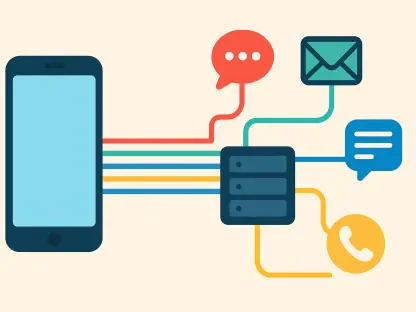
Experimenting with game engines like Flame or building a Node.js-based WhatsApp automation tool pushes me out of the comfort zone of standard CRUD applications. Game development, in particular, requires a deep understanding of state management and frame-by-frame rendering, which actually makes me a better frontend developer when I return to React or standard Flutter apps. The WhatsApp project was a fascinating dive into database integration and automated messaging workflows, which are becoming essential for businesses that want to engage customers where they already spend their time. These “experimental” projects are actually practical research sessions; they allow me to master different development environments and bring those unique insights back to my core business clients. It ensures that my technical palette is broad enough to handle virtually any request, from a simple landing page to a complex, automated communication system.
For startups and small businesses that may not have the budget for a large in-house team, what makes the freelance full-stack model a superior alternative for bringing an idea to life?
The primary advantage is the agility and direct line of communication that a single, high-level full-stack developer provides. When a startup works with me, they aren’t getting a fragmented team where the frontend person doesn’t talk to the backend person; they are getting a unified vision where the API, the database, and the user interface are built in total harmony. This model is incredibly cost-effective because it eliminates the overhead of a large firm while providing a customized solution that generic, off-the-shelf software simply cannot match. I can pivot quickly as the business requirements change, ensuring that the digital product evolves alongside the startup’s growth. It makes high-end technology accessible, allowing smaller players to compete with much larger organizations by having a digital platform that is just as fast, secure, and professional.
What is your forecast for the future of full-stack development?
I believe we are entering an era where the distinction between “web” and “mobile” will almost entirely disappear, replaced by truly universal applications that provide a native-like experience regardless of the device. From 2026 to 2028, we will see cloud computing and serverless architectures become even more invisible, allowing developers to focus almost entirely on user experience and complex data processing rather than managing infrastructure. We will also see a deeper convergence of AI and cross-platform frameworks, where the software will be able to adapt its own interface based on the specific needs of the user in real-time. For developers, the challenge will be to stay grounded in the fundamentals of engineering while becoming masters of these new, highly automated environments. The goal remains the same: taking a raw idea and turning it into a dependable, high-performing reality that makes life easier for the end user.