
Android’s battery-saving features like Doze mode can disrupt the delivery of real-time message updates if the application relies on direct provider connections. This technical hurdle is particularly prominent in 2026, as professionals in high-stakes fields like recruitment, sales, and real estate increasingly demand seamless communication across various channels. The current market landscape is defined by extreme fragmentation, where a single workflow might span WhatsApp, LinkedIn, and multiple enterprise email accounts. When developers attempt to build individual integrations for each service, they often encounter a massive productivity bottleneck known as context switching, which forces end-users to manually bridge data gaps by copying contact details and conversation histories between disparate applications. To resolve this, the industry has shifted toward the implementation of Unified Messaging APIs, which collapse the inherent complexity of various authentication protocols and message formats into a single, standardized integration framework. This approach provides a consistent data model that allows Android applications to handle multi-channel communication efficiently while maintaining high performance.
Architectural Foundations: The Necessity of a Backend Relay
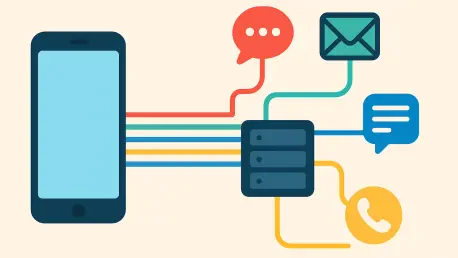
A fundamental architectural rule for modern mobile development is that Android clients should never communicate directly with third-party messaging providers to ensure maximum security. Instead, a backend relay service must act as a necessary intermediary to handle sensitive logic and secret management. Hardcoding API keys or client secrets within an Android Package (APK) remains a significant risk, as even sophisticated obfuscation can be bypassed by determined reverse-engineering efforts. By centralizing these credentials on a secure server, developers ensure that the broad access granted by unified APIs remains protected from malicious actors who might attempt to compromise the mobile client. This separation of concerns allows the mobile app to focus on the user interface while the backend handles the heavy lifting of provider-specific communication and credential storage.
Beyond simple security, a robust backend relay is the only reliable way to manage real-time webhooks and enforce business policies across different messaging platforms. Messaging services deliver updates via public HTTPS endpoints that must remain perpetually reachable to capture incoming data. Since Android devices frequently lose connectivity in low-signal areas or enter aggressive battery-saving states, they are fundamentally unsuitable for receiving these webhooks directly. A centralized relay server can capture these events, perform essential tasks like access logging and rate limiting, and ensure data integrity before passing verified information to the mobile application. This structure guarantees that no messages are lost during network transitions or when the device is idle, providing a reliable foundation for professional communication tools that require constant uptime and data accuracy.
Strategic Implementation: Streamlined Authentication and Delivery
The diverse array of login methods across modern platforms, from standard OAuth for Google services to QR-code-based flows for WhatsApp, presents a significant hurdle for mobile developers. A unified strategy simplifies this by utilizing Hosted Authentication Links, which offload the complexity of credential exchange to a secure web environment. In this model, the Android application opens a Custom Tab where the user completes the native login process directly with the provider. Once the session is established, the backend relay receives a secure callback and connects the account to the user’s profile. This method is particularly effective for platforms like LinkedIn, as it allows the application to act as a technical intermediary without requiring the developer to build and maintain a custom API client from scratch, thereby reducing the chance of authentication errors.
Once authentication is secured, achieving real-time responsiveness requires a sophisticated push notification strategy using Firebase Cloud Messaging. When the backend relay detects a new message via a webhook, it triggers a high-priority data message to the specific device. Developers should prioritize Data Messages over standard Notification Messages because they offer full programmatic control over how the payload is rendered in the system tray. This flexibility enables the use of the Android MessagingStyle API, which groups conversations logically and supports direct-reply actions from the notification shade. Given that FCM limits payloads to 4 KB, the push should contain only essential metadata and identifiers. This triggers the application to fetch the full conversation history or large attachments in the background, ensuring a smooth and immediate experience for the end-user.
Data Resilience: Offline Synchronization and Media Handling
To maintain functionality in environments with intermittent connectivity, such as subways or elevators, developers must implement an offline-first architecture. This is best achieved using a local Room database to store chat histories and a dedicated outbox for pending messages. By using unique provider-specific message IDs as primary keys, the application can prevent duplicate entries during complex synchronization cycles. For users with extensive histories, mapping the API’s cursor-based pagination to the Android Paging 3 library ensures a fluid scrolling experience without excessive memory consumption. Furthermore, outgoing communications should be managed by WorkManager, which guarantees that messages are eventually sent even if the app process is terminated or the device restarts, providing the reliability expected of professional-grade communication software.
Handling media assets like voice notes, images, and PDF documents requires a strategy that balances performance with local storage constraints. Attachments should be treated as metadata during the initial sync, with the actual binary data being downloaded only when the user explicitly requests to view the file. On the transmission side, images and videos should undergo client-side compression to save bandwidth and reduce latency. Developers must also be mindful of format compatibility, as different messaging platforms often require specific audio encodings or file types. For instance, converting a voice memo to the specific format required by WhatsApp before it hits the relay service ensures that the recipient can play the file immediately. This proactive media management prevents the application from becoming sluggish while ensuring that all shared content remains accessible across all channels.
Technical Evolution: Scalability and Compliance Standards
The transition toward unified architectures proved essential for reducing technical debt, as it allowed development teams to maintain a single conversation model rather than a dozen different protocol implementations. Instead of reacting to every minor API change from external providers, engineers delegated the maintenance of these connections to the unified service provider. This strategic move enabled companies to focus their resources on core product innovation and user experience improvements throughout the year. The resulting codebase became significantly more scalable, allowing for the rapid addition of new messaging channels without requiring a complete overhaul of the existing sync engine or notification pipeline. This streamlined approach ensured that the application remained agile and responsive to changing market demands without accumulating unmanageable maintenance costs.
In finalizing these integrations, software architects prioritized rigorous security due diligence to protect sensitive professional data. It was determined that high-value compliance standards, such as SOC 2 Type II and GDPR adherence, were non-negotiable requirements for any unified API vendor. Moving forward, developers should implement periodic security audits of their backend relay services and ensure that data encryption is applied both at rest and in transit. The most successful implementations utilized a multi-layered approach that combined secure vendor partnerships with smart local data management and robust error handling. These steps ensured that the final product was not only highly functional but also respected the privacy and security requirements of the enterprise environment, setting a high standard for communication tools in the 2026 software landscape.