
Anand Naidu is a seasoned development expert who has spent years navigating the complex interplay between frontend elegance and backend stability. With a deep mastery of multiple coding languages and a front-row seat to the evolution of DevOps, he provides a grounded perspective on the current shift toward AI-assisted engineering. As teams grapple with the sheer volume of code generated by “vibe coding” agents, Naidu offers essential insights into how these new “agentic” tools can either streamline a workflow or, if mismanaged, create a new layer of technical debt.
This conversation explores the transition from traditional code reviews to a holistic system of agentic change management. We discuss how modern tools move beyond simple line-by-line diffs to prioritize pull requests based on business value and urgency, while mapping the hidden “blast radius” of architectural changes. Naidu also touches on the critical role of security scanning in the development pipeline and the ongoing necessity of human oversight and clear governance to prevent automation bias from introducing unforeseen risks into the software development lifecycle.
With the rise of automated agents producing massive amounts of code, how does the concept of triage help teams distinguish between critical updates and low-priority changes?
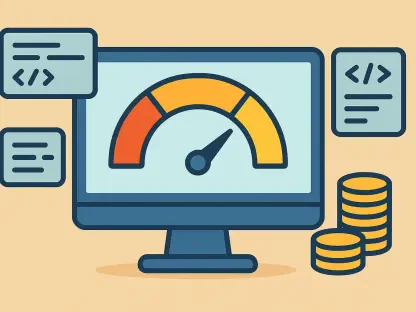
The sheer volume of code hitting our repositories today can be overwhelming, often feeling like a relentless wave that threatens to drown manual review processes. Triage steps in as a sophisticated filter, evaluating incoming pull requests against a variety of signals like business value, urgency, and the actual effort required for a fix. By categorizing these changes into specific priority bands, the system allows lead developers to focus their mental energy on high-risk modifications while mundane updates move through a different track. It’s a sensory relief for a lead dev to see a dashboard that clearly recommends the next action based on readiness and reviewer fit, rather than just seeing a chronological list of 50 pending PRs. This level of organization ensures that the most impactful work isn’t buried under a mountain of minor “vibe coding” experiments.
Beyond just looking at what lines of code changed, why is it becoming necessary to visualize the broader impact through an interactive blast radius?
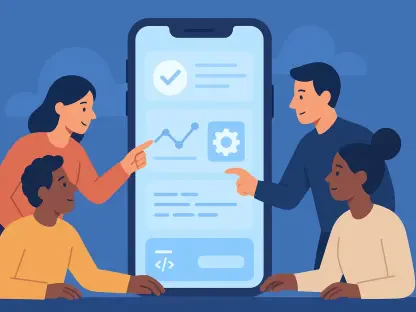
Standard pull request diffs are notoriously narrow; they show you that a line changed, but they don’t tell you if that change ripples through the entire repository architecture. Change Stack addresses this by analyzing definitions, usages, and data flows to show exactly how a modification affects downstream systems or existing contracts. We’ve all felt that pit in our stomach when a “simple” config change breaks a service three layers deep because of a dependency no one remembered was there. This tool essentially digitizes “tribal memory,” ensuring that vital architectural knowledge doesn’t vanish when a senior developer leaves the company. It provides a visual map of relationships, allowing the team to see the architecture analysis in real-time before they hit the merge button.
How does integrating a dedicated security agent directly into the PR process change the way teams handle vulnerabilities and infrastructure-as-code?
Integrating security directly into the flow means we are no longer treating safety as an afterthought or a final gate that everyone hates to reach. The Security Agent scans everything from the committed source code to infrastructure-as-code and software bill of materials, or SBOMs, looking for cracks in the foundation. It’s priced at $40 per seat per month, which reflects the heavy lifting it does in recurrently scanning configurations and generating remediation options that developers can actually use. This creates a proactive environment where vulnerabilities are caught and addressed within the PR process itself, rather than being flagged by a separate security team three weeks later. Seeing a suggested fix right alongside a flagged dependency makes the process feel collaborative rather than punitive.
While automation offers a lot of speed, there are significant concerns about governance; how should enterprises balance these AI signals with human judgment?
It is vital to remember that while these agents are incredibly smart, they are not the ultimate authority and should never replace the final gate of human approval. Enterprises must maintain their existing controls like CODEOWNERS files, required checks, and branch protection policies to ensure accountability remains with a person, not a model. There is a real risk of automation bias, where a team might blindly trust a “low risk” classification and miss a critical architectural flaw. CIOs need to be asking tough questions about who defines the scoring criteria and how the team detects model drift over time. High-impact changes should always require a human signature to maintain a clear path for exceptions and to ensure that the separation of duties remains intact.
With major platforms like GitHub and GitLab already dominating the development space, how does a specialized tool for agentic change management stay competitive?
The competition is definitely heating up, especially since giants like GitHub have already introduced features like Stacked PRs to help manage complex reviews. However, specialized tools carve out a niche by offering deeper integrations into security and code quality that overlap with vendors like Snyk, Semgrep, and Sonar. The real threat is “platform consolidation,” where an enterprise might decide they don’t need another vendor if GitHub folds enough prioritization logic into its native workflow. To stay relevant, these tools have to offer a more granular level of analysis, such as the Pro plan restricted features that provide deeper architectural insights than a standard platform might. It’s a race to see who can provide the most context with the least amount of friction for the developer.
What is your forecast for the evolution of AI-driven development workflows over the next few years?
I expect we will see a shift where the developer’s role transitions from “writer” to “orchestrator,” where 80% of the code is drafted by agents and the human focus is almost entirely on intent and architectural integrity. We will likely see these triage and blast radius tools become so deeply embedded that a developer won’t even be able to open a PR without a pre-computed impact report. However, as these systems become more autonomous, the premium on “human-in-the-loop” governance will actually increase, making the ability to audit and explain AI decisions a core requirement for any enterprise. We are moving toward a future where the “tribal memory” of a company is fully indexed and searchable, allowing for a much faster onboarding process and a significantly lower rate of regression errors. Success will belong to the teams that can leverage this speed without sacrificing the rigorous oversight that keeps a codebase healthy.