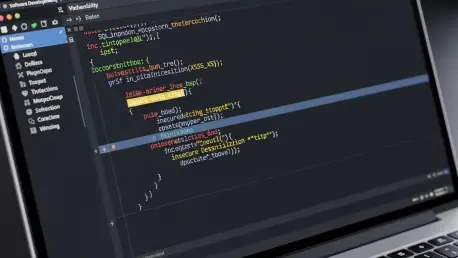

The modern engineering floor has effectively dissolved its physical boundaries, transforming from a collection of secured offices into a vast, interconnected digital landscape where productivity and peril exist in equal measure. Platforms like GitHub now serve as the central nervous system for global innovation, making their internal security a matter of critical importance for the entire tech industry. As development workflows increasingly rely on third-party integrations, the “Developer Experience” market has inadvertently expanded the corporate attack surface. This evolution places significant weight on the security of IDEs and the massive marketplaces of plugins that facilitate rapid coding, where a single vulnerability can have far-reaching consequences across global supply chains.
The integration of cloud-based services and local development tools has created a hybrid environment that is difficult to monitor. Today, the focus shifts toward the individual workstation as the weakest link in a complex chain of trust. This shift reflects a broader industry trend where the ease of tool adoption often outpaces the implementation of rigorous security vetting.
The Rise of Developer-Centric Threats and Supply Chain Infiltration
Weaponization of Extensions and Marketplace Dependencies
Threat actors are increasingly pivoting away from direct infrastructure attacks to target the individual developer workstation. By injecting malicious code into popular tools like Visual Studio Code extensions, attackers bypass traditional perimeter defenses. This incident involving TeamPCP highlights a growing trend where cybercriminals exploit the inherent trust developers place in marketplace utilities to gain a foothold. These tools often require elevated permissions to interact with file systems and cloud environments, providing a “golden ticket” for attackers to exfiltrate internal source code and sensitive configurations.
Because extensions operate within the context of the user, they can access local SSH keys and environment variables without triggering standard security alerts. The sophistication of these attacks lies in their simplicity, leveraging the very tools meant to improve efficiency. This methodology allows groups like TeamPCP to move laterally from a single compromised plugin to the core of an organization’s intellectual property.
Quantifying the Economic and Operational Impact of Repository Breaches
Recent data suggests a sharp increase in attacks targeting package managers and developer environments, with groups like TeamPCP seeking high-value payouts through targeted extortion. The breach of 3,800 internal repositories at GitHub represents a massive exposure of intellectual property, even when customer data remains untouched. The demand for a $50,000 ransom demonstrates a shift in cybercriminal strategy toward smaller, more frequent extortion attempts that target the reputation and internal logic of tech giants.
Market projections indicate that from 2026 to 2028, enterprises will be forced to increase their cybersecurity spending specifically on supply chain integrity and developer-focused security tools. As the cost of credential theft and intellectual property recovery rises, the financial burden of such breaches will extend beyond immediate remediation. Companies now face the ongoing cost of total credential rotation and the implementation of more invasive endpoint monitoring.
Overcoming the Vulnerabilities of Integrated Development Environments
The primary challenge facing the industry is the tension between developer productivity and rigid security protocols. IDE extensions often operate in a “black box” with minimal oversight, making it difficult for security teams to vet every update or third-party contribution. To combat this, organizations must move toward sandboxing development environments and implementing strict “least privilege” access for plugins. Strategies such as automated extension scanning, internal-only marketplaces, and mandatory code-signing are becoming essential to mitigate the risks posed by compromised workstations.
Moreover, the transition to cloud-based IDEs could provide a more controlled environment where every action is logged and scrutinized. By centralizing the development environment, companies can apply the same security rigors to the coding process that they currently apply to production servers. This approach significantly reduces the potential for a rogue extension to silently exfiltrate data from a local machine.
Navigating the Compliance and Security Standards of the Software Supply Chain
In response to escalating supply chain threats, the regulatory landscape is shifting toward more stringent requirements for software transparency. Frameworks such as the Software Bill of Materials (SBOM) are becoming standard, requiring companies to account for every third-party component in their stack. Compliance standards like SOC2 and ISO 27001 are also evolving to include more rigorous audits of developer tools and internal repository access controls. These regulations ensure that major players maintain high levels of accountability and implement rapid response protocols.
The requirement for continuous monitoring and rapid response has turned security from a static checklist into a dynamic operational necessity. Companies are now expected to demonstrate not just that they have walls, but that they can detect and isolate a breach within minutes. This regulatory pressure is driving the adoption of more transparent development cycles and better managed third-party ecosystems.
The Future of Secure Coding and the Evolution of Marketplace Governance
The next frontier of cybersecurity will likely focus on “Zero Trust” developer environments and AI-driven threat detection within software marketplaces. Future development tools will likely incorporate real-time behavioral analysis to detect when an extension performs unauthorized data exfiltration or credential access. As the industry matures, we can expect a more centralized and curated approach to extension ecosystems, where platform providers take a more active role in continuous monitoring and proactive threat hunting to prevent sophisticated actors from exploiting the software supply chain.
This evolution will likely lead to the rise of “Verified Developer” programs and more aggressive curation of marketplace content. Instead of a wide-open ecosystem, the industry may move toward a tiered system where only vetted extensions can access sensitive internal assets. This shift will fundamentally change how developers interact with their tools, prioritizing security as a baseline feature of the development lifecycle.
Strengthening Defensive Postures in an Interconnected Tech Landscape
The breach at GitHub served as a watershed moment for enterprise security, proving that even the most sophisticated tech giants remained vulnerable to supply chain intrusions. Protecting production environments was no longer sufficient if the tools used to build them remained insecure. Organizations recognized that the hardening of developer workstations and the rigorous vetting of third-party extensions were essential to maintain the integrity of their internal repositories. Leaders prioritized building a resilient infrastructure that could withstand the evolving tactics of groups like TeamPCP.
The incident prompted a industry-wide shift toward mandatory hardware-based authentication for all developer actions and the implementation of isolated execution environments for untrusted plugins. Security teams integrated automated secret-scanning tools that prevented credentials from ever being committed to a repository, regardless of the entry point. Ultimately, the industry moved toward a model where developer productivity and security were no longer viewed as opposing forces, but as twin pillars of a sustainable and trustworthy software ecosystem.