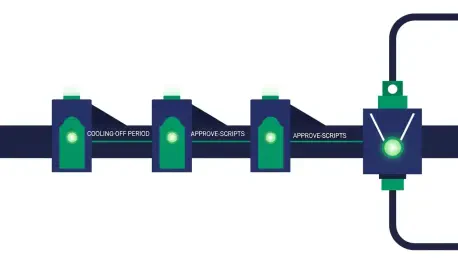

The software world recently witnessed a critical evolution in the security of JavaScript development with the definitive release of NPM 12, a version that fundamentally reimagines the safety of package management. For years, the Node.js ecosystem relied on an implicit trust model that assumed third-party dependencies were benign, leaving developers exposed to sophisticated supply chain attacks that leveraged the very tools meant to simplify their work. This new release signals the end of that era by implementing a zero-trust architecture that dismantles the most common attack vectors used by malicious actors today. Rather than providing a series of optional security patches, this update fundamentally alters the internal logic of how scripts are executed and dependencies are resolved. By removing the automatic execution of potentially dangerous code during the installation process, NPM 12 ensures that developers are no longer vulnerable to hidden malware lurking within standard library updates.
Addressing the Vulnerabilities of Automated Execution
Historically, the most significant threat to the npm ecosystem emerged from the use of “install” hooks, which allowed packages to execute arbitrary scripts the moment they were added to a project. While these hooks were originally designed for helpful tasks like compiling native code or setting up environmental configurations, they became a favorite tool for attackers seeking to deploy ransomware or steal sensitive credentials from developer machines. NPM 12 addresses this long-standing vulnerability by stripping away the automatic execution of these lifecycle scripts, creating a far more controlled environment. In this new landscape, malicious hooks can no longer run silently in the background without the explicit consent of the user, effectively closing a door that had been left open for over a decade. This shift represents a move toward prioritizing system integrity over developer convenience, ensuring that the package manager acts as a guard.
By dismantling the default behavior of lifecycle scripts, the maintainers of the npm registry have taken the single most impactful step toward securing local developer workstations and enterprise build servers. Previously, simply typing a command to install a seemingly harmless utility library could lead to a compromised system if any dependency deep within the dependency tree contained a malicious post-install script. This type of vulnerability was particularly difficult to detect because it occurred during the setup phase, often before any security scanners could analyze the local environment. NPM 12 mandates a proactive approach to script execution, ensuring that the act of adding a new library does not inadvertently open a backdoor into a company’s private infrastructure or a developer’s personal files. This defensive layer is essential because it shifts the burden of proof from the user to the package author, requiring transparency for any executable actions.
The Shift Toward Explicit Permission Models
At the core of the NPM 12 philosophy is a transition from an “opt-out” security posture to an “opt-in” model, which fundamentally changes how developers interact with third-party code. In all previous versions of the package manager, risky behaviors were permitted by default unless a user or an organization specifically went through the trouble of disabling them via complex configuration files. The new version flips this logic entirely, favoring safety and transparency as the baseline state for every new project. Developers must now explicitly authorize any lifecycle scripts that reside within their dependencies, ensuring that no external package can run code on a local machine or within a Continuous Integration environment without a prior audit. This change forces a necessary pause in the development cycle, encouraging teams to review why a particular package requires script execution rights before granting it access to their resources.
In addition to script management, this update places strict limitations on where a project can fetch its code, serving as a powerful deterrent against unauthorized external access and repository hijacking. By default, NPM 12 blocks the resolution of dependencies that originate from Git repositories or remote HTTPS tarballs, as these sources are frequently used by bad actors to point project manifests toward untrusted or unverified locations. To include these types of dependencies now, developers must utilize specific command-line flags or explicit configuration overrides, turning every external fetch into a conscious and documented decision. This requirement significantly reduces the risk of background exploitation, as it prevents the silent introduction of code from sources that bypass the standard security checks of the main npm registry. By enforcing these boundaries, the tool ensures that the supply chain remains verifiable and under the direct control of the lead engineer.
Innovative Safeguards: Cooling-Off Periods and Granular Control
To combat the rise of “campaign-style” attacks where malware is rapidly spread through automated updates across thousands of projects, NPM 12 introduces a critical safety buffer through the min-release-age setting. This feature allows organizations to mandate that any package version must exist on the public registry for a specific amount of time before it becomes eligible for installation in their local environments. This intentional delay provides a vital window of opportunity for security researchers, community members, and automated scanning tools to identify and purge malicious artifacts from the registry before they reach production systems. By slowing down the adoption of brand-new, unvetted releases, this cooling-off period mitigates the damage of “zero-day” package exploits that rely on the speed of modern CI/CD pipelines to propagate. It transforms the race against attackers into a more manageable and observable process.
Complementing these structural safeguards is the new npm approve-scripts command, which provides a granular and intuitive interface for managing script permissions across an entire project. Instead of granting broad, sweeping permissions to every package in a complex dependency tree, developers can now review and authorize individual scripts on a per-dependency basis. This approach strictly adheres to the principle of least privilege, ensuring that only the most necessary operations are allowed to run during the build process. Furthermore, the mandatory blocking of native module builds via node-gyp by default ensures that binary compilation—a frequent source of hidden vulnerabilities and system instability—cannot occur without the developer being fully aware of the operation. These combined features offer a level of visibility that was previously impossible, allowing teams to construct a hardened environment that resists both known and unknown threats.
Navigating Industry Impact: Transitioning to the New Standard
While these security enhancements are indispensable for the modern web, they represent significant breaking changes that will inevitably disrupt many established development workflows and automated pipelines. High-profile tools and frameworks that rely on complex native builds or specific installation configurations will require updated settings and refined scripts to function correctly under the stricter rules of NPM 12. To ease this massive transition, the ecosystem provided a migration path through npm version 11.16.0, which offers warnings and dry-run capabilities to identify potential roadblocks before they cause build failures. This gives development teams the necessary time to refactor their internal processes and update their documentation before the enforcement of the new security standard takes hold. The transition highlights the tension between legacy compatibility and the urgent need for a more resilient and secure software supply chain.
Ultimately, the implementation of NPM 12 shifted the strategic advantage away from attackers by removing the most accessible paths to system compromise during the installation phase. While malicious actors likely pivoted toward more complex social engineering tactics or runtime exploits as automated execution became harder to achieve, the community gained unprecedented visibility into dependency trees. Organizations that adopted these new protocols found themselves better aligned with global security standards such as SLSA and the best practices outlined by the OpenSSF. Moving forward, the industry successfully transitioned into an era where security was no longer a secondary consideration but a non-negotiable component of the software development lifecycle. Development teams began treating their dependency management with the same rigor as their own source code, resulting in a more robust ecosystem that was capable of withstanding the increasingly sophisticated threats of the modern digital landscape.