
The announcement that Elon Musk’s SpaceX is preparing to absorb Cursor in a massive sixty billion dollar deal marks the precise moment when the digital craft of writing code finally collided with the industrial scale of heavy infrastructure. This high-stakes acquisition is not merely a corporate merger but a fundamental reconfiguration of the global technological landscape. By bringing an AI coding platform already integrated into 64% of Fortune 500 companies under the same roof as orbital rockets and massive xAI data centers, SpaceX is positioning itself to own the very control plane of the digital age. This move effectively signals the end of the era where software startups could exist in a vacuum, proving that the future belongs to those who control both the code and the physical compute necessary to run it.
The current transition represents a definitive pivot in how the world views software development tools. For years, the industry viewed IDEs and AI assistants as secondary utilities, but the scale of this transaction elevates them to the status of critical national infrastructure. SpaceX is not just buying a text editor; it is acquiring a gateway through which a majority of modern software is filtered, debugged, and optimized. This integration suggests a future where the distinction between software and physical engineering becomes increasingly blurred, as the same intelligence used to simulate rocket trajectories is applied to the mundane but essential task of building enterprise applications.
A Seismic Shift in the Architecture of Modern Software Engineering
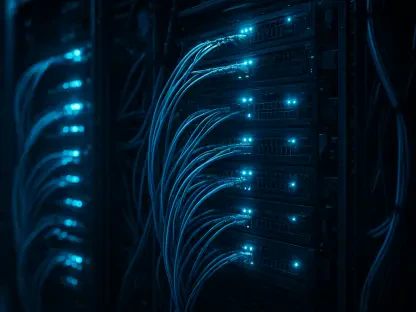
The decision to bring Cursor into the SpaceX ecosystem creates a vertically integrated powerhouse that few competitors can hope to match. Traditionally, software companies functioned by renting capacity from cloud providers, creating a layer of abstraction between the developer and the hardware. However, the sheer volume of data and the low-latency requirements of agentic AI models have made this model increasingly inefficient. By merging these entities, the new organization controls the entire stack, from the physical fiber optics and satellites to the actual keystrokes of a developer working in a skyscraper in New York or a garage in Silicon Valley.
Furthermore, this acquisition marks the official conclusion of the software-only era for high-growth tech firms. In the current environment, the ability to iterate on complex codebases is limited by the availability of high-end hardware, a resource that SpaceX has secured in abundance. This deal forces every other player in the enterprise space to reconsider their reliance on third-party infrastructure. The industry is moving toward a state where the most powerful development tools are those that sit closest to the heat sinks and power grids of massive AI clusters, making the “control plane” a physical reality rather than just a technical metaphor.
From Orbit to IDE: The Logic Behind a $60 Billion Gamble
At the heart of this strategy lies the resolution of the most significant bottleneck in artificial intelligence: the physical limiting reagents of compute and power. While Cursor established itself as a market leader through its intuitive interface and agentic capabilities, it eventually faced a structural ceiling. Independent software startups, regardless of their revenue, are often at the mercy of GPU allocation and energy zoning laws. By joining SpaceX, Cursor gains immediate access to the xAI infrastructure, which is currently unmatched in its ability to navigate the complex logistics of building and powering next-generation data centers.
This logic extends beyond mere processing power into the realm of operational efficiency and cooling technology. SpaceX has developed unique expertise in managing extreme thermal environments and high-capacity electrical systems, skills that are directly transferable to the maintenance of AI superclusters. This physical proximity allows for a level of software-hardware co-optimization that was previously impossible. For the enterprise user, this translates to faster response times and the ability to run far more complex agentic workflows that would be cost-prohibitive on standard public cloud environments.
The Strategic Realignment of the Global Tech Ecosystem
This transaction introduces a profound change in how compute is valued within the global economy, effectively turning hardware into the primary currency of the AI age. As Cursor gains the hardware “legs” to outpace traditional enterprise vendors like Microsoft and Google, the competitive field is being narrowed to those who can provide their own silicon and power. The era of “vibe coding,” which focused on aesthetic code generation and quick fixes, is rapidly giving way to a more disciplined, agentic workflow environment. These new workflows require a level of governance and hardware-backed reliability that only a vertically integrated entity can provide.
However, this realignment also creates a significant platform risk for the broader developer community. While Cursor has historically maintained a model-agnostic approach, the pressure to favor the Grok ecosystem or other proprietary SpaceX technologies is immense. If the tool begins to prioritize specific internal architectures, enterprise customers who have standardized their operations on rival models may find themselves facing a difficult choice. The market is now watching to see if the tool can remain a neutral ground for development or if it will become a walled garden that dictates the technological trajectory of its users.
The Trust Gap and the Erosion of Data Sovereignty
Security analysts and legal experts are currently sounding the alarm regarding the intellectual-property bloodstream of the global corporations that depend on Cursor. The platform’s initial success was built on a foundation of zero-data-retention policies, a critical factor that allowed it to pass the rigorous procurement hurdles of the Fortune 500. With the change in ownership, there is a growing concern that these contractual guarantees may be reinterpreted or modified to serve the training needs of broader AI models. This potential for data leakage represents a crisis of trust for organizations that consider their source code to be their most valuable asset.
The timing of this deal also suggests a sophisticated layer of financial engineering intended to bolster valuations ahead of potential public offerings. By socializing the acquisition now, the organization is effectively inflating the perceived value of its physical assets by tying them to the high-multiple growth of the AI software sector. For the enterprise customer, this means that the tools they use for daily development are now pawns in a much larger game of market positioning. There is a palpable fear that the transparency and auditability of data fencing will become harder to verify as the software is absorbed into a private, proprietary infrastructure that spans the globe.
A Framework for Navigating the New Enterprise Reality
For technology leaders and engineering executives, the new reality of the SpaceX-Cursor merger requires an immediate and proactive strategy to safeguard corporate assets. The first step involves a comprehensive audit of existing service-level agreements to ensure that privacy protections remain enforceable under the new corporate structure. Organizations must determine whether the performance gains offered by enhanced compute access outweigh the risks associated with potential vendor lock-in. It is becoming increasingly necessary to establish model-choice contingency plans, ensuring that internal development workflows can be ported to alternative platforms if the tool’s neutrality is compromised.
Furthermore, security departments should demand transparent, third-party audits of the data fencing and processing pipelines used by the merged entity. The goal is to ensure that the control plane of software development remains entirely private and decoupled from any external model training initiatives. As the industry moves forward, the most successful organizations will be those that leverage the power of these new integrated tools while maintaining a rigorous stance on data sovereignty. By prioritizing architectural flexibility and insisting on clear infrastructure transparency, engineering teams can navigate this transition without ceding control over their technological future to a single provider.
The acquisition of Cursor by SpaceX marked a definitive turning point in the relationship between industrial compute and creative software development. Forward-thinking organizations responded by implementing rigorous vetting processes for all AI-assisted tools. These entities successfully migrated their most sensitive workloads to air-gapped environments while still benefiting from the raw processing power provided by the new SpaceX infrastructure. As the dust settled, the tech industry adopted a more nuanced approach to vendor selection, ensuring that the control plane of innovation remained firmly in the hands of the engineers. These steps ensured that corporate intellectual property was protected while the benefits of the merger were fully realized across the global enterprise sector.