
The silent hum of a high-performance workstation no longer signals a grueling night of hunting for a misplaced semicolon or a catastrophic memory leak that refuses to reveal its source. Instead, the modern screen reflects a rapid-fire exchange between a human operator and an agentic system that translates abstract intent into production-ready repositories in a matter of seconds. This evolution represents a departure from the traditional artisan model of programming, where skill was synonymous with the endurance required to master cryptic syntax and hardware limitations.
As artificial intelligence assumes the role of the primary architect, the industry stands at a crossroads. The transition from manual labor to algorithmic orchestration is not merely a change in tools but a fundamental shift in the cognitive requirements of the profession. This movement raises a critical question about the long-term viability of software quality when the foundational struggle that once defined technical mastery is systematically removed from the development lifecycle.
The Shift: From Manual Debugging to Algorithmic Orchestration
Decades ago, a developer’s professional value was tethered to the ability to navigate the labyrinthine complexities of low-level languages and unoptimized logic. Mastery was achieved through the meticulous study of physical manuals and the cultivation of an intuitive sense for how electrons moved through silicon. Today, sophisticated agentic tools can synthesize complex, secure applications from brief natural language descriptions, effectively bypassing the years of grueling practice that once served as the gateway to the profession.
This transition marks a departure from a world where every line of code represented a hard-won victory of human intellect over machine stubbornness. In this contemporary setting, the machine no longer requires the human to act as a translator of logic but rather as a provider of intent. The focus has moved from the microscopic details of execution to the macroscopic goals of the system, fundamentally altering the relationship between the creator and the creation.
The Erosion of Trial-by-Fire Learning in the Modern Tech Landscape
Deep understanding in the software domain has traditionally been an emergent property of persistent failure. In the pre-internet landscape, programmers developed wisdom by wrestling with poorly documented systems and enduring the consequences of inefficient code that crashed under load. These moments of technical pain served as the primary teachers, grounding abstract concepts like memory management and algorithmic complexity in the reality of real-world repercussions.
As artificial intelligence begins to automate the high-stakes tasks of security auditing and resource management, the traditional trial by fire is becoming an optional experience. The immediate availability of high-quality, optimized output means that new entrants to the field may never encounter the specific types of failures that previously forced a deep dive into the inner workings of a computer. Consequently, the industry faces a pivot point where the lack of struggle might lead to a more superficial grasp of the underlying architecture.
Analyzing the Paradox: Why Wisdom-Free Software Matters
While modern AI agents exhibit a level of technical precision that can exceed human performance, their capabilities are anchored in the historical records of human effort. These models have ingested billions of lines of code, representing the collective wisdom and architectural insights of generations of human developers. This creates a fascinating but precarious innovation paradox where the tools of the present are fueled by the struggles of the past, even as those same tools eliminate the need for such struggles in the future.
In this environment, the role of the developer has shifted toward that of a high-level conductor rather than a meticulous writer. It is becoming increasingly common for professionals to deploy complex logic without ever inspecting the underlying syntax, trusting the machine to manage the intricacies. If the next generation of creators stops engaging in the manual friction that produces deep architectural insight, the reservoir of original human experience that feeds these models could eventually become stagnant.
The Historical Weight: Hard-Earned Expertise and System Architecture
Veteran engineers often recall the final decades of the previous century as a formative period where the constraints of the hardware necessitated a rigorous approach to system design. The necessity of writing highly efficient code for limited memory environments produced an intuitive understanding of object-oriented principles and modular architecture. This expertise was not taught in a vacuum but was the direct result of watching unoptimized systems fail under the pressure of production environments.
In the current tech landscape, the definition of wisdom is migrating from the ability to write perfect syntax to the capacity for exercising sound judgment over AI-generated solutions. The value of a senior developer is no longer found in their typing speed or knowledge of obscure libraries but in their ability to recognize when a generated architecture deviates from sustainable practices. This shift prioritizes the evaluation of outcomes over the manual labor of execution, requiring a different type of intellectual engagement.
A Framework: Transitioning from Developer to Strategic Orchestrator
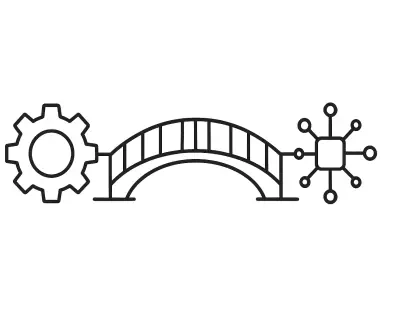
The shift toward strategic orchestration established a new standard where human value was found in high-level integration. It became necessary to treat traditional syntax as a conceptual framework for directing automated agents, much like the study of a classical language provides a foundation for modern communication. Professionals prioritized the definition of complex problems and the overarching system design, ensuring that the machine-generated logic adhered to rigorous vetting standards.
This transition transformed the developer into a conductor who exercised final authority over the architectural direction. The requirement for human oversight remained the cornerstone of the industry, even as the methods of creation became fully automated. Sound judgment and the ability to define high-level system requirements became the primary metrics of success. Ultimately, the evolution of the craft ensured that human wisdom remained the final arbiter of quality, purpose, and ethical integrity in an era of machine-led production.