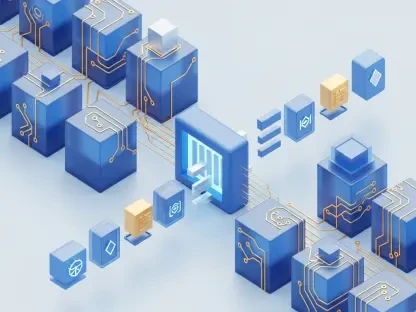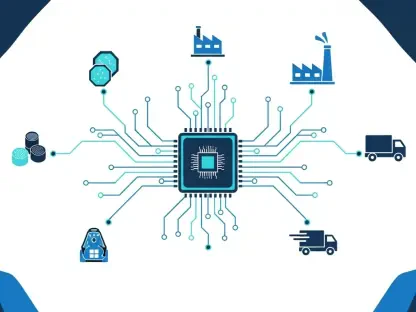

The rapid migration of critical business logic to hyperscale artificial intelligence endpoints has created a paradox where the most sophisticated systems in human history are also the most precarious. While the transition from isolated on-premises servers to centralized, cloud-hosted intelligence was marketed as a move toward infinite scalability, it has instead introduced a fragile dependency on a handful of dominant providers. Modern enterprise resilience no longer depends on local hardware maintenance; rather, it hinges on the invisible stability of remote API connections and the specialized hardware clusters that power them. This review examines how this shift has fundamentally altered the technological landscape, moving the industry away from traditional “siloed” safety toward a model of collective vulnerability.
Defining Resilience in the Age of Cloud-Hosted Intelligence
In the current technological context, resilience has evolved from a matter of physical backups to a complex orchestration of distributed software dependencies. The core principle of modern resilience involves the ability of a system to maintain its primary functions despite the failure of its underlying intelligence engine. As organizations have moved toward centralized, hyperscale dependencies, the “black box” nature of these systems has made traditional troubleshooting nearly impossible. Understanding this context is vital, as the infrastructure is no longer a passive utility like electricity, but an active, decision-making component that can paralyze a business if it blinks.
This evolution is not merely a technical change but a psychological shift in how enterprise systems are built. The convenience of outsourcing complex computational tasks to providers like Amazon or Google has led to a widespread neglect of foundational architectural principles. By treating large language models (LLMs) as an always-on commodity, developers have inadvertently removed the safety nets that once protected businesses from regional outages or provider-specific glitches. This shift marks the end of the era of isolated failures, as the current landscape is now characterized by interconnected systemic risks that can affect thousands of organizations simultaneously.
Core Pillars of Modern AI Infrastructure
Centralized LLM Integration
The primary feature of the modern enterprise stack is the utilization of LLMs as SaaS or API endpoints. This method allows companies to bypass the massive capital expenditure required to train and host their own models, effectively democratizing access to high-tier intelligence. By streamlining access through standardized APIs, businesses have been able to modernize their workflows at a pace previously thought impossible, automating everything from complex legal analysis to real-time supply chain adjustments. However, this ease of use is a deceptive advantage, as it encourages a “plug-and-play” mentality that often ignores the technical realities of the underlying connection.
Hyperscale Cloud Dependencies
Hosting massive intelligence engines within a few dominant cloud providers offers undeniable performance benefits, such as low latency and high throughput for data processing. Yet, these technical aspects come with the significant risk of shared computational resources. When a provider experiences a hardware bottleneck or a cooling failure in a major data center, the performance impact is felt globally. These hyperscale dependencies create a situation where a single misconfiguration in a remote server farm can lead to a cascading failure across an entire industry’s digital presence, proving that high performance and high risk are currently two sides of the same coin.
Shifting Paradigms and the Rise of Systemic Vulnerability
The transition from the “traditional shop” model—where IT teams managed their own local stacks—to the “interconnected” model has introduced a new brand of systemic vulnerability. In the past, if a company’s server went down, only that company suffered. Today, industry behavior has shifted toward a monoculture where most major applications rely on the same three or four intelligence providers. This concentration has created centralized points of failure that did not exist a decade ago. Moreover, as these systems become more deeply integrated, the boundaries between different businesses blur, making a failure in one part of the cloud ecosystem a universal crisis.
Real-World Implementations and the Cost of Failure
Cloud-based LLMs have found their way into the heart of various industries, with legal tech using them for rapid discovery and customer service departments relying on them for autonomous resolution. In supply chain management, these tools are deployed to predict disruptions and optimize logistics in real time. While these implementations have increased efficiency, the notable outages observed in 2025 served as a brutal wake-up call. During these events, businesses that had fully integrated these models without fail-safes saw their operations grind to a halt, resulting in catastrophic revenue losses and a sudden realization that their “digital transformation” lacked a fallback plan.
The tangible impact of these 2025 outages demonstrated that the cost of failure is no longer just a technical metric; it is a direct hit to the bottom line. Companies that had outsourced their core logic to the cloud found themselves unable to process orders, verify identities, or communicate with clients. This period of downtime proved that while the technology is transformative, the current implementation strategies are often brittle. The financial and reputational damage suffered by these firms highlighted the urgent need for a more robust approach to how these intelligence layers are woven into the corporate fabric.
Technical Hurdles and Architectural Oversights
One of the most significant challenges facing this technology is the “set-and-forget” mentality that has led to the neglect of architectural foundations. Many development teams have prioritized features over durability, failing to account for the technical hurdles of scaling complex models on legacy cloud systems. There is a persistent myth that the cloud is inherently resilient, leading to a lack of investment in local failovers or multi-provider strategies. This oversight has left systems vulnerable to even minor fluctuations in service quality, as the architectural bridges between the enterprise and the LLM are often flimsy and poorly monitored.
Ongoing development efforts are finally beginning to address these limitations by moving toward deep dependency mapping. Rather than settling for superficial vendor reviews, architects are now looking at the entire supply chain of their intelligence, from the silicon in the data center to the specific version of the API they are calling. Mitigating these hurdles requires a departure from standard cloud practices and a return to “defensive coding,” where every external call is treated as a potential point of failure. The move toward more transparent and redundant systems is a necessary response to the fragility discovered in recent years.
Future Trajectory: Toward a More Durable AI Foundation
The industry is currently moving toward a more sophisticated model of multi-model redundancy and local failover solutions. Future developments will likely involve the rise of “graceful degradation” patterns, where an application can switch from a massive, cloud-hosted model to a smaller, more efficient local model if the connection is lost. This approach ensures that while the system might lose some “intellectual” nuance during an outage, it remains functional enough to handle basic tasks. Breakthroughs in model compression and edge computing are making this hybrid approach increasingly viable for even small-to-mid-sized enterprises.
In the long term, resilient design will become the primary differentiator for enterprise stability. We are moving toward a period where “always-on” intelligence is achieved not by a single reliable connection, but by a web of redundant models that can support each other. This shift will likely lead to a more fragmented but stable ecosystem, where no single provider has the power to take down an entire sector of the economy. The focus is shifting from pure power to “survivability,” ensuring that the global digital economy can withstand the inevitable glitches that come with hyperscale computing.
Summary of Findings and Strategic Assessment
The analysis of cloud infrastructure resilience revealed that the current enterprise dependence on centralized AI models was a double-edged sword that required immediate architectural correction. It became clear that the convenience of API-driven intelligence had outpaced the development of necessary safety protocols, leaving many organizations exposed to systemic risks. The review established that the move toward multi-vendor strategies and local fallback systems was not just a luxury, but a fundamental requirement for any business operating in a digitized environment. The 2025 outages served as a definitive proof of concept for why dependency audits and readiness drills must be integrated into standard operating procedures.
Ultimately, the technology was found to be in a transitional phase, moving from a period of reckless adoption to one of calculated durability. Strategic assessments indicated that the most successful organizations were those that treated LLM access as a critical utility requiring the same level of redundancy as power or data storage. The move toward resilient design showed that the global digital economy could indeed achieve stability, provided that architects prioritize the health of the entire system over the performance of a single component. In conclusion, the shift toward a more robust, multi-layered AI foundation was the only viable path forward for maintaining enterprise continuity.