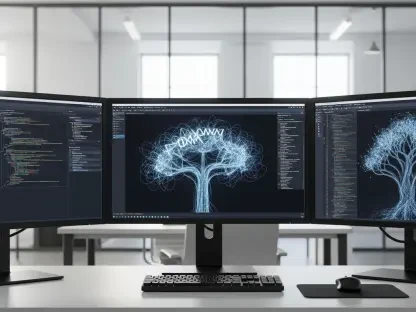

The traditional image of a software engineer hunched over a keyboard manually typing out thousands of lines of syntax is rapidly dissolving into a new reality where human intellect serves primarily as a high-level guide for autonomous systems. Across the global technology sector, a profound transition has occurred, moving software development from the granular construction of manual code to a model defined by high-level architectural oversight. This shift is not merely about productivity gains but represents a fundamental change in the identity of the engineering profession. As firms move beyond simple code-completion tools, the emergence of autonomous agents marks the beginning of an era where software creates itself under the watchful eye of human curators.
The definition of an AI-native operating model has evolved from a theoretical concept into a functional requirement for any enterprise seeking to remain competitive. Major industry players have moved past the initial phase of AI copilots, which acted as sophisticated spell-checkers for code, to a more integrated system of autonomous agents. These agents do not just suggest snippets; they navigate complex repositories, execute multi-file edits, and suggest entire architectural patterns. This transformation has been fueled largely by the democratization of foundational models like Llama, which has allowed organizations to build customized, secure internal development environments that do not rely on third-party public clouds for every interaction.
As this technology becomes ubiquitous, the regulatory and security context surrounding automated programming has grown increasingly complex. Engineering leaders are now forced to navigate emerging standards that balance the speed of automation with the necessity of code safety and intellectual property protection. The focus has shifted from whether AI should be used to how it can be governed. Establishing rigorous data privacy protocols and ensuring that AI-generated artifacts do not infringe on existing copyrights has become a central pillar of modern technical governance.
Strategic Mandates and Performance Metrics at Meta
Quantitative Targets for the 2025–2026 Roadmap
The current year has seen Meta implement some of the most aggressive technical mandates in the history of the software industry. Within the Creation Organization, a specific initiative has set a benchmark for select engineering teams to reach a 75% threshold of AI-generated code by the middle of 2026. This target is not a suggestion but a core performance metric designed to force a total pivot in how products are built and maintained. By setting such a high bar, the organization aims to eliminate the friction inherent in manual coding, allowing engineers to focus almost exclusively on product logic and user experience rather than the underlying syntax.
Timelines in the Machine Learning divisions are even more compressed, with many units expected to reach 80% AI adoption in their development lifecycles by February 2026. These divisions act as a proving ground for the rest of the company, demonstrating that high-velocity teams can maintain structural integrity while offloading the vast majority of coding tasks to automated systems. On a company-wide scale, the objective remains clear: by the end of the final quarter of last year and heading into this year, at least 55% of all code changes must be classified as agent-assisted, ensuring that the entire workforce is proficient in utilizing these advanced tools.
Industry Benchmarking and Market Growth
When comparing these mandates to the rest of the market, Meta appears to be setting a pace that outstrips its closest competitors. While Microsoft and Google have integrated AI deeply into their respective ecosystems, Meta’s internal benchmarks suggest a higher degree of reliance on autonomous agents for core infrastructure changes. This productivity multiplier is expected to significantly impact product release cycles, potentially doubling the density of features released within a single development sprint. The ability to iterate faster than the market allows for a more responsive product strategy that can adapt to user feedback in real-time.
The economic implications of this transition are substantial, particularly regarding long-term operational cost reduction. By moving toward an AI-native workflow, the company can handle larger codebases with the same or even smaller headcounts, redirecting human talent toward innovation rather than maintenance. This creates a sustainable model where technical debt is managed by AI, and human engineers are free to pursue high-risk, high-reward projects that were previously sidelined by the sheer volume of routine maintenance work.
Navigating the Challenges of an AI-Augmented Codebase
The rapid influx of AI-generated content into a central repository brings the significant risk of code quality drift. Without careful supervision, there is a tendency for automated systems to produce code that is functional but lacks the nuanced elegance required for long-term scalability. Maintaining structural integrity requires a new set of strategies designed to prevent the homogenization of complex software architectures. Engineers must now act as gatekeepers, ensuring that the AI does not introduce patterns that might work in isolation but create conflicts when integrated into the broader system.
Security remains the most critical imperative in this new landscape. Autonomous agents, while efficient, may inadvertently suggest code that contains known vulnerabilities or utilizes outdated libraries. To combat this, Meta has implemented automated security gates that scan every line of AI-generated code before it reaches a production branch. These gates utilize the same foundational models to detect anomalies and potential exploits, creating a self-healing loop where the AI is tasked with identifying the flaws in its own output. This layer of defense is non-negotiable in an era where cyber threats are becoming increasingly sophisticated.
Establishing an accountability framework is another hurdle that organizations must clear. When an autonomous agent executes a change across dozens of files, determining ownership in the event of a failure becomes a complex task. Meta has addressed this by ensuring that every AI-generated commit is signed off by a human supervisor who assumes ultimate responsibility for the logic. This prevents the emergence of a blame-shifted culture where mistakes are attributed to the machine. By maintaining this human-in-the-loop requirement, the company ensures that the speed of AI does not come at the cost of personal accountability.
Compliance, Standardization, and Technical Governance
The internal tooling ecosystem at Meta, led by platforms like DevMate and Metamate, plays a vital role in ensuring that all code adheres to strict compliance standards. These Llama-powered tools are trained on Meta’s internal coding style and architectural requirements, which means the code they generate is inherently compliant with company standards. This level of uniformity is difficult to achieve with human engineers alone, who often bring their own idiosyncratic preferences to a project. By using AI to enforce internal rules, the company prevents the accumulation of snowflake code that is difficult for other teams to interpret or modify.
Architectural uniformity is perhaps the greatest hidden benefit of an AI-native workflow. Because the models follow standardized templates and best practices, the resulting codebase is significantly more predictable and easier to navigate. This reduces the onboarding time for new engineers and allows for more fluid movement of talent between different product teams. The AI effectively acts as a living documentation layer, ensuring that every new addition to the repository follows the same logic and structure as the existing foundation.
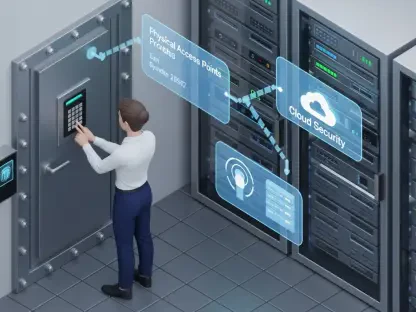
Security standards for agentic workflows must be rigorous to prevent unauthorized access or accidental data leaks. Meta has implemented verification processes that require multi-factor authentication even for autonomous agents when they attempt to access sensitive parts of the codebase. Furthermore, all agentic activity is logged and audited in real-time to identify any deviations from expected behavior. This level of technical governance is essential for maintaining trust in a system where the majority of the work is being performed by non-human actors.
The Future of the Engineering Profession: Orchestration Over Authorship
The rise of vibe coding and iterative steering marks the definitive end of the syntax-first era. In this model, an engineer uses natural language to describe a desired outcome, and the AI generates a series of drafts that the human then refines through successive prompts. It is a process of steering a system toward a solution rather than building that solution from scratch. This shift requires engineers to possess a deep understanding of system design and logic, as they must be able to recognize when a generated solution is elegant and when it is merely a functional kludge.
The human role has transformed from a writer to a curator and high-level logic supervisor. This evolution changes everything from daily stand-ups to long-term career development. Engineers are no longer valued for their ability to memorize obscure library functions or write complex algorithms from memory. Instead, they are judged on their ability to orchestrate a fleet of AI agents to solve a business problem. This transformation has led to a major shift in recruitment, with hiring managers now looking for candidates who demonstrate superior AI orchestration skills during technical interviews.
Market disruptors are already appearing as these ubiquitous tools lower the barrier to entry for software creation. As the technical difficulty of writing code decreases, the value of creative problem-solving and domain expertise increases. This shift will likely lead to a change in global talent demands, as the traditional competitive advantage of countries with large pools of low-cost manual coders is eroded by the efficiency of AI. The future belongs to those who can master the interface between human intention and machine execution, a skill set that is becoming the new gold standard in the technology industry.
Concluding Perspectives on Meta’s Engineering Transformation
The transition at Meta represented a significant milestone in the move from traditional software craftsmanship toward a more industrial, curated process. This pivot established a clear precedent for how large-scale organizations utilized autonomous systems to maintain a competitive edge. The implementation of high-threshold AI-generation targets forced the engineering workforce to adapt rapidly, ultimately resulting in a more standardized and resilient codebase. The success of this initiative demonstrated that proficiency in AI-native workflows was no longer a luxury but a fundamental requirement for any firm seeking to lead in the digital era.
Strategic recommendations for other technology leaders involve a heavy focus on building robust internal tooling that aligns with specific organizational needs. Leaders observed that the most effective path toward scaling productivity was the integration of secure, fine-tuned models like Llama into every stage of the development lifecycle. This approach not only improved speed but also reinforced architectural consistency across disparate teams. The experience at Meta proved that while the human element remained essential for high-level decision-making, the manual labor of coding was a task best left to the machines. Organizations that moved quickly to replicate this framework positioned themselves to capitalize on the next wave of technological innovation with unprecedented efficiency.