
The transition toward agentic AI requires infrastructure that can execute code and retrieve information autonomously rather than just generating static text or images. As the industry moves away from simple prompt-response mechanics, the demand for sophisticated “AI Factories” has reached an all-time high. Oracle and NVIDIA have recognized this shift, significantly deepening their strategic partnership by integrating the next-generation Vera Rubin architecture into Oracle Cloud Infrastructure (OCI). This evolution signals a fundamental change in how data centers are constructed and operated, moving from general-purpose hosting to specialized environments designed to handle the massive computational requirements of frontier AI models. By deploying Vera Rubin GPUs and the accompanying Vera CPUs, Oracle is positioning itself to lead the global race for high-performance computing. This collaboration is not merely about raw power; it represents a comprehensive effort to sustain the growth of autonomous agents that drive modern digital transformation across diverse sectors.
The Next Generation of High-Performance Computing
Scaling AI Factories: The Vera Rubin Platform
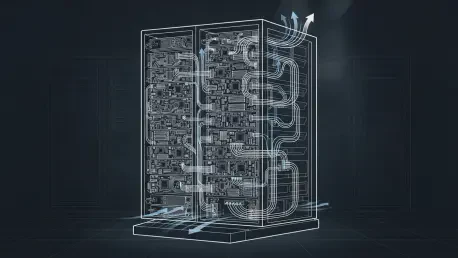
The centerpiece of this expansion is the deployment of the NVIDIA Vera Rubin platform, which succeeds the Blackwell architecture to provide unprecedented computational throughput. Oracle’s multi-gigawatt OCI Superclusters are being built to utilize the NVL72 system, a sophisticated rack-scale design that interconnects 72 GPUs via proprietary NVLink technology. This configuration allows the entire rack to function as a single, massive processor, effectively removing the latency issues commonly associated with distributed computing across multiple nodes. For developers working on frontier models like OpenAI’s GPT-6 Astra, this unified architecture is essential for maintaining the high data transfer speeds required for model training. The shift toward multi-gigawatt scaling indicates that the physical infrastructure of AI is reaching a level where power management and heat dissipation are as critical as the silicon itself. Such scale ensures that OCI remains the primary destination for training the world’s most complex models.
Moving beyond traditional data center paradigms, these “AI Factories” are specifically engineered to handle the massive datasets and complex reasoning tasks that define the current era. The integration of Rubin GPUs provides a significant leap in floating-point operations per second, which is vital for reducing the time-to-market for new generative applications. This efficiency is further bolstered by the ability of the OCI Supercluster to scale horizontally across hundreds of thousands of interconnected units without hitting traditional performance ceilings. As industries ranging from pharmaceuticals to autonomous logistics begin to rely on these models, the reliability and speed of the underlying hardware become paramount. Oracle has committed to providing a fungible and durable environment where workloads can be shifted seamlessly, ensuring that the infrastructure remains relevant even as software requirements evolve. This approach allows for a more sustainable investment in hardware that continues to deliver value through 2027 and beyond.
The Enterprise Bridge: x86 Software Compatibility
Recognizing that many enterprises need to maintain existing software environments while adopting new technologies, the partnership also introduces the NVIDIA HGX Rubin NVL8. This configuration pairs eight Rubin GPUs with dual Intel Xeon 6 processors and 4 TB of DDR5 memory, offering a flexible path for organizations to modernize their operations without starting from scratch. By providing a bridge for x86-based applications, Oracle ensures that traditional enterprise customers can harness cutting-edge AI power without requiring a complete architectural overhaul. This setup is particularly useful for industries like finance or healthcare, where legacy systems still hold vital data and must interact with new AI modules securely. The inclusion of substantial memory capacities allows for larger datasets to be processed locally on the node, reducing the need for constant data fetching from external storage. This architectural decision acknowledges that the transition to an AI-first strategy is often iterative rather than a single, disruptive event.
Furthermore, the HGX NVL8 platform serves as a versatile tool for organizations that require high-performance inference but do not need the massive scale of a full NVL72 rack. This flexibility allows businesses to right-size their infrastructure based on specific project needs, whether they are fine-tuning a small language model or deploying a robust recommendation engine. The dual Intel Xeon 6 processors provide the general-purpose compute power necessary to handle pre-processing tasks and data cleaning before the heavy lifting is handed off to the Rubin GPUs. Such a balanced system architecture prevents the common issue of underutilization, where expensive GPU resources sit idle while waiting for the CPU to finish sequential tasks. By maintaining compatibility with standard x86 software stacks, Oracle lowers the barrier to entry for firms that might otherwise be intimidated by the complexity of specialized AI hardware. This strategic move ensures that the benefits of the Rubin architecture are accessible to a broader range of commercial entities.
Revolutionizing Connectivity and Processing Power
Advanced Connectivity: Networking as the AI Backbone
As AI clusters grow to include hundreds of thousands of GPUs, networking efficiency becomes the primary bottleneck for overall system performance. Oracle’s “Acceleron” architecture addresses this challenge by integrating NVIDIA Spectrum-X Ethernet and BlueField-4 data processing units to ensure seamless data movement throughout the fabric. This high-bandwidth, low-latency networking solution is critical for the synchronization required during large-scale training runs, where thousands of processors must exchange gradients and weights in real-time. Without this robust connectivity, the theoretical speed of the Rubin GPUs would be wasted on waiting for data packets to arrive. The Spectrum-X technology specifically optimizes Ethernet for AI workloads, providing the predictability and congestion control typically reserved for more expensive InfiniBand setups. This allows OCI to deliver enterprise-grade networking that can scale up to the multi-gigawatt requirements of the next generation of supercomputing clusters.
Beyond pure speed, the BlueField-4 DPUs play a critical role in system security by providing isolated environments known as sandboxes. These isolated zones are essential when AI agents are tasked with executing untrusted or autonomously generated code, as they prevent any potential malicious actions from affecting the broader cloud infrastructure. By offloading networking and security tasks from the main CPU to the DPU, the system maintains high performance while ensuring a robust defense-in-depth posture. This is particularly relevant as organizations increasingly deploy agents that can interact with external APIs and internal databases to complete complex workflows. The ability to monitor and control data flow at the hardware level provides a layer of protection that software-only solutions cannot match. As the complexity of AI-generated code increases, having hardware-enforced isolation becomes a non-negotiable requirement for any enterprise cloud provider. This focus on secure connectivity ensures that OCI can support even the most sensitive research.
Intelligent Logic: Optimizing for Agentic AI
The rise of agentic AI—models that autonomously call tools and execute code—has created an urgent need for more robust general-purpose computing to support the GPU. The new Vera CPU is specifically optimized for high-performance serial tasks and memory-intensive operations, ensuring that the GPU never sits idle while waiting for logic-heavy instructions. Unlike traditional generative models that focus on token prediction, agentic systems must navigate logical trees and manage state across multiple steps. This shift puts immense pressure on the CPU to handle the “operational” side of the AI, including task planning and tool orchestration. By prioritizing single-threaded performance and massive memory bandwidth, the Vera CPU addresses the specific bottlenecks found in modern agentic workloads. This optimization allows for faster decision-making processes within the AI agent, leading to more responsive and capable autonomous systems. It marks a departure from the “GPU-only” mindset of previous years toward a more balanced, heterogenous approach.
This balanced approach is already being utilized by industry leaders like OpenAI, who use OCI’s specialized hardware to test the reasoning and interaction capabilities of their most advanced models. In these agentic sandbox environments, models are challenged to interact with software environments, solve multi-step problems, and retrieve data from fragmented sources. The Vera CPU handles the heavy lifting of system calls and data management, while the Rubin GPUs manage the massive parallel processing required for the underlying neural network. This synergy ensures that the entire system operates at peak efficiency, maximizing the return on investment for the hardware. As inference becomes more logic-heavy, the demand for such integrated solutions will only continue to rise throughout 2026 and 2027. By designing the Vera CPU to work in lockstep with the Rubin architecture, Oracle and NVIDIA have created a platform that is not just powerful, but also intelligent. This infrastructure provides the necessary foundation for the next wave of autonomous digital workers.
Strategic Outlook: Actionable Implementation
The expansion of Oracle Cloud Infrastructure with NVIDIA Vera Rubin technology demonstrated a clear shift in how the industry approached high-scale computing. It was observed that organizations prioritizing integrated networking and specialized CPUs achieved significantly lower latency in their agentic workflows. To capitalize on these advancements, IT leaders were encouraged to audit their existing x86 workloads and identify areas where the HGX Rubin NVL8 could provide an immediate performance boost without requiring a total rewrite of legacy code. Furthermore, the implementation of hardware-level sandboxing via BlueField-4 DPUs became a standard recommendation for any team deploying autonomous agents capable of code execution. Moving forward, businesses should have focused on the long-term sustainability of their “AI Factory” investments by prioritizing multi-gigawatt scalability. By aligning infrastructure choices with the demands of agentic reasoning, companies secured a competitive edge in the evolving digital landscape.