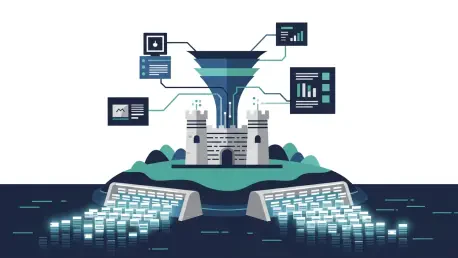

Granting an autonomous software agent the authority to refactor a legacy codebase or manage cloud network endpoints requires a level of trust that traditional operating system security was never originally designed to provide. When an AI agent decides that the most efficient path toward optimizing a system involves modifying a root directory or installing unverified dependencies, the potential for catastrophic failure escalates. As developers increasingly hand over the keys to the kingdom to agentic AI, the traditional safety nets of containerization are being pushed to their breaking points. The core challenge is no longer just about running code; it is about providing a high-privilege environment to a non-human entity without risking the total compromise of the underlying hardware. Docker Sandboxes emerge as a critical response to this dilemma, offering a way to grant AI agents the functional freedom of a senior developer while keeping them confined within a digital clean room.
The Vanishing Boundary: AI Autonomy and System Integrity
The transition from passive AI assistants to active agents has fundamentally changed the risk profile of modern development environments. Historically, a developer might use an AI to generate a snippet of code, which was then manually vetted before execution. Today, agentic systems operate with a degree of independence that allows them to initiate system calls, manage local files, and interact with remote APIs. This autonomy blurs the line between a helpful tool and a high-risk user, necessitating a security model that assumes the agent might, either through logic error or external manipulation, attempt to breach its intended boundaries.
Maintaining system integrity in the face of such autonomy requires a shift from monitoring to absolute isolation. If an agent manages a complex deployment and inadvertently executes a recursive script that targets the host file system, the damage must be physicalized within a container that possesses no actual link to the host’s persistent storage. Docker Sandboxes were developed to solve this specific problem, providing a workspace where an agent can exercise full administrative rights over its local environment without those rights ever leaking into the broader infrastructure.
The Security Gap: Why Traditional Container Security Fails the Agentic Era
For years, the software industry operated on a binary choice between the lightweight agility of standard containers and the heavy-duty isolation of full virtual machines. Standard containers share the host system’s kernel, which creates a thin but permeable membrane that sophisticated exploits—or even accidental AI logic loops—can pierce. With the rise of agentic AI, this risk is magnified because these agents frequently require administrative-level permissions to build software and execute system-level commands. Relying on shared-kernel architecture in this context is a gamble that modern enterprises can no longer afford to take.
The shift toward microVM technology represents a necessary middle ground, addressing the urgent need for a zero-trust execution layer that does not sacrifice the rapid startup times developers expect from the Docker ecosystem. By isolating the kernel itself, the blast radius of an errant agent is contained entirely within a virtualized boundary. This approach eliminates kernel-level vulnerabilities that could lead to host breakout, ensuring that the AI’s sandbox remains a truly isolated island rather than a room with a shared ceiling.
Architectural Shift: Deconstructing the MicroVM Architecture within Docker Sandboxes
The technical foundation of a Docker Sandbox rests on its ability to bypass the host’s Docker daemon entirely. By spinning up an independent microVM on native hypervisors—KVM for Linux, Hypervisor.framework for macOS, and WHP for Windows—each sandbox operates with its own dedicated kernel and isolated daemon. This architectural shift ensures that even if an AI agent executes a high-risk command like a full system build, the process occurs within a strictly defined perimeter that cannot see or touch the host’s file system. This independence is what allows the agent to function as a root user without actually possessing root access to the physical machine.
Furthermore, these environments are designed to be ephemeral; they exist only for the duration of a specific task and are wiped clean upon completion. This stateless approach eliminates the possibility of persistent malware or accidental configuration drift, providing a fresh, predictable environment for every new execution cycle. By leveraging native hypervisors, the system achieves near-native performance while maintaining a level of isolation previously reserved for legacy virtual machines. The result is a setup that feels as fast as a container but acts as secure as a disconnected server.
Perimeter Defense: Hardening the Perimeter for Autonomous Software Agents
Securing an AI agent requires more than just a locked door; it requires a controlled intake of sensitive data and specific resource limits. Docker Sandboxes facilitate this by allowing developers to inject specific secrets, directories, and network permissions at runtime rather than baking them into a static image. Research into agentic behavior suggests that locally scoped environments are the most effective way to prevent resource exhaustion and unauthorized data exfiltration. By limiting an agent’s view to only the assets it needs for a single task, the sandbox acts as a high-fidelity filter for all incoming and outgoing data.
Industry experts note that this setup allows for functional parity with a human developer, where the AI can simulate complex workflows—such as testing third-party integrations or refactoring legacy modules—without any risk of trashing the production environment. This granular control ensures that agents remain productive without becoming liabilities. Moreover, the ability to specify memory and CPU quotas prevents an agent from unintentionally consuming all available host resources during a compute-intensive task.
Technical Workflows: Implementing Secure Sandboxing Across Diverse Technical Workflows
While the primary driver for this technology was the rise of AI, the framework for deploying Docker Sandboxes became highly adaptable to other high-stakes scenarios. Security teams leveraged these microVMs for malware analysis, using the rapid startup and teardown capabilities to observe malicious binaries in a safe, disposable environment. For platforms hosting untrusted third-party code, such as online IDEs or SaaS plugins, the sandbox provided a mechanism to enforce strict quotas, automatically terminating the microVM if it exceeded its allotted resources. This flexibility allowed organizations to scale their security protocols without adding significant latency to their operational pipelines.
Developers began integrating these sandboxes by utilizing specialized kits and templates that pre-configured the environment for specific languages or tasks. By decoupling the execution layer from the host system, organizations built more resilient CI/CD pipelines where build processes were isolated from one another, ensuring that a failure in one branch never contaminated the broader development lifecycle. As the industry moved toward 2027 and 2028, these isolation protocols were standardized to prepare for even more autonomous systems. These next steps ensured that the safety of the host was never sacrificed for the speed of innovation, establishing a new baseline for secure, automated software development.