
In the high-velocity world of digital retail, the moment an enterprise freezes its software configuration is the exact moment it begins its descent into technological obsolescence. Static platforms cannot survive in a landscape defined by rapid consumer shifts and constant data influxes. Autotrader recently acknowledged this reality by transforming its relationship with technology from a series of disjointed projects into a continuous stream of evolution. By moving away from traditional maintenance cycles, the organization has positioned its digital infrastructure to adapt at the speed of the modern automotive market.
Breaking the Cycle of Static Software Maintenance
Most enterprise organizations treat digital transformation as a linear race with a definitive finish line, yet modern market dynamics require perpetual motion. Autotrader recently challenged this conventional mentality by signing a three-year agreement that moves away from discrete updates in favor of constant evolution. This shift addresses a hard truth: an ERP system that remains static for even half a year becomes a legacy burden. By embracing a subscription-based framework for change, the company ensures its core platforms remain as agile as the digital marketplace it leads.
This strategic pivot recognizes that agility is not a one-time achievement but a continuous operational requirement. In an era where expectations shift overnight, traditional maintenance cycles create a gap between capability and demand. By adopting a framework for perpetual improvement, Autotrader transforms its core environment from a rigid back-office tool into a flexible engine. This approach ensures the business stays ahead of technological decay by treating software as a living asset rather than a finished product.
The Strategic Shift from Managed Services to BTaaS
The transition from traditional managed services to Business Technology as a Service (BTaaS) marks a maturation in the partnership between Autotrader and Embridge Consulting. For years, the focus was on reactive support for Unit4 ERP environments. The new BTaaS model expands this into a holistic partnership where success is measured by business outcomes rather than uptime. This reflects an industry movement where enterprise leaders prioritize the value derived from technology over the mechanics of keeping the lights on.
In complex landscapes where cloud and on-premise systems must coexist, a service-based consumption model allows organizations to scale without the friction of constant renegotiation. Traditional project budgeting often hinders innovation by forcing teams to justify every improvement as a separate expense. In contrast, BTaaS provides a predictable cost structure that facilitates ongoing enhancement. This shift allows Autotrader to treat its technology stack as a strategic ecosystem that matures alongside its long-term business objectives.
Integration as the Engine of Continuous Transformation
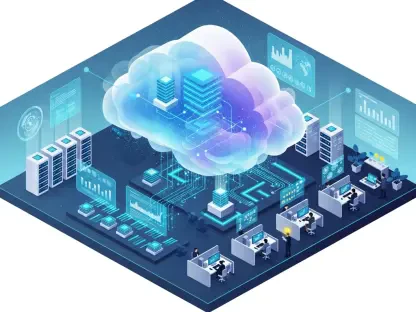
A primary driver of this evolution is the adoption of “LEO,” a managed integration service designed to bridge gaps between fragmented software applications. Instead of managing dozens of individual connections that might break during updates, Autotrader consolidated its integration layer into this managed framework. This approach treats modernization as a unified roadmap rather than a collection of isolated technical events. By streamlining data flows, the company reduces the operational risk associated with distributed technology across the enterprise.
Consolidating these connections ensures that information moves seamlessly between different business units without manual intervention. This structural resilience is essential for maintaining a competitive edge in a data-heavy industry. By treating integration as a managed service, the organization ensures its technical infrastructure supports, rather than hinders, large-scale innovation. The result is a more cohesive environment where updates can be deployed rapidly without the fear of cascading system failures.
Reclaiming Internal Focus Through Outsourced Ownership
The decision to outsource integration ownership highlights a strategic shift in how internal talent is utilized. Many technology leaders find their teams bogged down by the “plumbing” of IT—troubleshooting friction and maintaining complex middleware—rather than driving value. By shifting this responsibility to a specialized partner, Autotrader enabled its internal staff to focus on high-value strategic initiatives and data-driven insights. This reflects a maturing perspective where the enterprise is free to innovate on top of a stable foundation.
When a specialized partner orchestrates the capabilities of the system, the business can move faster. Internal experts can now dedicate their time to refining business processes and interpreting analytics instead of managing backend server connections. This model proves that the most valuable use of internal resources is driving business growth, not maintaining the underlying infrastructure. By offloading technical ownership, the company created a more efficient internal structure capable of responding to market opportunities with greater precision.
Strategies for Transitioning to an Outcome-Driven Partnership
Adopting a BTaaS model required a framework that prioritized business agility over technical maintenance. Organizations looking to replicate this success identified “digital anchors”—internal processes or complex integrations that slowed down change. By addressing these bottlenecks, enterprises established a path toward a subscription-based consumption of expertise. This strategy provided a predictable cost structure while ensuring the organization remained resilient enough to support innovation in a data-heavy environment.
The final phase of this transition involved moving the internal focus from system management to system orchestration. This strategy ensured that the underlying enterprise platform actively contributed to growth objectives. Leadership teams prepared for a future where data fluidity and platform adaptability were the primary metrics of success. The path forward was paved by those who recognized that technology was a service to be utilized, not a project to be completed. By shifting to this model, the organization secured a sustainable foundation for long-term digital excellence.