
The traditional barrier separating rapid innovation from rigorous defensive protocols is dissolving as enterprises face an unprecedented volume of sophisticated digital threats that demand a fundamental architectural shift. For modern business leaders, the historical trade-off between deployment velocity and comprehensive security is no longer a viable operational strategy. Competitive pressures dictate that software must reach the market faster than ever, yet the reputational and financial risks of a single vulnerability can be catastrophic. Consequently, the industry is witnessing a radical transformation where security is no longer an isolated phase at the end of a project but a continuous, automated presence within the entire engineering lifecycle. This evolution is driven by the strategic integration of artificial intelligence and high-level automation, creating a paradigm where safety is a feature of the development process itself rather than an external check. By adopting these integrated models, organizations can achieve a level of resilience that was previously impossible under manual review cycles. Understanding this convergence is essential for decision-makers who must navigate the complexities of digital transformation while maintaining a rigid posture against emerging cyber risks. This approach ensures that the pursuit of innovation does not compromise the underlying integrity of the enterprise’s technological foundation.
Introduction
Software development has transitioned from a linear, structured task into a dynamic, iterative lifecycle that requires constant synchronization between diverse engineering disciplines. In the current B2B landscape, the definition of success has expanded to include not only the delivery of functional features but also the assurance of long-term system stability and data privacy. Organizations are moving away from the Waterfall and standard Agile models toward a more holistic DevSecOps approach, which prioritizes the integration of security and operations into the core development stream. This cultural and technical shift is necessary because the speed of modern business requires a level of agility that traditional security audits simply cannot support.
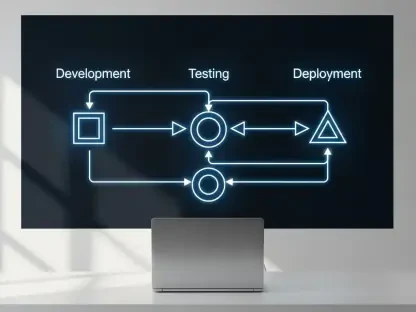
When security is treated as a final hurdle, it often leads to significant delays and friction, as teams must go back to fix structural flaws that should have been addressed earlier. By contrast, a unified development environment allows for a continuous feedback loop where potential issues are identified and remediated in real time. This proactive stance significantly reduces the security debt that often plagues legacy systems, creating a more sustainable path for future growth and technological expansion. By fostering a culture of shared responsibility, enterprises can ensure that every team member is invested in the quality and safety of the final product, ultimately leading to more robust and reliable software solutions.
The Strategic Core: Integrating AI and Security into the Lifecycle
The implementation of a Secure Software Development Lifecycle represents a fundamental shift toward a secure-by-design philosophy that impacts every phase of software creation. During the planning and design stages, teams now utilize advanced threat modeling to identify potential attack vectors before a single line of code is written. This foresight is critical for managing third-party dependencies and ensuring that the software architecture is resilient against supply chain vulnerabilities. As development progresses, automated scanning tools integrated into the continuous integration and delivery pipeline provide immediate validation of new code, checking for known vulnerabilities and adherence to organizational security policies.
This automation ensures that developers receive immediate feedback, allowing them to address security concerns without interrupting their creative momentum. Moreover, the use of infrastructure as code allows operations teams to manage server environments with the same rigor and version control as software code, ensuring consistency across all deployment stages. This level of integration is vital for maintaining compliance in highly regulated industries, where manual checks are both inefficient and prone to human error. By automating these repetitive tasks, enterprises can focus their high-level talent on innovation and strategic problem solving, ensuring that the organization remains competitive in a rapidly changing market.
Intelligence at Scale: Algorithmic Assistance in the Engineering Pipeline
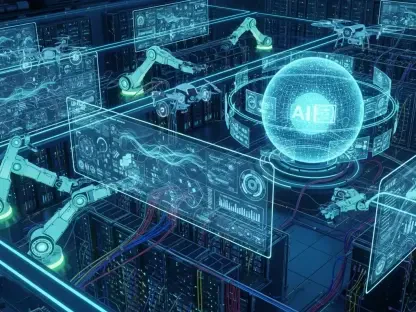
Artificial intelligence has emerged as a force multiplier in the engineering pipeline, offering capabilities that extend far beyond simple code completion or syntax correction. Modern generative AI tools are capable of analyzing complex patterns across vast repositories of code, providing developers with real-time suggestions that improve both efficiency and structural integrity. These systems can automatically identify insecure coding practices, such as hard-coded credentials or improper data validation, and suggest remediations that align with industry best practices. Beyond the initial coding phase, AI plays a crucial role in automated testing and quality assurance by generating comprehensive test suites that cover edge cases that human testers might overlook.
This algorithmic precision ensures that applications are robust and performant under a variety of real-world scenarios. Furthermore, AI-driven monitoring and observability tools can detect subtle anomalies in production environments, providing early warnings of potential breaches or performance bottlenecks. This predictive capability allows businesses to react to threats before they escalate into major incidents, safeguarding the enterprise’s digital assets. However, the successful integration of AI requires careful human oversight to ensure that the generated output meets the specific security and compliance requirements of the business, maintaining a balance between automation and expert judgment. This synergy between human creativity and machine intelligence is the cornerstone of modern software excellence.
Economic Viability: ROI and the Mitigation of Technical Debt
Investing in an integrated development strategy provides significant economic benefits by reducing the long-term costs associated with technical debt and emergency remediation. When security flaws are identified late in the development cycle or after an application has been deployed, the cost to fix them is exponentially higher than if they were caught during the initial design phase. By shifting security to the left and automating the validation process, organizations minimize the risk of costly delays and potential data breaches that can result in regulatory fines and loss of customer trust. Furthermore, the increased stability provided by a secure-by-design approach leads to a more reliable user experience, which is a critical differentiator in the competitive B2B market.
The use of platform engineering and self-service portals also improves the productivity of engineering teams by reducing the time spent on manual infrastructure management and repetitive compliance tasks. This efficiency allows companies to allocate more resources toward feature development and market expansion, driving higher returns on their technological investments. Ultimately, the integration of AI and security is not just a technical improvement but a strategic business decision that enhances the overall resilience and agility of the organization. A robust engineering foundation enables a company to pivot quickly in response to market changes while maintaining a strong defensive posture against evolving cyber threats, ensuring long-term viability.
Conclusion
The systematic integration of artificial intelligence and automated security protocols transformed the landscape of enterprise engineering by replacing antiquated, siloed workflows with a unified, high-velocity development ecosystem. By prioritizing structural resilience over reactive maintenance, organizations established a robust framework that successfully balanced the demand for rapid deployment with the necessity of rigorous protection. This transition proved that digital security functioned most effectively when it was embedded within the creative process as a core feature rather than an external constraint. Decision-makers realized significant improvements in stability and risk mitigation while future-proofing their digital infrastructure for ongoing global economic challenges.