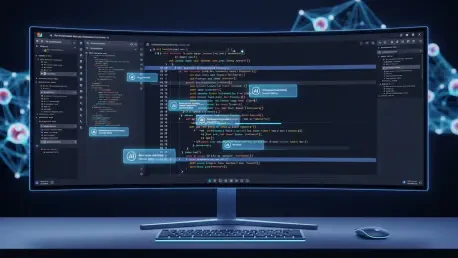
The transition from basic code completion to fully autonomous agentic workflows has fundamentally redefined the software development landscape, turning what was once a mere suggestion engine into a comprehensive lifecycle management partner. In the current environment, the industry has largely

A critical care nurse in a modern hospital no longer waits for a monitor to beep with an emergency alert; instead, a silent notification on a tablet predicts a septic event six hours before clinical symptoms appear. This shift represents the pinnacle of modern medicine, where the vast oceans of

The rapid evolution of large language models has fundamentally transformed how data scientists approach the R programming language, yet many users still struggle with generic, hallucinated, or inefficient code outputs. While general-purpose chatbots can handle basic syntax, the nuances of the

The architectural density of contemporary cloud ecosystems has reached a threshold where human intervention alone can no longer guarantee systemic reliability or performance optimization. Monitoring has historically been a passive endeavor, focused on gathering data for human review, but the

The persistent challenge of ensuring that large language models provide consistently accurate and verifiable outputs has led to a paradigm shift in how developers approach the concept of artificial intelligence reliability across modern enterprise environments. While initial excitement focused on

The modern cybersecurity landscape suffers from a critical fragmentation of tools that forces security professionals to toggle between dozens of separate interfaces for reconnaissance and patching. This lack of cohesion often leads to missed vulnerabilities and slow response times, as human