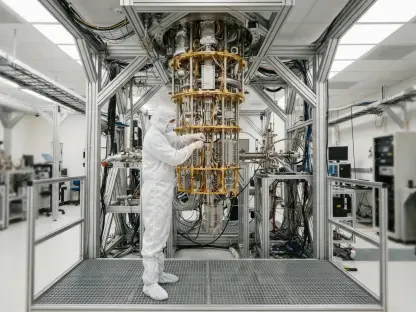

The traditional image of a web developer hunched over a keyboard manually typing thousands of lines of syntax has rapidly evolved into a sophisticated orchestration of intelligent agents and natural language processing. By this point in 2026, the integration of artificial intelligence into software

The enterprise software landscape has shifted fundamentally away from chat-based assistants toward autonomous actors that handle high-stakes business operations without constant human hand-holding. Workday's transition into the agentic AI sphere marks a departure from the "summarize and suggest"

The silent shift from predictable, human-scale cyberattacks to autonomous, machine-speed incursions has effectively invalidated traditional security architectures that once served as the primary line of defense for global enterprises. The rapid integration of artificial intelligence into the

The silent transition from traditional mechanical systems to autonomous, software-defined ecosystems has reached a critical tipping point where the absolute predictability of a machine is now considered as vital as its raw operational power or efficiency. As the global technological landscape
The shift from rudimentary chat interfaces to autonomous AI agents marks a fundamental transition in how digital infrastructure is architected for modern global enterprise needs. While early iterations of large language models focused primarily on linguistic accuracy and creative output, today’s
The era when software was the sole king of technology has been superseded by a reality where the physical constraints of electricity and silicon dictate global market leaders. The explosion of generative artificial intelligence has fundamentally transformed the relationship between businesses and