
The transition from manual code orchestration to high-level system supervision marks the most significant paradigm shift in web architecture since the advent of the graphical user interface. By the middle of this decade, the industry has standardized a workflow where agentic intelligence handles

Despite the relentless advancement of artificial intelligence and automated defensive measures, ninety-one percent of successful security breaches in 2026 still trace back to a single human error during a phishing interaction. Passkeys represent a fundamental shift in this landscape by removing the

The formal publication of RFC 10008 by the Internet Engineering Task Force marks a definitive shift in the architectural philosophy of the modern web by introducing a mechanism that handles high-volume data retrieval without the structural baggage of state changes. For a considerable duration, the
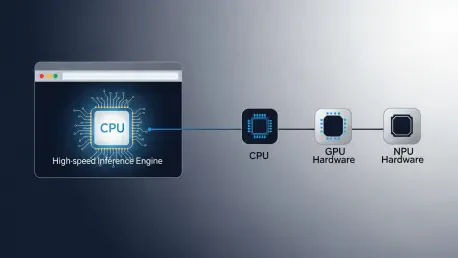
The advent of ubiquitous machine learning in modern web development has reached a significant milestone with the official arrival of LiteRT.js for high-performance browser inference. Developers are increasingly moving away from cloud-reliant architectures toward local execution to ensure user

Navigating the competitive digital landscape requires more than just a functional website; it demands a sophisticated architectural approach that synthesizes brand identity with cutting-edge user experience. As the digital ecosystem matures throughout the current year, the distinction between a

As autonomous digital assistants evolve beyond simple chat interfaces to navigate complex web environments, the industry is discovering that the most efficient way to interact with software is not through the eyes of a human, but through the structured data of an accessibility tree. While early