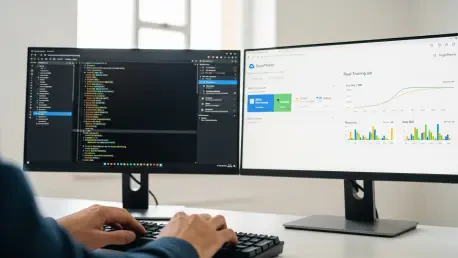

Data scientists often face a jarring disconnect between the rich, customized features of their local Integrated Development Environments and the simplified web interfaces provided by cloud-based machine learning platforms. This friction frequently forces engineers to choose between the scalability of the cloud and the productivity of tools they have spent years mastering in a local context. Amazon Web Services has addressed this recurring pain point by bridging the gap between SageMaker Unified Studio and popular local editors like Visual Studio Code and PyCharm. By enabling a seamless connection, developers can now leverage the high-performance compute and centralized data governance of the AWS ecosystem without ever having to leave their preferred coding interface. This integration signifies a major shift in how AI projects are built, moving away from restrictive browser-based sandboxes toward a more flexible development model that maintains high security standards.
The Technical Foundation: Bridging Productivity and Cloud Scalability
Modernizing the development experience involves establishing a persistent link between the local workstation and the cloud-hosted resources via specialized toolkits and extensions. For instance, the AWS Toolkit for Visual Studio Code now facilitates a direct connection to SageMaker Unified Studio environments, allowing users to browse data catalogs and manage training jobs directly from their sidebars. This setup utilizes secure shell protocols to tunnel the local environment into the cloud instance, effectively making the remote Amazon EC2 compute capacity feel like a local extension of the machine. Developers no longer need to manually upload scripts or synchronize local directories with cloud storage, as the integration handles the bidirectional file movement in the background. Consequently, the speed of the inner-loop development process—coding, testing, and debugging—is drastically increased because the overhead of context switching between the browser and the desktop editor is eliminated entirely.
Beyond simple code editing, this integration allows for the utilization of advanced debugging tools and localized plugins that are often unavailable in standard web-based notebook environments. Engineers can now set breakpoints and inspect variables in complex machine learning pipelines using the native debugging engines of PyCharm or VS Code while the actual execution occurs on powerful GPU-accelerated instances in the cloud. This hybrid approach ensures that the most computationally demanding tasks, such as large-scale model training or data preprocessing, are handled by the cloud’s elastic infrastructure without draining local hardware resources. Furthermore, the SageMaker Unified Studio environment ensures that all participants in a project are working with the same container images and library versions, which minimizes the “it works on my machine” syndrome. By centralizing the runtime environment while decentralizing the user interface, organizations can achieve a higher degree of technical consistency and reliability.
Strategic Implementation: Maximizing Performance and Operational Efficiency
Organizations that adopted the integrated SageMaker Unified Studio workflow realized immediate gains in engineering velocity and reduced the time required to onboard new team members. The move toward local IDE support represented a strategic pivot away from closed ecosystems and toward an open architecture that respected the established habits of professional programmers. To maximize these benefits, technical leaders evaluated their existing development stacks and identified opportunities where local plugins could enhance the cloud-native features of AWS. It became clear that the success of machine learning development relied on a symbiotic relationship between local agility and centralized cloud power. Teams were encouraged to standardize their remote configurations and update their security protocols to take full advantage of the encrypted tunnels and identity-based access controls. By embracing this hybrid model, companies positioned themselves to build more complex and robust artificial intelligence solutions effectively.
Implementation of these tools allowed companies to bridge the talent gap by offering developers the high-quality environments they expected in a competitive market. Those who transitioned early documented a significant reduction in the frequency of environment-related bugs, as the parity between local coding and cloud execution reached an all-time high. Strategic planning shifted toward creating reusable development templates that could be shared across global teams, ensuring that every engineer had instant access to the necessary compute and data permissions. This evolution prompted a broader reevaluation of how machine learning operations were structured, leading to a more integrated approach between DevOps and data science teams. Ultimately, the adoption of these unified studio features paved the way for more sophisticated automation in the model deployment pipeline. Leaders focused on long-term scalability by ensuring that their local tools were fully compatible with the evolving landscape of cloud services.