
The relentless influx of critical vulnerability reports often leaves modern security operations centers drowning in a sea of data while attackers exploit known weaknesses within hours of their public disclosure. This disconnect represents the most significant hurdle in the current cybersecurity landscape: the remediation bottleneck. Despite having sophisticated scanning tools that identify thousands of flaws across cloud environments and legacy systems, the actual process of fixing these issues remains stubbornly manual. Human engineers must prioritize and test patches, a cycle that frequently takes weeks to complete. As software architectures become more decentralized, the sheer volume of dependencies makes it nearly impossible for traditional teams to keep pace. The emergence of specialized artificial intelligence agents represents a fundamental shift in this dynamic, allowing software to autonomously identify and repair its own security defects without constant human intervention or manual oversight.
The Critical Shift: Toward Autonomous Response
The Limitations: Why Manual Triage Fails
Traditional vulnerability management, however, has long relied on the Common Vulnerability Scoring System (CVSS) to determine what needs immediate attention, yet this metric often fails to account for the specific business context of an application. A high-severity flaw in a non-critical internal tool might receive more attention than a moderate flaw in a customer-facing portal simply because of its score. This misallocation of resources creates a backlog that never truly clears, as security teams are forced into a reactive stance that prioritizes compliance over actual risk reduction. Furthermore, the communication gap between security researchers and the developers who must implement fixes leads to friction and delays. Developers often view security mandates as interruptions, while security professionals feel ignored. This cultural friction is where the remediation bottleneck thrives, necessitating a layer of intelligent mediation that can translate security requirements into code.
The Solution: Integrating Intelligent Reasoning
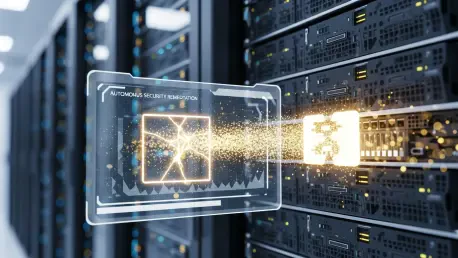
Building on these logical requirements, the current generation of AI agents utilizes large language models and reasoning engines to understand the underlying logic of a codebase. Unlike basic automation that follows a rigid if-then structure, these agents can interpret the intent of a security patch and adjust it to fit the unique syntax of a specific repository. By integrating directly into version control systems like GitHub, these agents act as virtual security engineers that work around the clock. They do not just identify a missing update; they create a pull request, run unit tests to ensure no breaking changes are introduced, and provide a detailed explanation of why the fix is necessary. This transition represents a shift from human-in-the-loop to human-on-the-loop management. In this model, the security professional moves from performing the repair to auditing the agent’s performance, which is essential for managing microservices architectures of the modern enterprise cloud.
Operational Efficiency: Securing the Digital Pipeline
Technological Innovation: Securing the Software Pipeline
Consequently, integrating AI agents into continuous deployment (CI/CD) pipelines provides a level of protection previously unattainable for organizations with rapid release cycles. These agents monitor every commit in real-time, catching vulnerabilities before they reach production. By utilizing sophisticated analysis techniques, the agents can simulate how a potential exploit might travel through a network, providing a more accurate assessment of risk than a standalone scan. For instance, an agent might discover a SQL injection vulnerability and immediately generate a sanitized input function that adheres to specific coding standards. This proactive approach significantly reduces the mean time to remediate, which has historically been a key metric for measuring security effectiveness. Because the agents operate within the existing developer workflow, they minimize disruption, as developers see the suggested fix as a standard code review rather than an external security interruption.
The Outcome: Achieving a Self-Healing Infrastructure
Ultimately, the successful adoption of autonomous remediation required organizations to implement a multi-staged verification process where every AI-generated patch underwent rigorous regression testing within a sandboxed environment. Security teams moved away from non-contextual scanning and instead prioritized agents that could interpret the specific business logic of their unique codebases. They established clear boundaries for autonomous action, allowing agents to fix low-risk internal bugs while requiring human approval for changes to mission-critical systems. Furthermore, developers were encouraged to treat AI-generated pull requests as peer contributions, fostering a culture of collaborative security. By investing in these intelligent workflows, companies significantly reduced their exposure windows and freed engineers to focus on high-level architecture. This shift proved that the bottleneck was not a lack of talent, but a lack of scalable systems capable of handling the volume of modern digital threats.