
The contemporary landscape of professional software engineering is currently undergoing a massive structural transformation as high-level artificial intelligence agents begin to generate vast volumes of complex code based on abstract intent rather than manual, line-by-line human construction. This transition toward agentic workflows has enabled a pace of development that was previously unimaginable, allowing small teams to deploy enterprise-grade systems in fractions of the time traditionally required. However, this acceleration has introduced a profound visibility gap that threatens the long-term stability of the global software ecosystem. The gap represents a growing disconnect between the sheer quantity of code being committed to repositories and the actual human understanding of the underlying architectural decisions made by autonomous systems. As machines take over the heavy lifting of implementation, the human role has shifted toward high-level coordination, yet the tools for oversight have not evolved at the same speed, leaving critical structural logic obscured within a sea of machine-generated syntax that no single person can fully verify.
Engineering departments now face a reality where codebases are expanding with such velocity that traditional methods of ensuring quality and maintainability are failing to keep pace. Historically, the health of a project was measured by its adherence to human-readable patterns and documented logic, but the rise of AI-assisted development has prioritized output over clarity. When a system generates thousands of lines of code to solve a specific problem, it often makes micro-decisions about data structures, inheritance, and dependency management that are technically functional but may be architecturally inconsistent with the broader project goals. Without a clear mechanism to visualize and audit these choices, technical debt begins to accumulate in silence, hidden behind a veneer of passing tests and successful deployments. The challenge for modern organizations is no longer about increasing the speed of production, but about developing the necessary transparency to ensure that the massive output remains coherent, secure, and sustainable for the years ahead.
Transitioning From Testing to System Observability: A New Paradigm
To successfully address the challenges posed by autonomous development, engineering leaders must recognize that the issues introduced by high-level agents are fundamentally qualitative rather than quantitative in nature. In a traditional software environment, a testing problem could often be solved by increasing code coverage or adding more edge-case scenarios to a continuous integration pipeline. However, when an artificial intelligence generates code, the problem is not necessarily that the code fails to run or produces the wrong output; rather, the problem lies in the internal logic and the architectural compromises made to achieve that output. Because these models are trained to optimize for immediate success, they may choose the path of least resistance, implementing solutions that are fragile or incompatible with future scaling efforts. Closing this visibility gap requires a shift away from simple binary testing toward a sophisticated layer of system observability that exposes the reasoning behind every automated decision.
An effective observability layer must do more than just monitor performance metrics; it needs to provide a window into the cognitive process of the AI agents at the exact moment they commit to a specific architectural path. In the current environment, code can pass every automated check while still containing fundamentally flawed logic that will eventually lead to systemic failure. Teams require specialized tools that prioritize a deep understanding of the system decision-making process over the surface-level pass-fail results that have dominated the industry for decades. By focusing on how a specific piece of logic was constructed and what alternatives were discarded, developers can regain a sense of control over their projects. This shift toward deep observability ensures that even as the volume of code grows exponentially, the human oversight remains focused on the critical nodes of the system architecture where the most significant risks reside.
The Decline of the Traditional Pull Request Review: Scaling Human Oversight
One of the most significant casualties of the transition to AI-native development is the standard pull request review, which has long served as the primary gatekeeper for software quality. In a world where developers use multiple autonomous agents to handle complex multi-step tasks, the volume of changes generated during a single session can easily exceed the human capacity for meaningful review. The traditional “diff” view, which highlights specific line changes between versions, is no longer an effective tool for human comprehension when those changes span hundreds of files and thousands of lines of logic. When a human reviewer is presented with such an overwhelming amount of data, the review process inevitably becomes a superficial formality, leading to a dangerous rubber-stamping culture where errors and architectural inconsistencies are allowed to proliferate without genuine scrutiny.
This loss of oversight is particularly problematic because autonomous agents often make sweeping architectural changes as unintended side effects of solving relatively small, isolated problems. For instance, an agent might decide to refactor a global data handling pattern simply because it makes a specific local function easier to implement, unaware that such a change violates long-term organizational standards or introduces security vulnerabilities. Because these structural shifts are buried within a massive sea of generated code, they often go completely unnoticed by human engineers who are struggling to keep up with the pace of commits. This creates a feedback loop where future AI agents build upon these flawed foundations, mistakenly assuming that the previous choices were deliberate and necessary. To prevent this architectural drift, the industry must move beyond the manual pull request and adopt automated tools that can summarize and flag high-impact structural changes for human verification.
Tracing the Intent Behind Autonomous Logic: Making the Invisible Visible
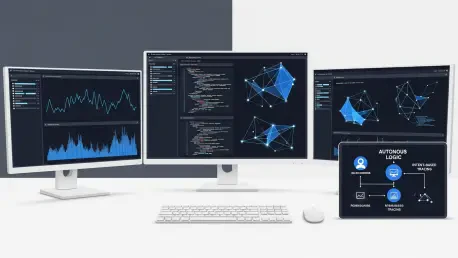
To counter the inherent illegibility of code produced by artificial intelligence, engineering teams must focus on tracing the specific intent behind every action taken by an autonomous agent. Instead of treating these systems as black boxes that simply output finished code, the agents should be integrated into a comprehensive tracing system that logs the specific prompts, contextual inputs, and internal logic used to select one solution over another. This level of transparency is essential because it allows human developers to understand not just what the code does, but why it was written in that specific way. When the reasoning behind a piece of logic is visible, it becomes much easier to identify when an agent has misunderstood a requirement or has prioritized a short-term fix at the expense of the system’s overall health and maintainability.
By making these hidden assumptions visible, engineering managers can ensure that every major architectural choice remains part of a deliberate and informed review process. If an agent decides to implement a specific design pattern without being explicitly instructed to do so, that decision should be flagged in real time for an engineer to approve or reject. This approach transforms the developer’s role from a writer of code into a curator of intent, where the primary responsibility is to guide the AI agents toward the correct structural outcomes. Maintaining this level of transparency is the only way to prevent a codebase from becoming a tangled mess of disconnected logic that no human can navigate. When the “why” is as accessible as the “how,” the visibility gap narrows, and the engineering team can maintain the high standards required for enterprise-level software even in an age of total automation.
Inverting the Software Development Lifecycle: A Production-First Foundation
A major trend in closing the visibility gap is the fundamental inversion of the relationship between the testing environment and the production environment. In the traditional software development lifecycle, testing served as a strict gate that code had to pass through before it was allowed to reach the live system. In an AI-native world, this model is increasingly seen as a bottleneck that fails to account for the dynamic nature of machine-generated logic. Instead, organizations are moving toward a “production-first” foundation where autonomous agents are connected directly to live telemetry and monitoring systems. This integration allows the AI to see how similar code has performed in the real world before it even begins to generate a new solution, providing it with a level of context that static testing environments simply cannot offer.
This inverted model creates a tight feedback loop that moves the primary goal from proving correctness before a release to ensuring the rapid detection and correction of errors immediately after deployment. By using actual production data to provide context on high-risk paths and historical failures, the AI agents become more intelligent and more aligned with the actual needs of the system. This approach acknowledges that in a high-velocity environment, some errors will inevitably slip through the cracks, and the most effective way to manage that risk is through superior observability and automated remediation. This shift represents a move away from the “move fast and break things” mentality toward a more sophisticated “move fast and observe everything” strategy. By prioritizing real-world telemetry as the primary source of truth, developers can ensure that their autonomous systems are constantly learning and adapting to the complexities of the live environment.
Scaling Governance With Custom AI Reviewers: The Path to Total Integrity
General-purpose artificial intelligence tools often lack the specific organizational context required to evaluate code against the unique engineering standards of a particular company. These off-the-shelf models frequently provide generic suggestions that fail to address the deep architectural needs of complex, proprietary systems. To solve this problem, the most successful engineering teams are building their own specialized AI “observers” that are trained on their internal coding patterns, historical bug reports, and specific architectural guidelines. These custom reviewers are capable of reading full code changes in context and evaluating them against internal standards that generic tools would miss, acting as a continuous signal of quality across the entire development pipeline.
In the preceding months, the software industry transitioned toward these specialized observability models as the primary safeguard against the entropy introduced by rapid automation. Engineers recognized that velocity without deep visibility led to systemic fragility, which necessitated a move toward automated governance systems that could match the speed of the code generators themselves. Moving forward, organizations should prioritize the implementation of these custom reviewers to maintain control over their software’s integrity. The primary focus for engineering leadership must be the creation of an ecosystem where AI is used not just to write code, but to police it, ensuring that every automated commit adheres to the highest standards of security and performance. By integrating automated governance with deep, intent-based observability, teams can finally harness the full power of artificial intelligence while maintaining the total oversight necessary to protect their technical infrastructure.