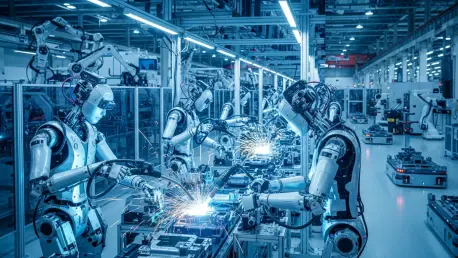

Industrial efficiency is no longer defined by stationary robotic arms bolted to factory floors but by agile, bipedal systems capable of navigating the complex, unscripted environments originally built for the human form. This transition represents a significant departure from the era of fixed automation, where machines were confined to cages and specific, repetitive tasks. Today, the convergence of advanced mobility, computer vision, and artificial intelligence is allowing these robots to step into labor-heavy sectors that were previously thought to be the exclusive domain of human workers. From the intricate handling of textiles to the heavy lifting required in logistics, the motivation for this shift is clear: a persistent global labor shortage and the need for higher operational resiliency. As companies integrate these autonomous systems, they are not just replacing human effort but are augmenting the workforce to handle hazardous or mundane tasks that often lead to burnout.
Automating Complex Labor and Logistics
Driving Digital Transformation in Textile Manufacturing
The garment industry has long remained one of the most challenging frontiers for automation because of the inherent difficulty in handling soft, flexible materials like fabrics. Unlike rigid metal parts in automotive assembly, cloth requires a level of tactile sensitivity and adaptability that older generations of robotics simply could not provide. However, recent collaborations between technology giants like Siemens and specialized industrial firms like Jack Technology have changed the narrative by integrating industrial AI into the sewing process.
By deploying thousands of humanoid-style machines equipped with high-resolution sensors, manufacturers are now able to automate sewing tasks with a degree of precision that rivals seasoned human operators. This shift is projected to increase production efficiency by at least 30 percent, allowing textile hubs to maintain high output even as the labor pool fluctuates. The use of software-driven intelligence ensures that each machine can adjust its grip and tension in real-time, preventing the material damage that previously hindered automated textile production efforts.
Solving Warehousing Challenges with Humanoid Designs
Warehousing and logistics serve as the backbone of global commerce, yet these environments often struggle with the physical limitations of traditional automation like conveyor belts or guided vehicles. Humanoid robots offer a unique solution because they are designed to operate within existing infrastructure without requiring expensive facility redesigns. These machines can walk through standard aisles and use the same workstations that were originally ergonomic for human employees, making them an incredibly cost-effective “drop-in” technology for modern distribution centers.
This compatibility allows logistics providers to scale their operations rapidly, adding robotic labor during peak seasons without the need for massive capital investment in specialized tracks or cages. Furthermore, their ability to use human tools and interfaces means they can bridge the gap between manual processing and fully automated systems. By maintaining a human-centric form factor, these robots ensure that the transition to automation is seamless, requiring minimal changes to the workflows that have been established over decades of manual industrial operations.
Maximizing Throughput with Autonomous Mobile Systems
Recent real-world deployments have proven that bipedal and wheeled humanoid designs are no longer experimental prototypes but are functional members of the workforce. In high-volume electronics plants, trials involving wheeled humanoid robots demonstrated their ability to move dozens of heavy crates per hour with a success rate exceeding 99 percent. These robots operated autonomously for entire shifts, navigating around human coworkers and obstacles with ease while managing the heavy lifting that often results in worker fatigue and long-term musculoskeletal injury.
The data gathered from these deployments suggests that the reliability of humanoid systems has reached a critical tipping point, providing a stable alternative for companies facing high turnover rates. As these machines become more integrated, the focus shifts toward optimizing the collaborative flow between human supervisors and their robotic counterparts. This strategic implementation allows factories to maintain 24-hour production cycles, significantly increasing total throughput while ensuring that the most physically demanding tasks are handled by resilient, autonomous hardware.
Enhancing Industrial Safety and Infrastructure
Improving Site Security with Specialized Quadrupeds
In high-risk sectors such as chemical processing and energy production, the safety of human personnel is the highest priority, leading to the adoption of specialized four-legged robots. These quadrupeds, such as the ANYmal system, are engineered to navigate terrain that is far too dangerous or difficult for wheeled machines or human inspectors. They are capable of climbing steep stairs, traversing uneven gravel, and operating in environments with poor lighting or hazardous atmospheric conditions that would otherwise require expensive life-support equipment for human entry.
Equipped with a suite of advanced sensors, these robots perform routine inspections that would normally expose workers to potential gas leaks or extreme heat. By using thermal cameras and acoustic sensors, they can detect minute changes in equipment performance, such as a bearing starting to fail or a pipe developing a pinhole leak. This early detection is vital for preventing catastrophic failures that could threaten the entire facility. The robots act as a first line of defense, providing constant vigilance in areas where human presence is either impossible or ill-advised.
Transitioning to Proactive Industrial Maintenance Models
The deployment of autonomous inspectors allows industrial plants to transition from reactive maintenance to a highly proactive security and operational model. Because these robots can operate continuously without the need for breaks, they provide a constant stream of data that human operators can monitor from a safe distance. This continuous surveillance is particularly valuable in massive refineries or power plants where manual inspections are time-consuming and often miss subtle signs of wear. The shift to constant monitoring has reduced unplanned downtime by identifying risks early.
Moreover, the robots can be deployed instantly during emergencies to assess a situation before human first responders enter a danger zone, providing live video feeds and sensor readings that are vital for decision-making. This strategic use of specialized robotics not only protects human life but also ensures that critical infrastructure remains operational with minimal downtime. By offloading the most dangerous inspection tasks to machines, companies have reinforced the stability of essential utility services while significantly lowering the insurance and safety costs associated with high-risk labor.
Integrating the Digital Backbone for Total Connectivity
The transformation of the modern industrial landscape was ultimately finalized when hardware became secondary to the sophisticated digital backbone that connected every robotic unit to the factory ecosystem. Companies that successfully navigated this transition focused on creating digital twins and integrated sensing environments that allowed robots to communicate seamlessly with existing control systems. It was found that the most effective implementations occurred when managers viewed humanoid robots not as isolated tools, but as mobile data nodes capable of real-time environmental adaptation.
Leadership teams prioritized the development of cloud-based management platforms that synced the movements of various autonomous systems to prevent bottlenecks and ensure workplace safety. This holistic approach provided the necessary infrastructure for a resilient manufacturing sector that proved capable of withstanding labor fluctuations and supply chain disruptions. Moving forward, organizations should focus on standardizing communication protocols between different robotic brands to ensure total interoperability. By investing in a robust software layer today, industrial leaders secured a future where human ingenuity and robotic precision work in perfect, data-driven harmony.