
The rapid maturation of the artificial intelligence ecosystem has reached a critical inflection point where the sheer complexity of hardware management must finally give way to standardized software stability. As the global economy increasingly relies on decentralized and open-weight models, the infrastructure supporting these systems is undergoing a profound transformation. This shift is characterized by the migration of critical projects from private repositories to neutral, community-driven governance. The recent decision by the PyTorch Foundation to incorporate Helion and Safetensors marks a significant milestone in this trajectory, signaling the end of the experimental phase of AI and the beginning of a production-ready era defined by security and interoperability.
Building a Production-Ready Infrastructure for the Global AI Landscape
The transition from academic frameworks to enterprise-grade infrastructure has forced a reevaluation of how foundational tools are maintained and scaled. In the current landscape, the role of neutral organizations like the PyTorch Foundation and the Linux Foundation is no longer peripheral but central to the global supply chain of intelligence. These bodies provide the necessary legal and technical frameworks to ensure that the tools powering billion-dollar industries are not subject to the whims of a single corporate entity. This centralized open-source development model fosters an environment where competitors can collaborate on the “plumbing” of AI, ensuring that the underlying systems are robust enough for high-stakes deployment in banking, energy, and defense.
Hardware-agnostic optimization has emerged as the primary battlefield for AI dominance. As organizations seek to avoid vendor lock-in, the demand for software that can run seamlessly across diverse silicon architectures—from specialized tensor units to traditional GPUs—has become paramount. Secure serialization is the second pillar of this new foundation, addressing the growing need for data integrity in a world where models are frequently shared and fine-tuned across organizational boundaries. This collaborative shift toward neutral governance and standardized tooling is a direct response to the market demand for a more predictable and transparent development lifecycle.
Navigating the Evolution of Open-Source Model Management and Performance
Catalysts for Innovation in Hardware Portability and Programming Accessibility
Innovation in the AI sector was previously throttled by the deep chasm between high-level Python programming and the low-level assembly language required for hardware optimization. Writing efficient GPU kernels was once considered an arcane specialty, limited to a small number of elite engineers with deep knowledge of chip architecture. However, the introduction of Helion as a Python-embedded domain-specific language represents a democratization of this process. By allowing developers to express complex mathematical operations in a dialect they already understand, Helion effectively lowers the barrier to entry for performance tuning, enabling a broader range of engineers to extract maximum value from their hardware investments.
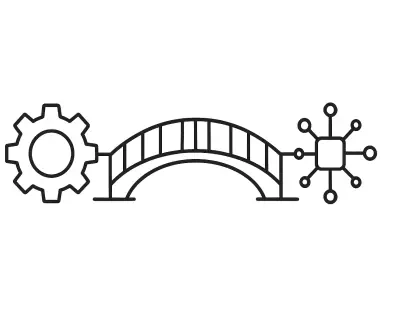
The shift in developer behavior is increasingly driven by a “write once, run anywhere” philosophy. In a fragmented hardware market, the ability to port code across various accelerators without a complete rewrite is not just a convenience but a strategic necessity. Helion facilitates this by acting as a bridge, compiling high-level instructions into optimized backends for different silicon. Moreover, the integration of automated testing and autotuning features allows the system to evaluate numerous implementation candidates autonomously. This identifies the most efficient kernel for a specific task, drastically reducing the time spent on manual trial-and-error and accelerating the overall deployment cycle for sophisticated models.
Projecting the Economic Impact and Growth of Standardized AI Frameworks
The economic landscape of artificial intelligence is currently witnessing a massive migration from proprietary, “walled garden” systems toward open-weight architectures. Market data suggests that enterprises are prioritizing the flexibility and transparency offered by open frameworks, as these models allow for greater customization and easier integration into existing security protocols. The adoption of Safetensors is a leading indicator of this trend, as it replaces legacy serialization methods that were often fraught with security risks. As more organizations move their workloads to these standardized formats, the market for model management tools is expected to see sustained growth throughout the rest of the decade.
Cost-efficiency remains the ultimate driver for enterprise adoption of these new standards. By improving GPU utilization through better kernel optimization and reducing the administrative overhead associated with security vetting, organizations can realize significant savings in both capital and operational expenditures. Projections indicate that standardized frameworks will lead to a substantial reduction in the total cost of ownership for AI systems, making large-scale deployment feasible for small and medium-sized enterprises. This shift toward standardization is not just a technical upgrade but a foundational economic change that stabilizes the market and encourages long-term institutional investment in AI infrastructure.
Overcoming Technical Barriers in Kernel Development and Model Integrity
The scarcity of specialized engineers capable of manual hardware optimization has long been a bottleneck for the industry. While the demand for high-performance AI continues to skyrocket, the pool of talent proficient in the intricacies of GPU memory management and parallel processing has remained relatively stagnant. Helion addresses this talent gap by automating the most complex aspects of kernel development. By providing a higher level of abstraction, the project allows companies to leverage their existing Python-proficient workforce to achieve performance levels that were previously the exclusive domain of hardware specialists. This shift effectively decouples software innovation from the constraints of human expertise.
Model integrity has similarly faced significant hurdles, most notably the “Pickle” security vulnerability. For years, the industry relied on serialization formats that allowed for the execution of arbitrary code, creating a massive attack vector for supply chain incursions. Safetensors solves this by being “safe-by-design,” ensuring that model weights are stored in a format that prohibits the embedding of malicious scripts. Furthermore, the push for hardware neutrality is bridging the gap between specialized silicon like AWS Trainium or Google TPUs and the software stacks used by developers. Ensuring that security protocols do not compromise the speed of multi-node deployments is critical, as any lag in performance can result in massive financial losses during real-time inference tasks.
Establishing Global Standards for AI Security and Governance Compliance
The regulatory environment for artificial intelligence is rapidly evolving, with governments and international bodies moving toward mandatory security vetting for all deployed models. In the financial and healthcare sectors, where data integrity is a matter of legal compliance, the risks associated with unvetted model weights are simply too high to ignore. Safetensors provides a structured, transparent framework that meets these emerging international standards, offering a clear audit trail for data provenance and security. This move toward standardized safety measures allows organizations to navigate the complex web of global regulations while maintaining the agility needed to innovate.
Institutional permanence is another key factor in the adoption of these tools. When a project is housed within a neutral foundation, it gains a level of stability that single-vendor projects cannot match. This permanence is vital for enterprise infrastructure planning, as it provides assurance that the tools used today will still be supported and maintained years into the future. By using neutral trademarks and open governance, the PyTorch Foundation satisfies the rigorous requirements of corporate procurement departments. This harmonization of open-source agility with the strict compliance needs of traditional industries is creating a more resilient ecosystem that can withstand both technical shifts and regulatory scrutiny.
The Future of Seamless Intelligence from the Data Center to the Edge
The next phase of AI deployment will likely be defined by unified tooling that spans the entire computing spectrum. As models become more pervasive, the distinction between massive cloud clusters and localized edge devices is beginning to blur. Unified frameworks like Helion and ExecuTorch are paving the way for a world where a model can be developed in the cloud and deployed to a mobile device or an industrial sensor with minimal friction. This trend toward “infrastructure nerdery”—where the primary focus is on the underlying plumbing rather than just the model architecture—is essential for sustaining the current pace of global innovation and ensuring that AI remains accessible at every scale.
Market disruptors are also emerging as diverse hardware accelerators challenge the dominance of traditional chipmakers. As software becomes more portable, the competitive advantage of any single hardware vendor is diminished, creating opportunities for new entrants in the silicon market. This competition is expected to drive down costs and accelerate the development of more energy-efficient chips. The convergence of performance and stability is becoming the primary driver for the next generation of applications, as users demand systems that are not only intelligent but also reliable and fast. The focus on the underlying stack ensures that the “intelligence” of the future is built on a foundation that is as secure as it is powerful.
Hardening the Open AI Stack for Resilient Enterprise Growth
The integration of Helion and Safetensors into the PyTorch ecosystem successfully addressed the historical limitations of open-source artificial intelligence. By simplifying the creation of high-performance kernels and establishing a secure standard for model serialization, the foundation provided the tools necessary for large-scale production. These advancements made it possible for organizations to move away from fragmented, insecure, and vendor-specific workflows. The collective impact of these projects was a more accessible and reliable environment, which empowered a broader range of developers to contribute to the global AI landscape while maintaining the highest standards of data integrity.
Organizations that recognized the value of a standardized and hardware-agnostic pipeline early on were best positioned to capitalize on the rapid evolution of the market. The decision to invest in a secure, open AI stack proved to be the most viable path for long-term growth, as it mitigated the risks of security breaches and technical debt. As the industry looked back at this period of consolidation, it became clear that the efforts to harden the underlying infrastructure were what ultimately allowed artificial intelligence to transition from a speculative technology into a resilient pillar of modern enterprise architecture. Moving forward, the focus shifted toward continuous refinement and the global scaling of these now-essential standards.