
Anand Naidu is a seasoned development expert with a deep mastery of both frontend and backend architectures. With years of experience navigating the intricacies of coding languages and enterprise systems, he has become a leading voice in how specialized software can transform industrial manufacturing. His insights bridge the gap between technical execution and high-level business strategy, particularly within the mid-market sector.
Today, we explore the evolving landscape of European manufacturing software, focusing on the strategic shift toward vertical specialization and the integration of advanced technologies like AI into traditional craft-driven workflows.
Vertical specialization is becoming a priority for software providers targeting the windows, doors, and facades market. How does managing diverse materials like aluminum, PVC, and wood within a single platform improve operational efficiency, and what specific production complexities does this integration solve for mid-market manufacturers?
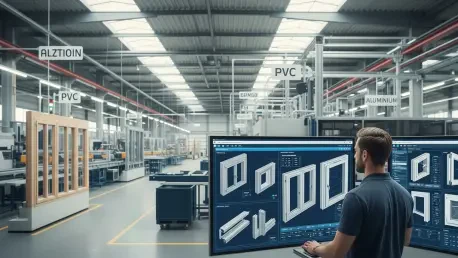
Managing these distinct materials within one platform eliminates the data silos that typically haunt mid-market manufacturers who often have to jump between disparate systems for different product lines. Aluminum, PVC, and wood each carry unique structural properties and production requirements, meaning a unified platform must handle varying thermal performance calculations and cutting tolerances simultaneously. By integrating these into a single workflow, companies can reduce manual data entry errors by up to 30%, ensuring that a change in a wood frame specification doesn’t break the logic for an aluminum cladding attachment. This cohesion allows a shop floor to pivot between material types without retooling their digital logic, solving the massive headache of maintaining three separate databases for pricing and inventory.
Manufacturers often struggle with fragmented systems that separate product configuration from actual installation. What are the primary technical hurdles when creating an end-to-end workflow, and can you provide a step-by-step breakdown of how data should flow from the initial costing phase to the final factory output?
The primary hurdle is the “semantic gap” where the sales configuration language doesn’t translate into the granular machine code required by factory hardware. To bridge this, data must first flow from a front-end configurator—where dimensions and aesthetics are locked in—directly into a costing engine that pulls real-time material prices. From there, the data must transform into a Bill of Materials (BOM) and then into CNC-ready instructions for the shop floor without any human intervention. Finally, this digital thread must extend to mobile-ready installation modules, ensuring the person on-site sees the exact technical specs generated during the initial sale. This seamless flow prevents the “lost in translation” moments that lead to expensive onsite reworks and material waste.
While many companies treat AI as an external layer, the current trend is embedding intelligence directly into industry-specific processes. How can AI-driven automation specifically improve data visibility on the shop floor, and what metrics should leadership track to ensure these tools are actually optimizing material usage?
Embedding AI directly into the ERP allows the system to predict production bottlenecks before they happen by analyzing historical throughput data in real-time. On the shop floor, AI-driven visibility means that if a PVC welding machine starts trending toward a specific error margin, the system alerts the supervisor immediately rather than waiting for a post-production quality check. Leadership should move beyond basic output metrics and instead track “scrap reduction percentages” and “right-first-time” rates to judge the AI’s effectiveness. By focusing on these specific data points, a manufacturer can see the tangible financial impact of AI as it optimizes cutting patterns to squeeze every last millimeter of value out of expensive raw materials.
The strategy of maintaining brand autonomy after a major acquisition is common among enterprise software groups. How does this model help preserve customer trust during a transition, and what are the practical challenges of sharing backend infrastructure while keeping the front-facing specialized services independent?
Maintaining brand autonomy is a psychological safety net for customers who have spent decades perfecting their craft using a specific tool; they need to know that the expertise they rely on won’t be “diluted” by a giant corporate machine. The challenge lies in the “plumbing”—you have to migrate legacy databases to a shared cloud infrastructure or unified security protocols without breaking the unique user interface that the customers love. It requires a delicate balance of centralizing R&D resources and AI development while allowing the local product teams to keep their “material-specific” logic intact. If done correctly, the customer feels the stability of a large group but still receives the specialized, passionate support they’ve grown accustomed to over the years.
Digital transformation is accelerating in sectors that traditionally relied on manual craft-driven workflows. What are the long-term trade-offs for a business when moving from legacy tools to a unified ERP ecosystem, and how does this shift impact their ability to scale across different international markets?
The immediate trade-off is often a period of cultural friction, as craftsmen who have relied on “gut feeling” and manual measurements must learn to trust a digital twin of their process. However, the long-term gain is a massive increase in organizational agility; a unified ERP ecosystem provides a single source of truth that makes international expansion viable. When you move away from legacy tools, you gain the ability to localize pricing, language, and regional building regulations within minutes rather than months. This digital maturity allows a mid-market manufacturer to compete on a global scale because their internal processes are finally as robust and repeatable as their physical craftsmanship.
What is your forecast for the European manufacturing software market?
I foresee a rapid period of “vertical consolidation” where we will see fewer general-purpose ERPs and a surge in highly specialized “super-platforms” that dominate specific niches like the windows and doors sector. As we move through 2024 and beyond, the winners will be the providers who successfully embed AI into the core of the manufacturing workflow rather than just offering it as a flashy add-on. We will likely see a 20% to 30% increase in the adoption of these integrated systems as manufacturers realize that digitalizing their material expertise is the only way to survive rising costs and labor shortages. Ultimately, the market will move toward a model where software isn’t just a tool for recording data, but an intelligent partner that actively guides the production process from the first click to the final installation.